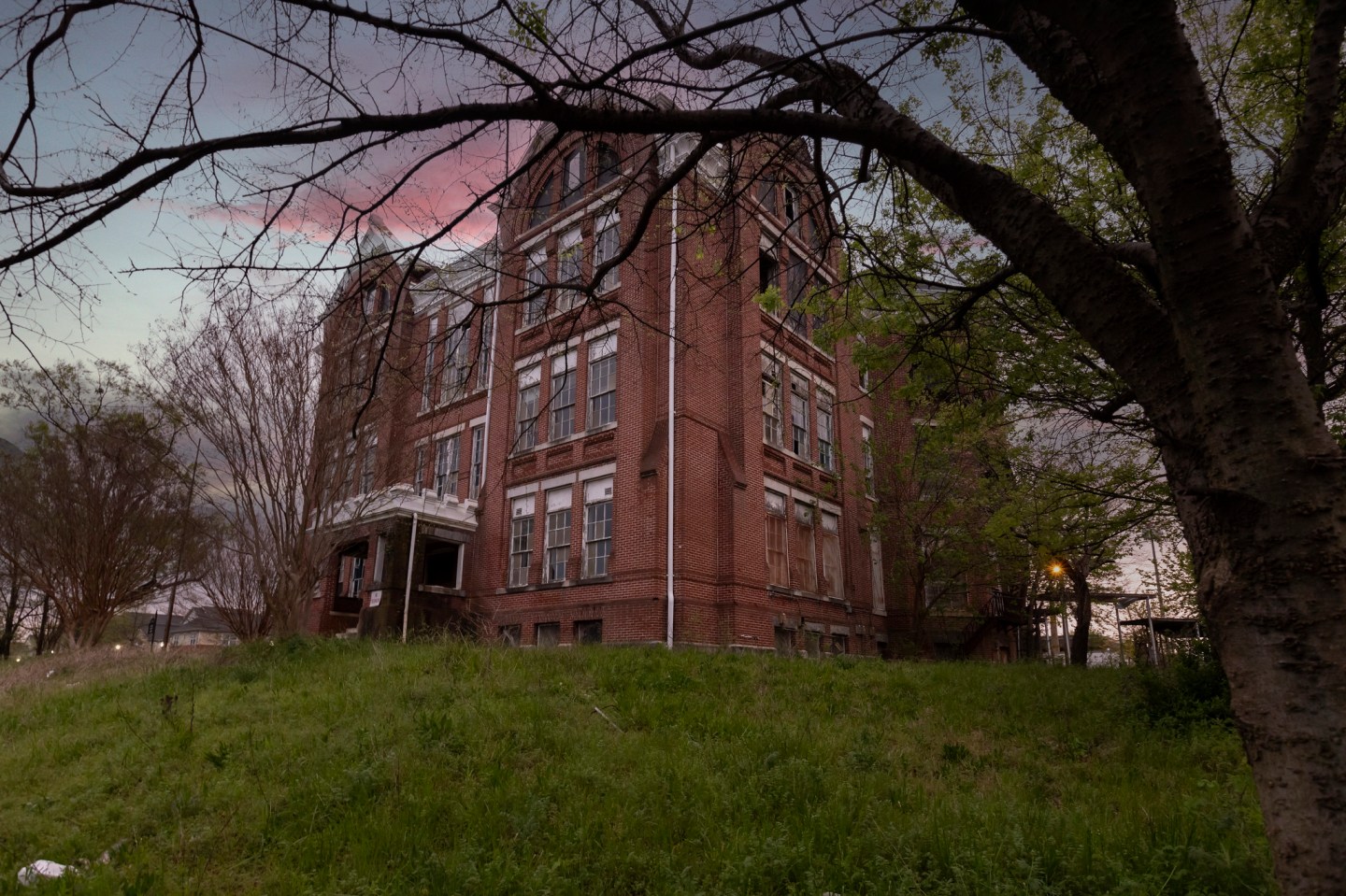
Long before Birmingham, Alabama, became known as the “Magic City,” education was already taking root in the young settlement. As the city grew following its incorporation in December 1871, civic leaders recognized that education was essential to attracting families and building a thriving community. The result was the establishment of Birmingham’s first public school, an institution that would lay the foundation for the city’s entire public school system.
In 1873, a group of citizens approached Colonel John T. Terry, the city attorney, seeking help in establishing a free school to encourage settlement in the new city. Terry carried the proposal to Colonel James Powell, president of the Elyton Land Company. Powell agreed to the plan and secured a parcel of land “far out in the country,” donated by the city for the express purpose of operating a free school. The deed stipulated that the property be used only for the education of white children residing in Birmingham and within a half mile of the city limits, and that instruction be provided by white teachers. If the land were ever used for another purpose, ownership would revert to the Elyton Land Company or its successors.
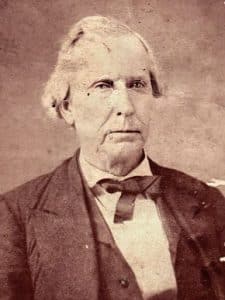
With land secured, John Terry and Charles Linn, a local banker and prominent industrialist, st about raising funds to construct a schoolhouse. When James Powell was elected mayor of Birmingham, he donated his entire mayoral salary to the project, along with fines collected through the Birmingham Police Court. According to local legend, Powell even took out a loan to complete construction, using a tailored suit as collateral. In appreciation, the schoolchildren later presented him with another custom-made suit.

On March 1, 1874, the Free School, a modest brick building containing four classrooms, was formally dedicated, and classes began on April 20. D. C. B. Connelley served as the school’s first principal, assisted by four teachers. Students were required to pay an incidental fee of $1.50 per school year, and boys and girls were not permitted to sit together except during recitation. These fees were gradually reduced and eventually eliminated altogether. For nearly a decade, the Free School remained Birmingham’s only public school until additional schools for lower grades were constructed. In 1883, the original school was converted into a high school.
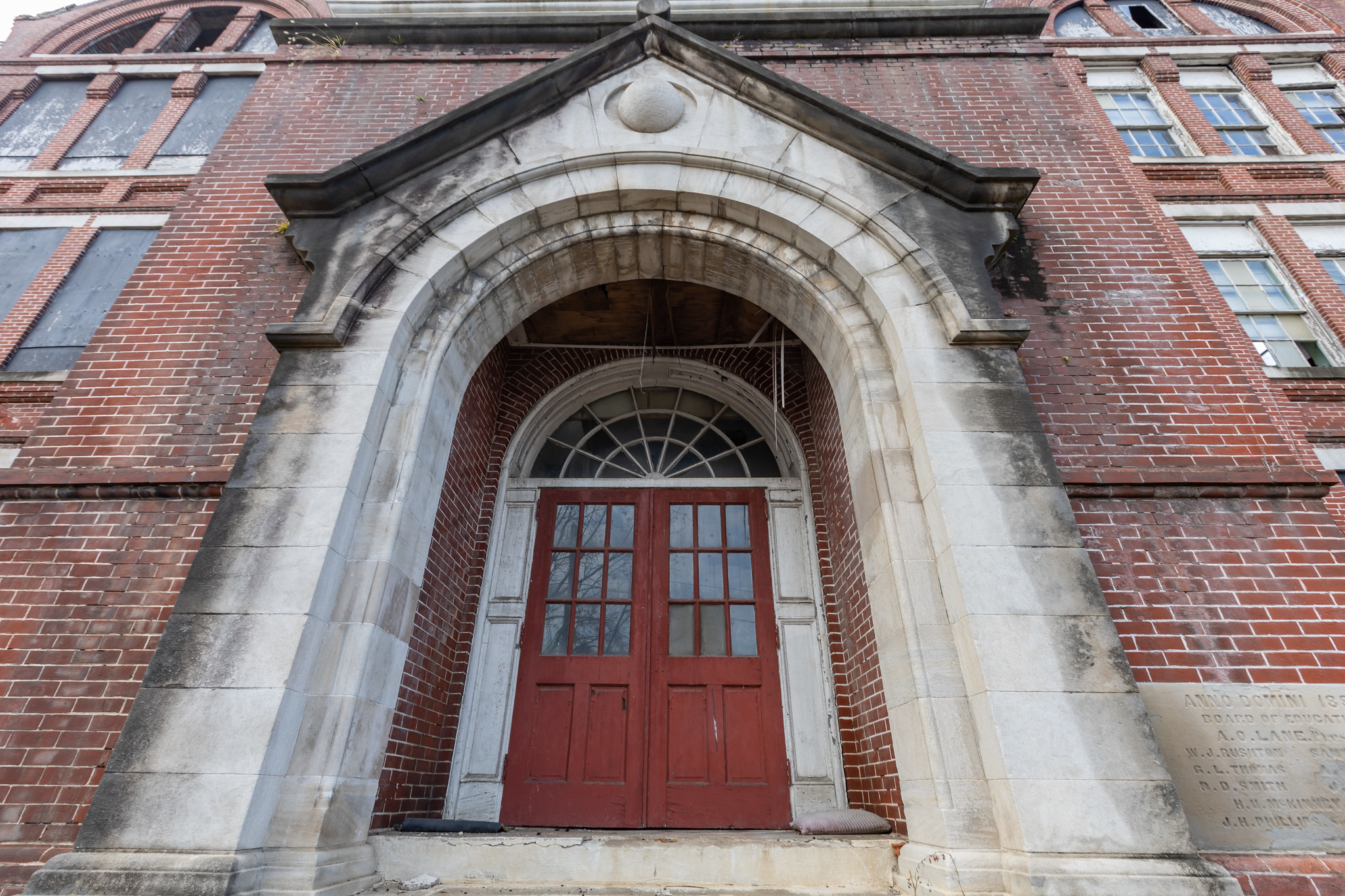
In 1886, a fire damaged the building, rendering it unsafe. An adjoining lot was purchased, and plans were drawn for a new schoolhouse. Completed in 1888, the replacement building was named Powell School to honor Colonel Powell at John Terry’s suggestion. At the time, it was hailed as “the most modern and best equipped elementary school in the South.”
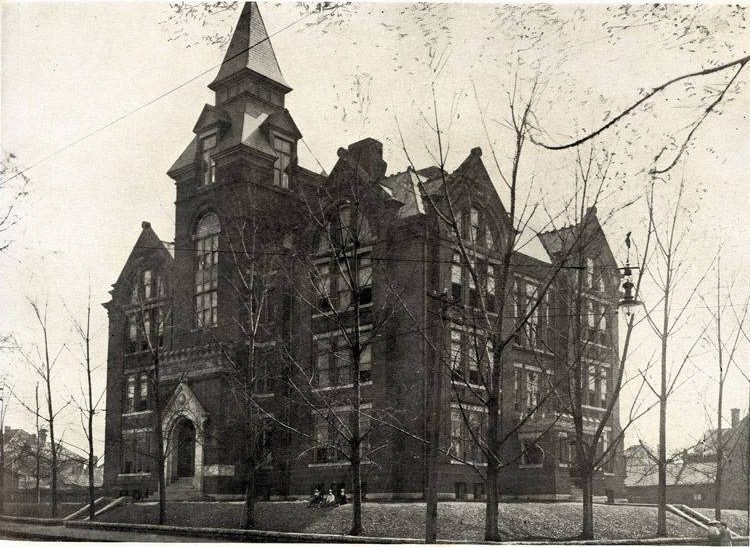
Powell School, 1908.
By 1923, however, a citywide study found Powell School to be outdated. The building lacked a cafeteria and auditorium and was severely overcrowded, though it was noted to be in better condition than many other Birmingham schools. The study recommended the addition of a gymnasium, auditorium, and more classrooms.
Following the destruction of Barker Elementary School by fire in 1941, Harry Singler, president of the Henley School PTA, publicly labeled Powell and Henley Schools as “firetraps” and proposed demolishing both buildings in favor of a centralized school near downtown. The idea proved controversial. Many parents objected to consolidating students from the nearby Central City Housing Project, while others advocated rebuilding on the former Barker School site. Ultimately, insurance proceeds from the Barker fire were used instead to expand F. D. MacArthur Elementary School and to construct an addition to Powell School in 1951. This expansion included a lunchroom, auditorium, and additional classrooms, along with fireproofed stairwells and modernized lighting.
By the 1960s, the building again showed signs of deterioration, and discussions arose about demolishing it. Preservationists argued for its historic value, and in 1969, the brick exterior was sandblasted, and the mortar joints were rechinked. In 1974, Powell School’s future was again imperiled by the likelihood that many of its students would be relocated due to the construction of the Red Mountain Expressway. Two years later, in 1976, Powell School was added to the National Register of Historic Places.
The building faced another threat in November 1980, when a structural evaluation raised concerns about its stability, and classes were relocated to Phillips High School. School board president Bettye Fine Collins suggested demolishing the structure rather than repairing it. With assistance from the Birmingham Historical Society, however, the Board of Education secured a grant from the Alabama Historical Commission to help fund repairs.
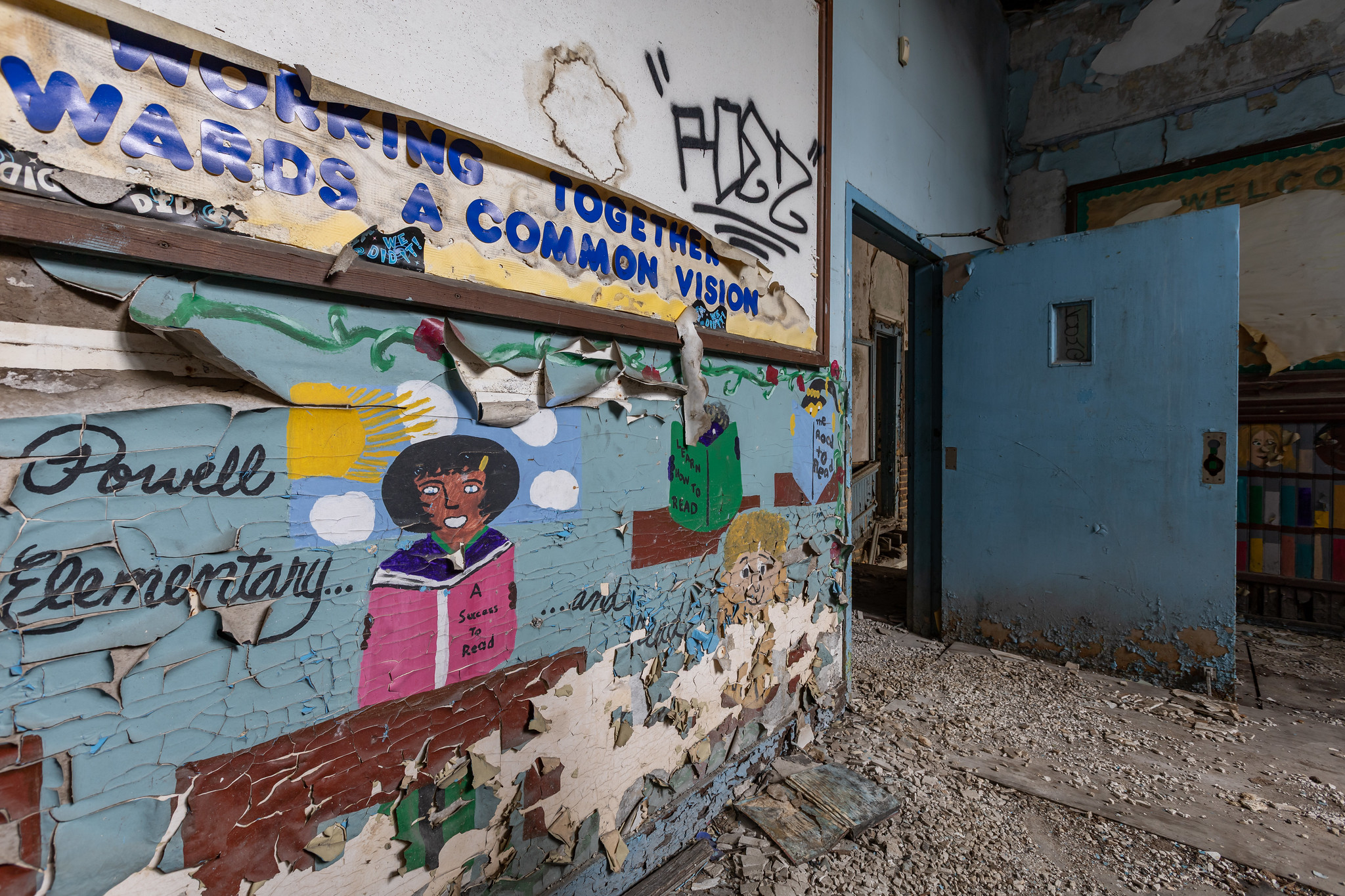
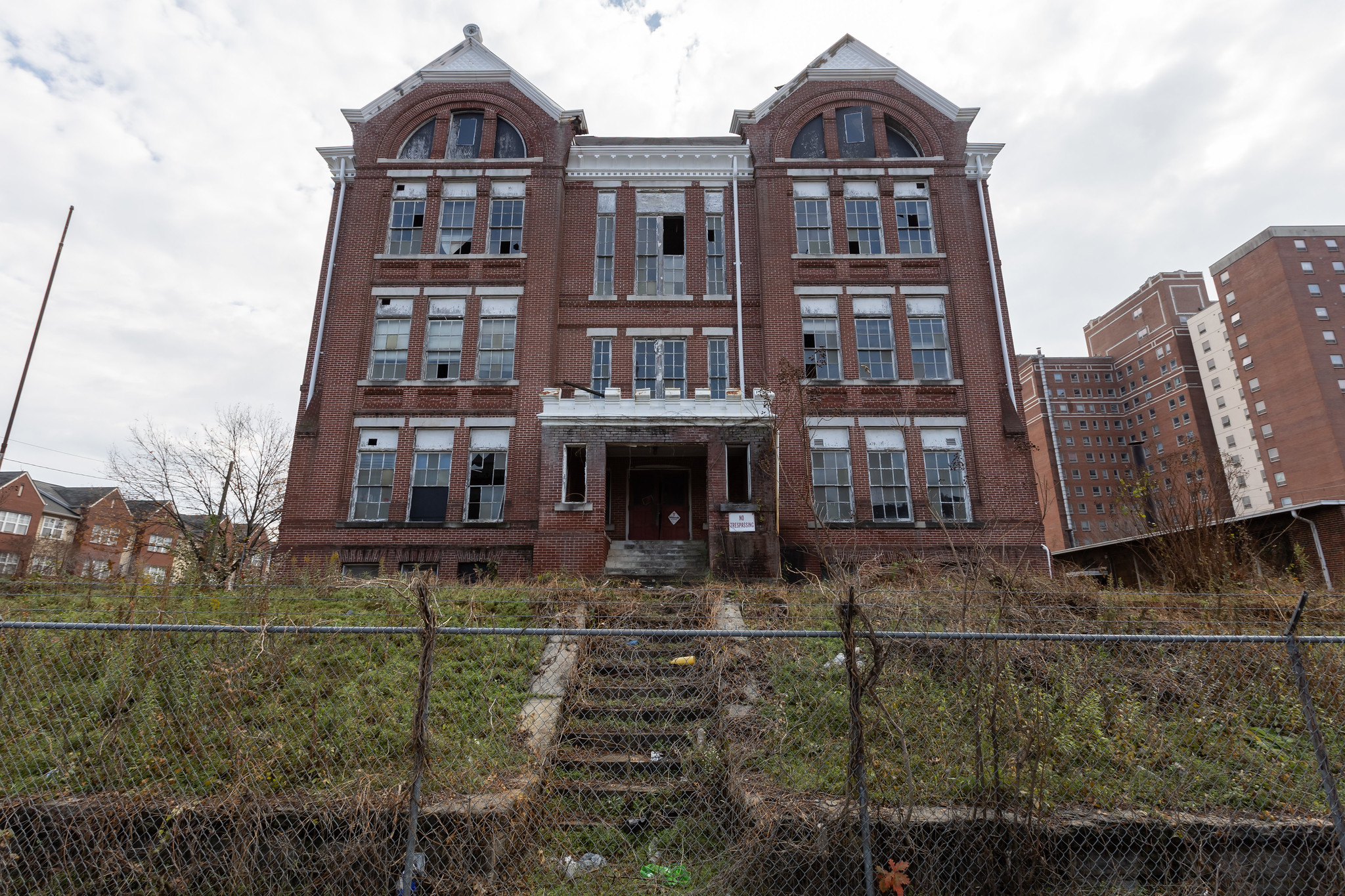
With the redevelopment of the nearby Metropolitan Gardens housing project, enrollment at Powell Elementary School dropped by half, and the decision was made to close the school after the 2001–2002 school year. Numerous proposals for reuse followed, including conversion into a teaching laboratory or historical archive, but these plans were deemed too costly. In 2008, Mayor Larry Langford proposed converting the building into an adult education center or donating it to a private school, but no progress resulted.
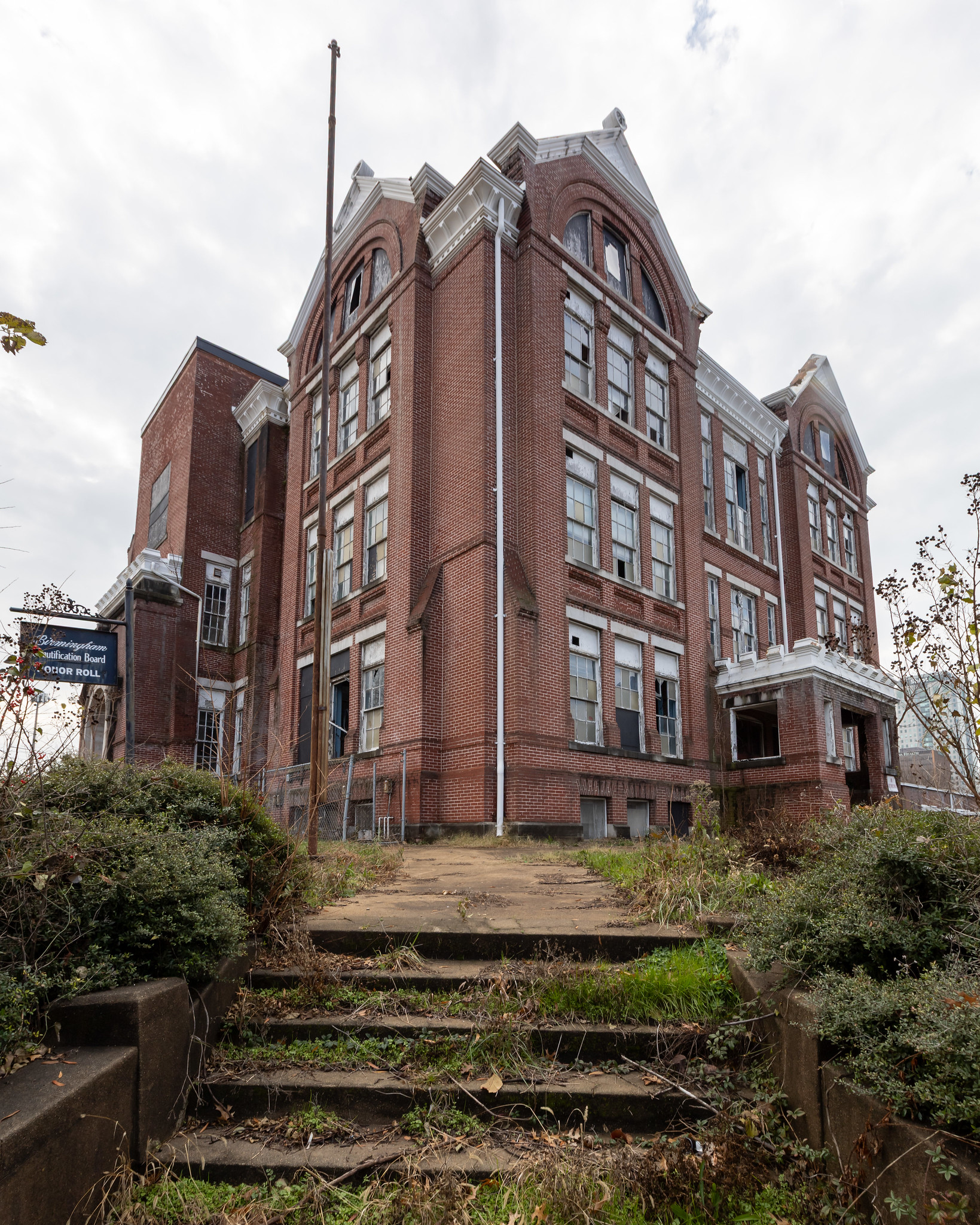
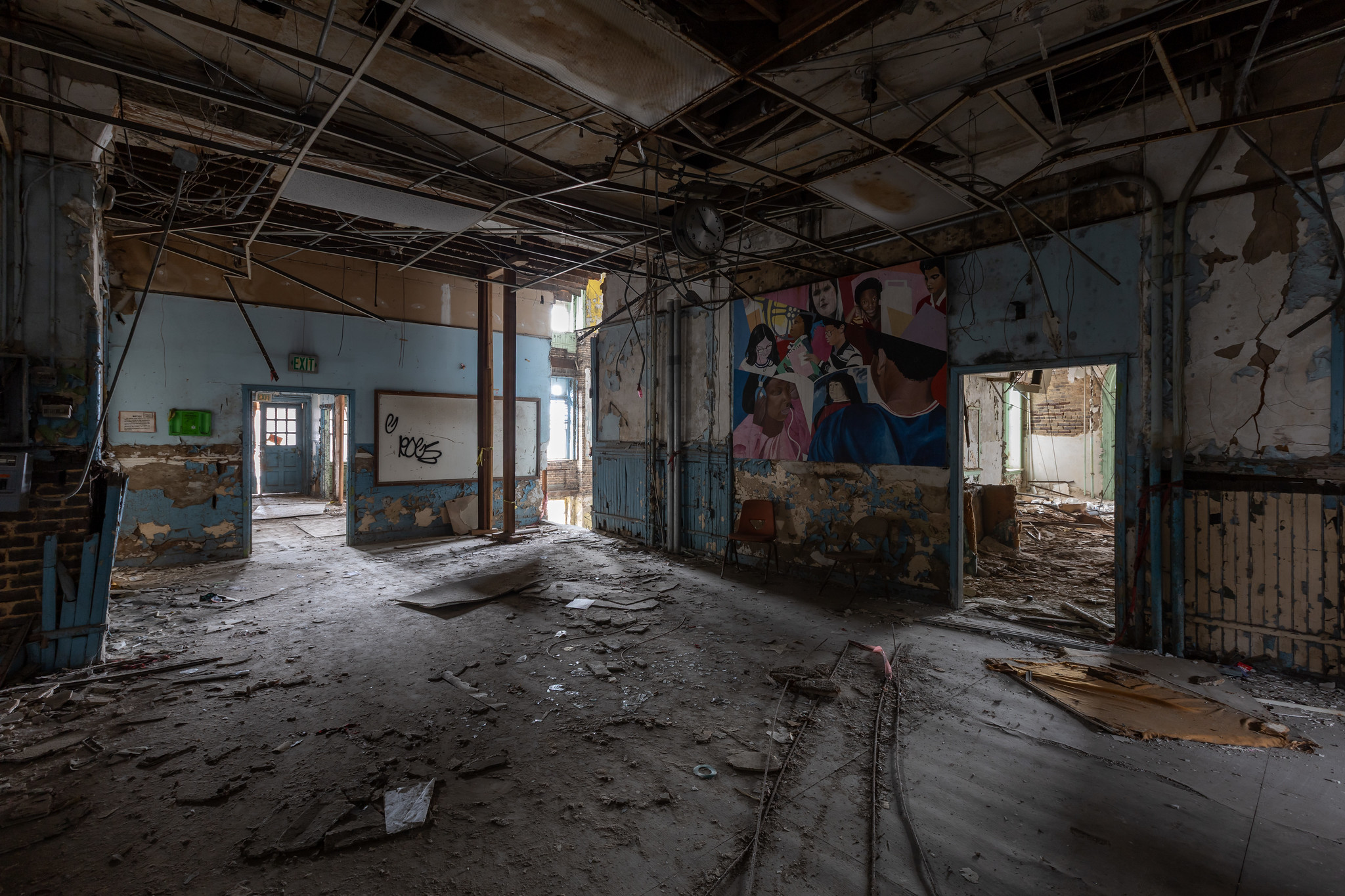
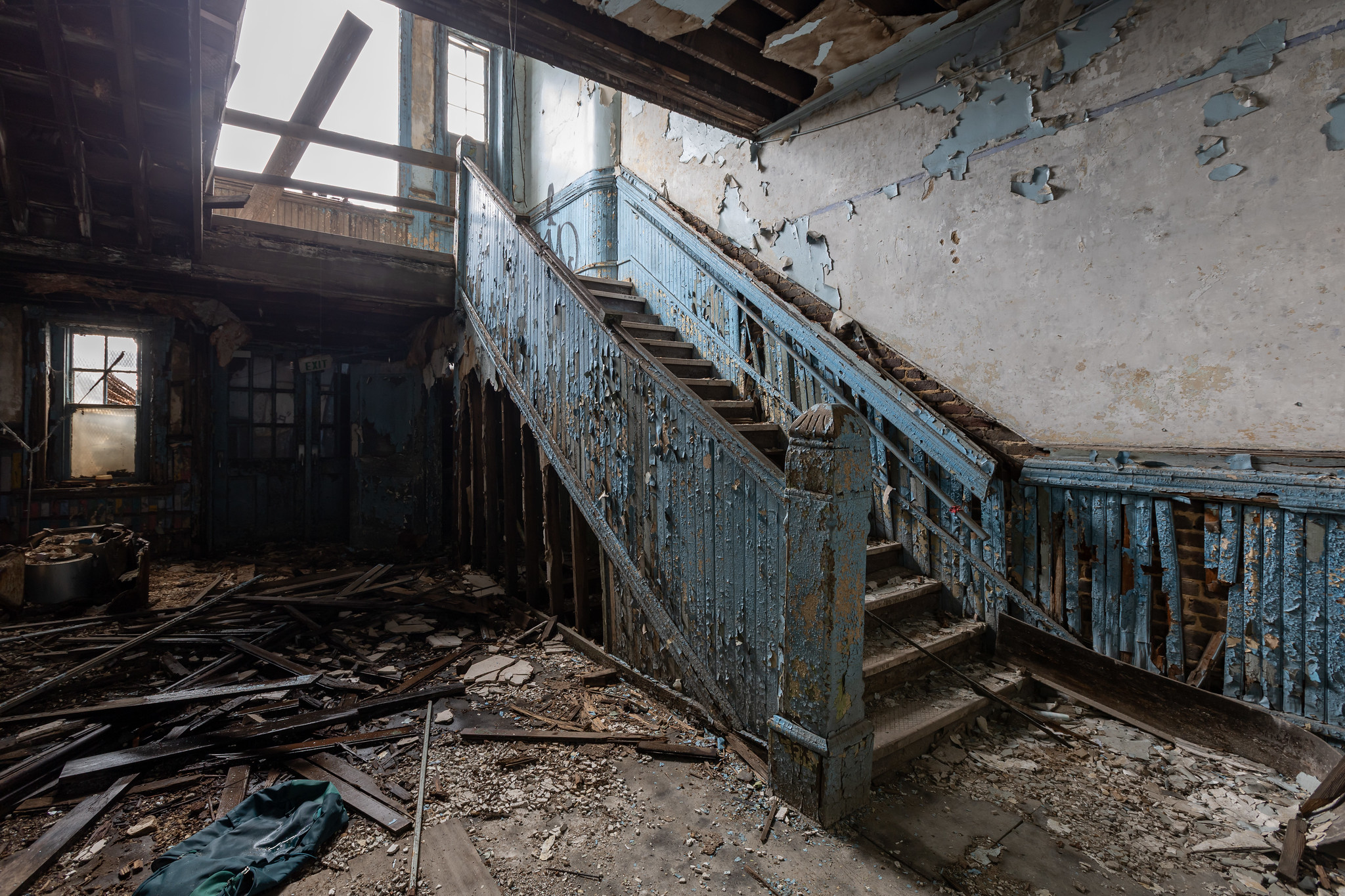
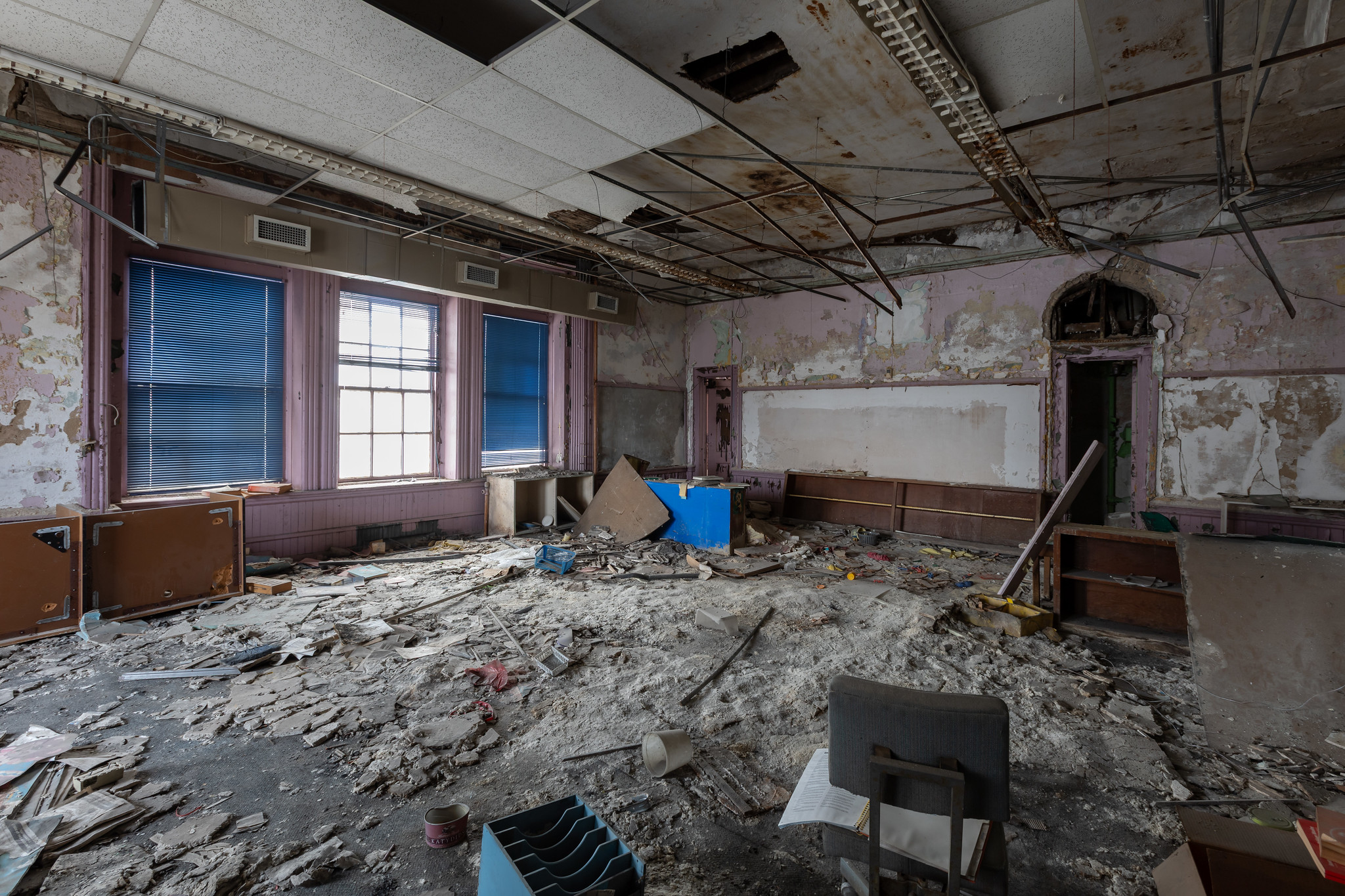
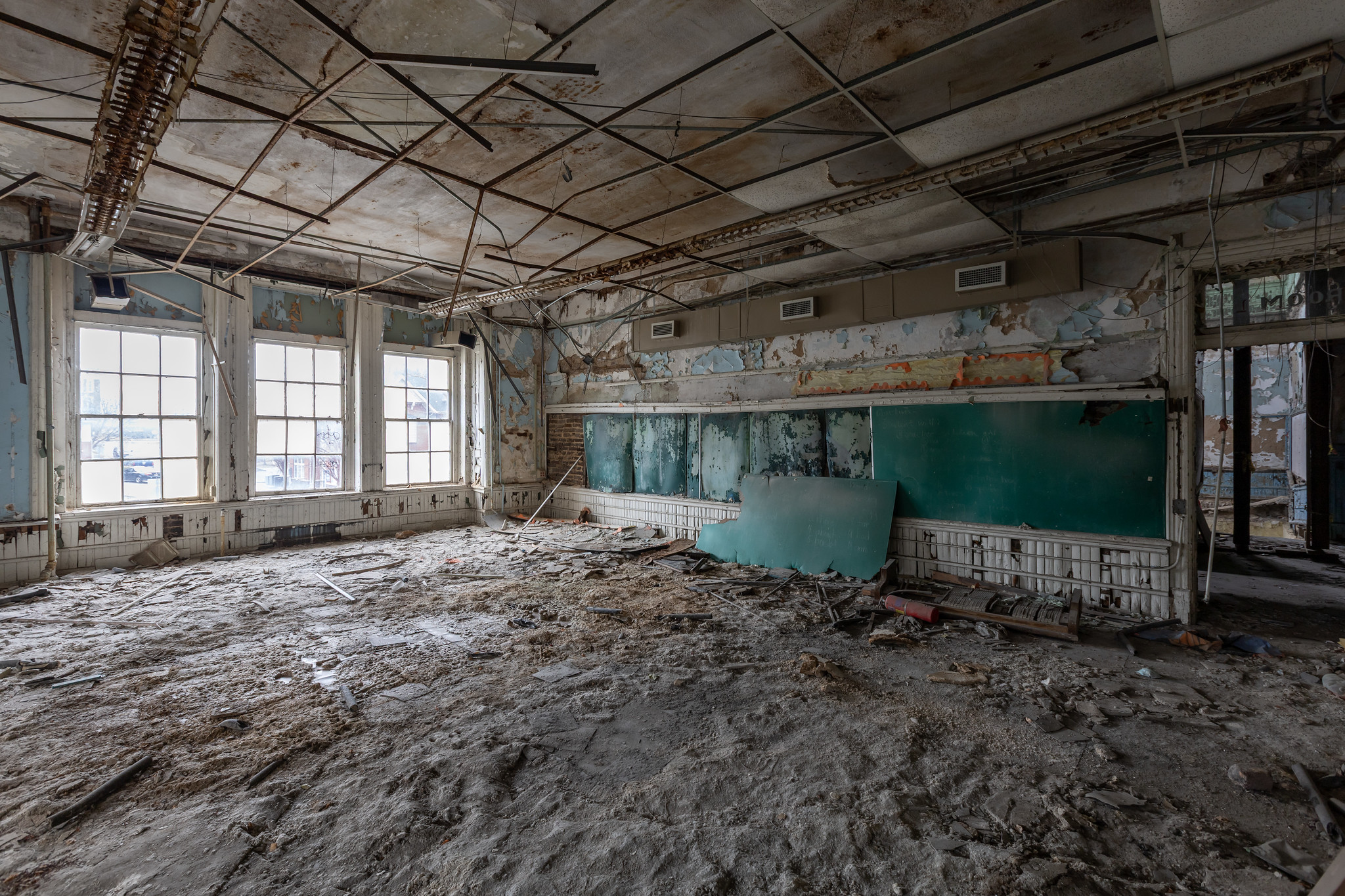
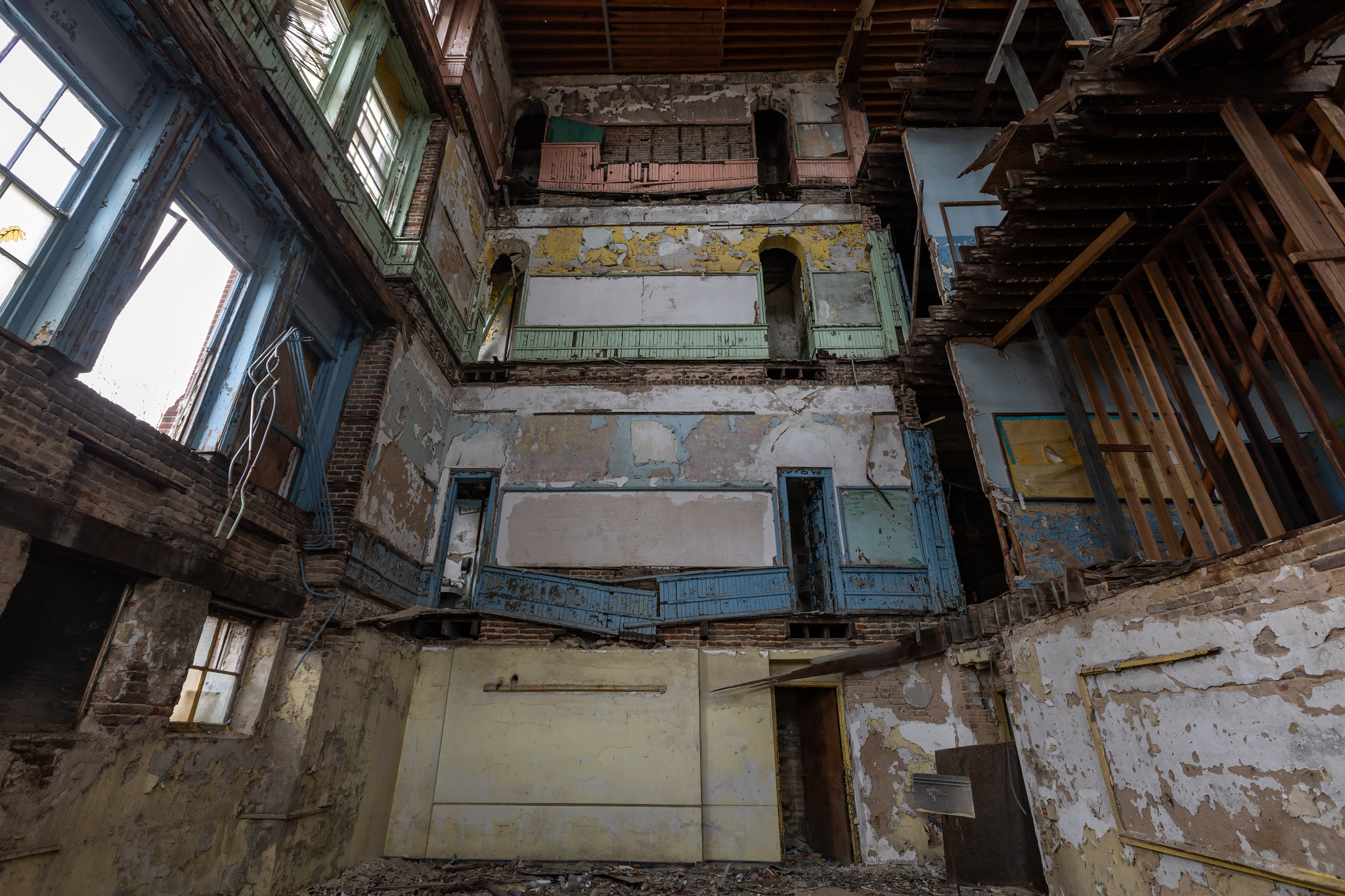
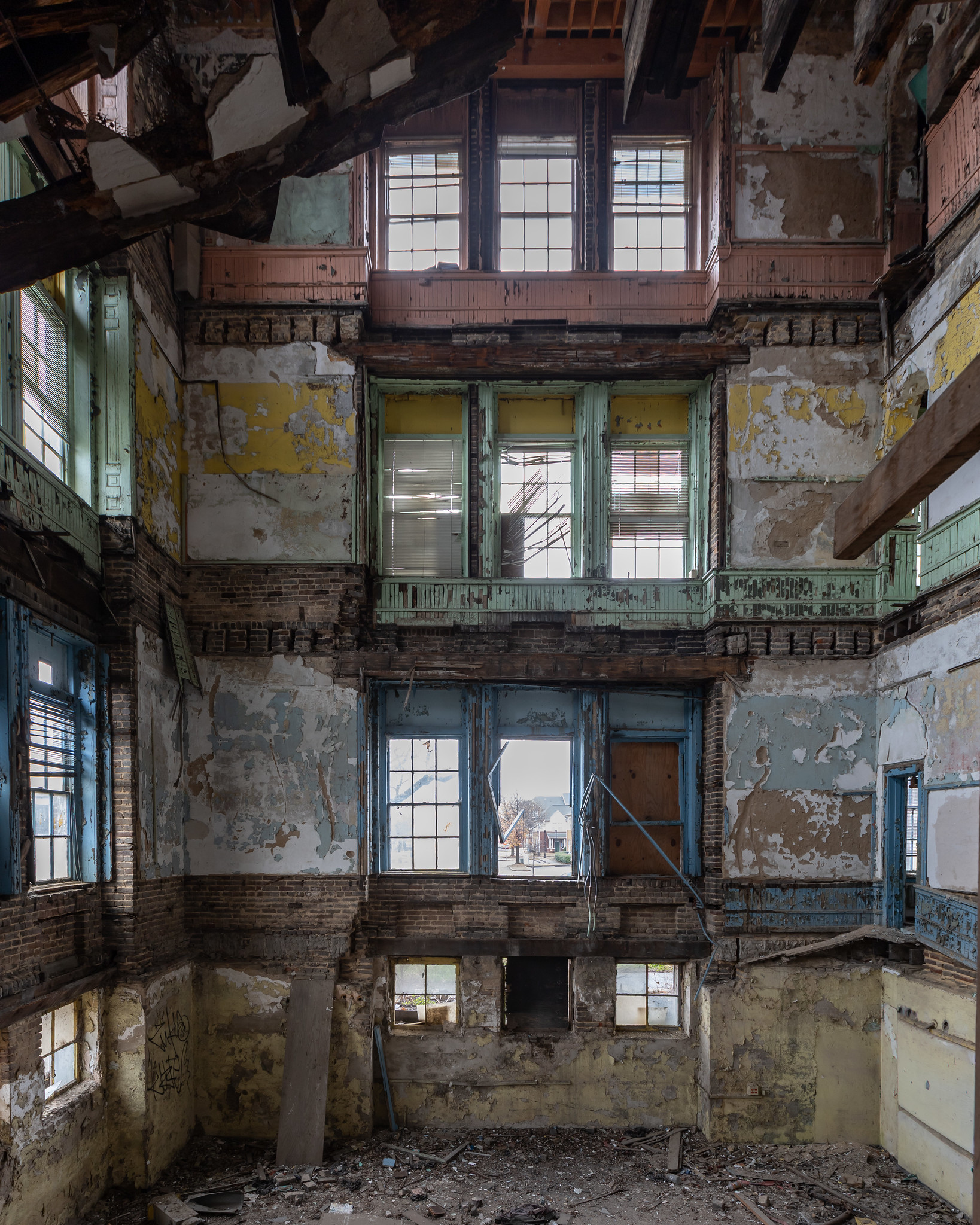
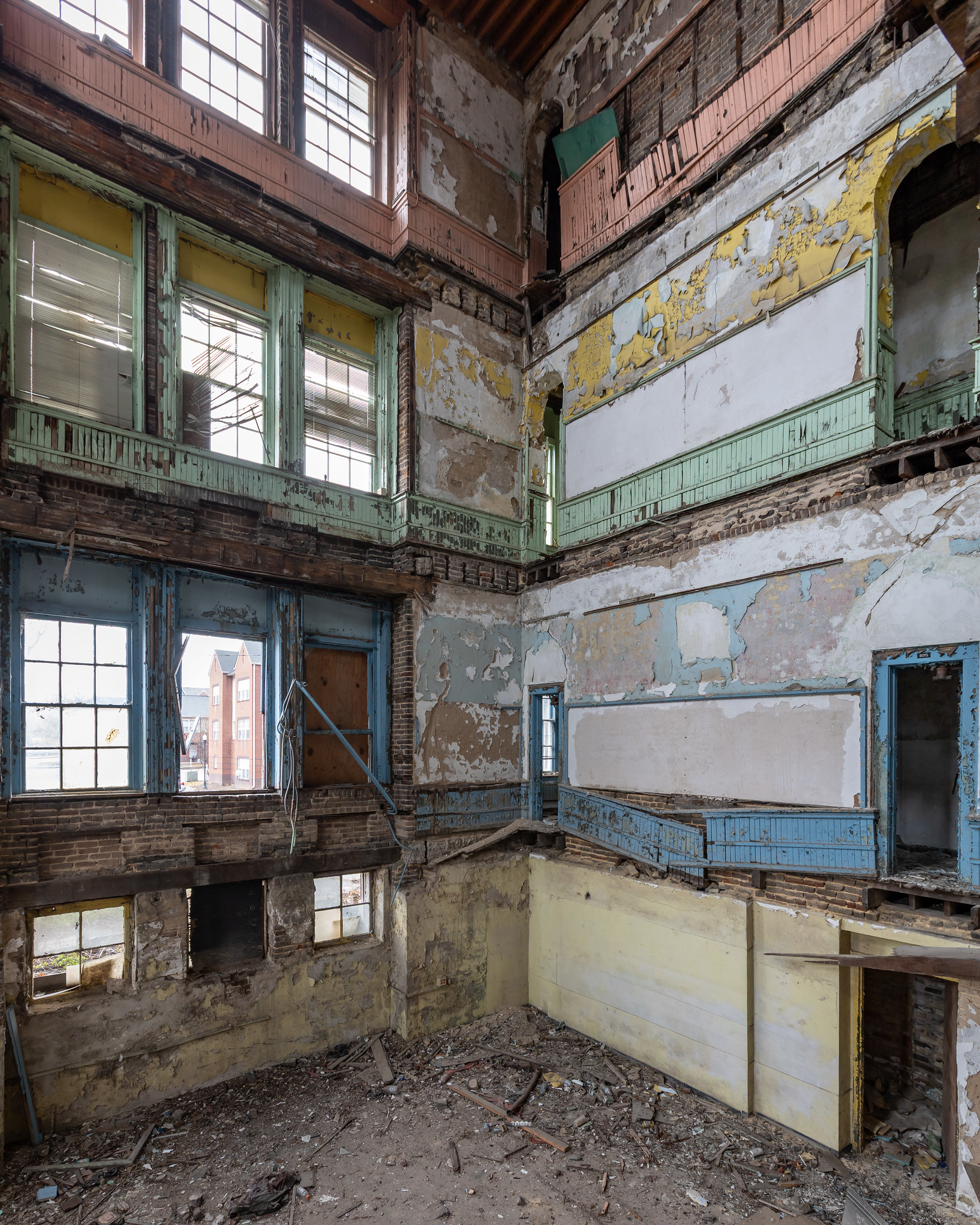
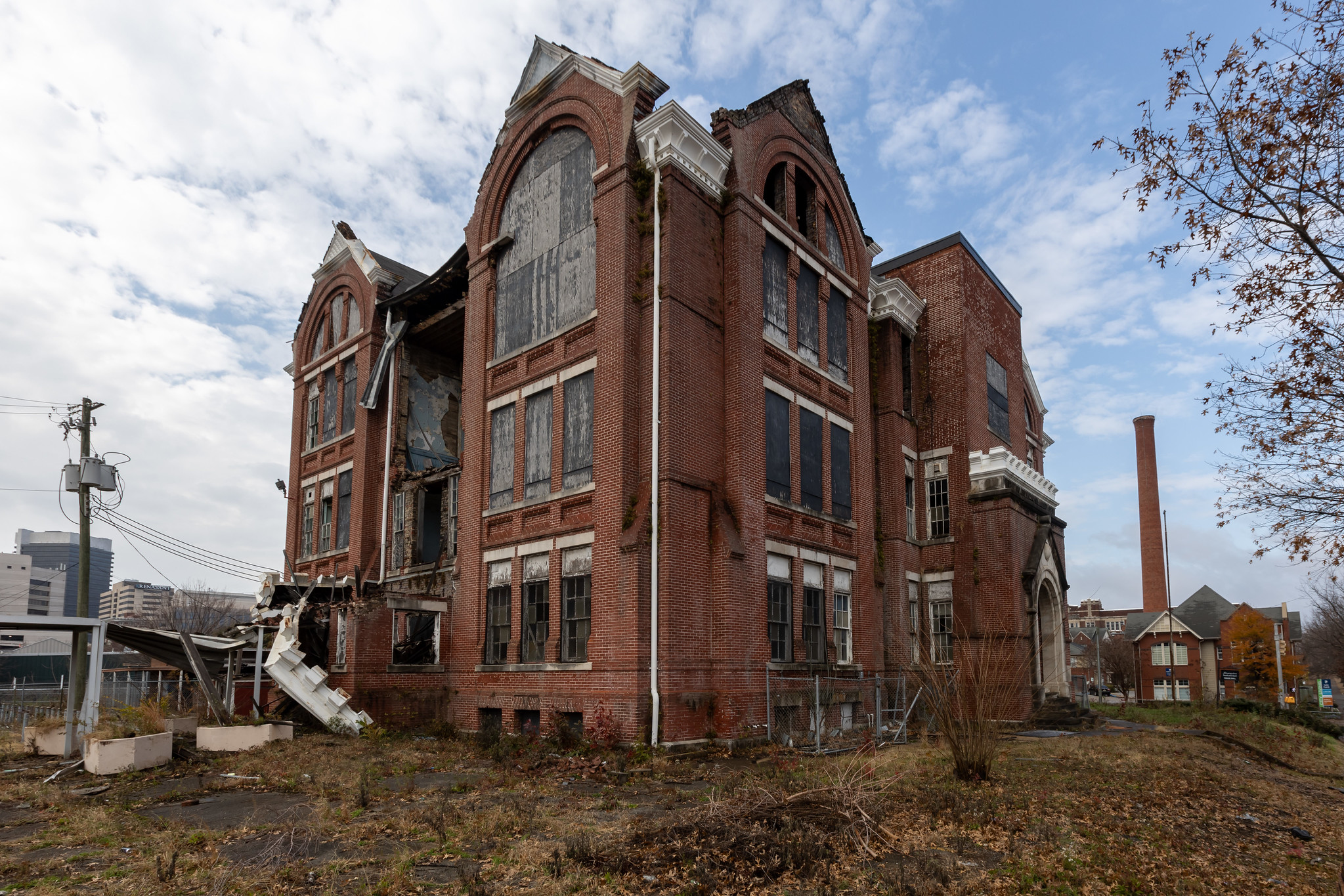
For more than a century, Powell School served generations of Birmingham students. A decade after its closure, on the evening of January 7, 2011, a massive fire erupted in the abandoned building. The blaze began on the third floor and was reported shortly after 9:00 P.M. Strong winds hampered firefighting efforts, but Birmingham Fire and Rescue Service brought the fire under control by approximately 10:30 P.M. The interior was gutted, the roof and upper floors collapsed, and the structure was left severely damaged.
In the aftermath, questions arose concerning ownership of the property. Because the building was no longer being used as a school, Barber Companies—the successors to the Elyton Land Company—initially argued that the title should revert to them. The city, in possession of the original handwritten deed, initiated a legal review. Soon afterward, Barber executed a quitclaim deed confirming the city’s ownership. It was also discovered that the Board of Education no longer insured the building, and the city’s policy provided only $350,000 toward repairs. Using those funds, a new roof was installed in October 2012.
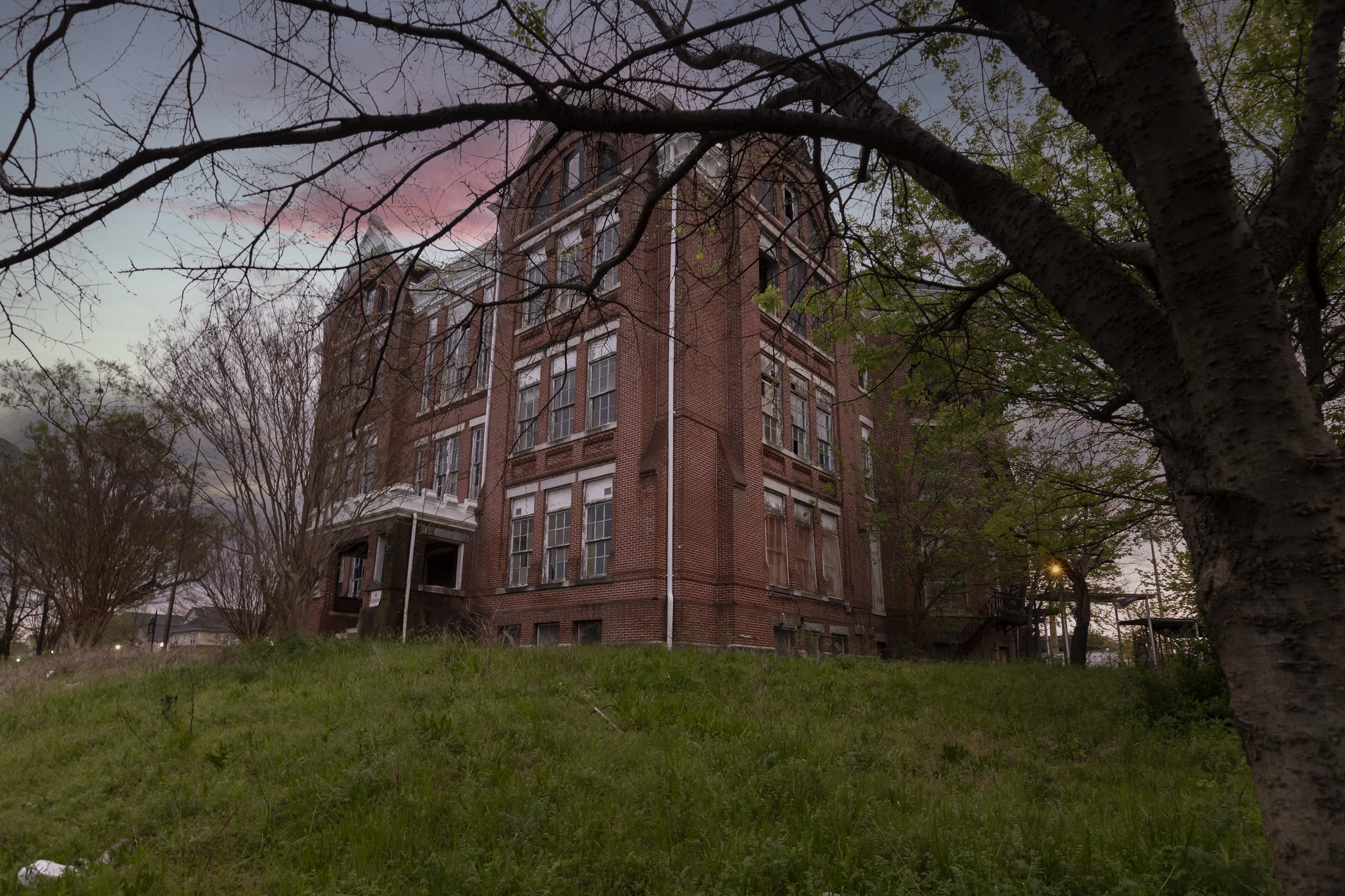
In October 2013, the Alabama Trust for Historic Preservation announced that an Atlanta-based developer had purchased the property with plans to convert it into apartments. The project advanced in 2015 with the award of a $3.7 million government loan, but no redevelopment ultimately occurred. Over the following decade, the building suffered significant additional damage from exposure to the elements. In 2023, the Birmingham City Council’s Economic Development and Tourism Committee unanimously approved a measure terminating the redevelopment agreement between the City of Birmingham and the Alabama Trust for Historic Preservation. A new joint proposal involving Harbert Realty, Sloss Real Estate, and Stewart Perry Construction, firms experienced in downtown historic preservation, is currently under development.


Thank you for reading. Please share the blog with your friends. I appreciate your support. You can find me on Facebook, Instagram, and TikTok. For more amazing, abandoned places, check out my photography books.
Discover more from Abandoned Southeast
Subscribe to get the latest posts sent to your email.

Thanks you so much for this post. I came to Birmingham in 1983 when the Red Mountain Expressway stopped in midair over the Goddwill building and have always thought how beautitul Powell School was that and the old fire station by the postoffice away intrigued me. I have wondered since the fire and every time I heard a new plan or drove by the place what was inside and what was being done to keep it stable for renovation. The same is to be said for the old Black Elks building and I was thrilled you got to photgraph it before it got destroyed by fire. Also the old power building by the Ensley bridge was alwaya building that intrigued me and ten I say you pictures right before it was leveled. I have enjoyed your posts and your books and have a list in the back of my mind of of other places that need your talents and I look forward to every post. Thanks you so much, Dennis
LikeLiked by 1 person
This school has definitely seen its fair share of deteriorations and damages over the years. Too bad it couldn’t stand the test of time.
LikeLike