Snow Hill Institute was founded in 1893 by Dr. William J. Edwards, the son of former slaves, as a private boarding school for African American youth in Wilcox County, Alabama. The school was established at a time when Alabama allocated a small amount towards the education of its Black children. Edwards was born on September 12, 1868, on the Ransom O. Simpson plantation, and raised by his paternal grandmother and an aunt, who saw him through a debilitating childhood illness. Originally named Ulysses Grant Edwards, his grandmother changed his name to William, and he later added James in memory of his grandfather.
After years of laboring in the cotton fields and working as a sharecropper, he managed to pay off his medical bills. On New Years Day 1889, at the age of 20, William J. Edwards entered the historic Tuskegee Institute under the direction of its founder Dr. Booker T. Washington. When he arrived, Edwards was unfamiliar with the use of a toothbrush or a knife and fork, yet he qualified for second-year classes in all subjects except grammar. For the first time in his life, he had three meals a day and a bed to sleep in. He worked on the Institute’s farm and listened each Sunday evening to Washington encourage his students to go back and uplift their home communities. William J. Edwards graduated from Tuskegee Institute in 1893, second in a class of 20.
After graduating from Tuskegee, Edwards decided that his native region needed a school. The Alabama Black Belt counties were home to more than 200,000 blacks, of whom more than 40 percent were of school age, but only one local school accepted blacks, and that one was private. Rural black schools were held in church buildings, with school terms lasting only 2-3 months out of the year. Edwards believed this situation to be deplorable, so he began his efforts to provide educational opportunities to children and young adults in the Snow Hill community.

In 1893, Edwards returned to Snow Hill and found R. O. Simpson deeply interested in the welfare of his people. Simpson had known Edwards since infancy and would frequently visit his grandmother while riding through his plantation. After discussing the idea of starting an industrial school on Simpson’s plantation, Edwards was given seven acres. He began teaching in a dilapidated one-room log cabin on the Simpson plantation. He had a class of three students in his first year, and his operating capital was fifty cents. The next year, Edwards built a two-room training building, hired two teacher aides, who happen to be fellow graduates of Tuskegee Institute, and had a student body of 150.
On June 15, 1895, two years after Edwards began teaching, the Colored Industrial and Literary Institute was incorporated. Nine years later, in 1904, the Board of Trustees of the Colored Industrial and Literary Institute, represented by President R. O. Simpson, petitioned the court to change the school’s name to Snow Hill Normal and Industrial Institute. Snow Hill Institute not only served Wilcox County and surrounding areas but also reached across the United States attracting students from southern and northern states. The school offered black children a comprehensive grade 12 liberal arts education, while also preparing young men and women for careers in industrial and vocational trades without funding from any religious or political organization.
William J. Edwards held various duties and appointments, including Secretary to the Board of Trustees, Chairman of the Financial Committee, Director of the Industrial Department, professor of mental and moral philosophy, and geometry teacher. Within 25 years, what started in a rented dilapidated log cabin with one teacher, three students, and 50 cents in savings had become 24 buildings on 1,940 acres, with 400 students and a property value of $125,000, according to a 1918 book by Edwards, “Twenty-Five Years in the Black Belt.”

William Edwards and his supporters increased the school’s property base beginning with an initial gift by Mr. R. O. Simpson of 100 acres. In 1905, 7 acres were purchased for $185 from S. E. Mathews. In February 1906, the school purchased 12 acres for $1,020 from Rebecca Crook. In November 1906, 122 acres were purchased for $1,449 from Mr. & Mrs. W. H. Holtsclaw. The couple were employed by the Snow Hill Institute. Mr. Holtsclaw served on the board as treasurer, as well as on the financial committee, and taught bookkeeping and physics. Mrs. Holtsclaw was the school copyist.
Local contributions and generous benefactors provided assistance for its operation. Philanthropist and businessman Julius Rosenwald donated to Snow Hill. Rosenwald established the Rosenwald Fund, which donated millions in matching funds to promote vocational and technical education. In April 1906, at the 25th anniversary of Tuskegee Institute, William Edwards delivered an address that interested Mr. Andrew Carnegie, and he gave the Snow Hill Institute $10,000.

In 1908, Mr. and Mrs. R. O. Simpson sold the Snow Hill Institute 3,200 acres of land for $30,000. The next year, in 1909, the Snow Hill Institute sold 1,817 acres back to R. O. Simpson for $10,000. Edwards wrote about the ordeal he endured buying the Simpson plantation in his book. To raise the necessary funds, he traveled North many times, using his great gift of speech to persuade rich whites to contribute. Though successful in many of these ventures and having made some lasting friends, Edwards also suffered great humiliation, rejection, and rebuke. Mr. Simpson recognized Edward’s efforts early in Snow Hill’s existence by supporting the school through donations of land and money. Throughout the history of Snow Hill Institute, a member of the Simpson family has had an appointment on the board to continue the family’s interest in the school.
Some of the land was used for farming, and to raise food for the boarding students, as well as pastureland for the cows. Much of the land was provided to the community who still lived in the old slave quarters on the Simpson plantation, as Edwards not only inspired to build a school, but also a community of Black property owners. Aside from the campus, the rest of the property was vast timberland designated for insurance of the school’s survival.

Snow Hill Institute offered excellent academic and vocational programs. Edwards was an advocate of the cultural arts – especially music. He hired a Selma native and fellow Tuskegee graduate Henry A. Barnes to head Snow Hill’s music department. Mr. Barnes, who did further study at The New England Conservatory, appointed Mrs. Alberta Simms to the faculty. Together they set a high standard of musical tradition at Snow Hill by introducing and performing works by black composers Harry T. Burleigh and Nathaniel Dett, along with the great European composers.
One of Simms’ students was Alberta Grace Edwards, daughter of the founder. Her musical talent was observed early and as a teenager she spent several summers studying piano at the New England Conservatory of Music in Boston. Alberta Grace Edwards graduated from Snow Hill Institute and continued her education at Fisk University and Alabama State University. Her first job was teaching music at Snow Hill Institute in the 1920-21 school year.
While attending summer school at Fisk University in 1921, Alberta Edwards married Arnold W. Lee, a Tuskegee graduate who came to Snow Hill in 1918 as an electrical engineer. Seven children were born into this union. Edwards not only taught her own children piano but also shared her gift with children of the Snow Hill community. In daily assemblies and Sunday services the students stayed in touch with their ancestral roots by singing the old spirituals yet were also familiar with many of the Protestant hymns. The campus atmosphere was one of learning and achieving pride, especially in the accomplishments of African Americans who made notable contributions in all fields despite overwhelming racial discrimination.
A majority of the more than two dozen early campus buildings that made up the Snow Hill Institute were built by students. In 1911, a fire destroyed three campus buildings: Messenger Hall, the dining room and girl’s dorm, Simpson Hall, the girl’s dormitory, and the commissary building. Immediately, a pamphlet titled Snow Hill Institute: A Light in the Black Belt was published by concerned citizens and endorsed by “prominent citizens of New York, Boston, and other sections of the country” in an attempt to encourage donations and support for the school.
Edwards was especially concerned about the failure of blacks to become property owners. When Edwards started Snow Hill, blacks owned a total of just 20 acres of land in the area. Most were tenant farmers who leased their lands and then borrowed against their crops to purchase seed and equipment. If their crops failed or they managed their funds poorly, families sank further into debt to purchase provisions for the winter, and the cycle began again in the spring. One way of promoting his philosophy was by selling parcels of land owned by Snow Hill Institute to families to develop and farm. Deed records from 1919 to 1944 contain some 42 entries of lands conveyed by Snow Hill Institute to private individuals. Another interesting fact is that Snow Hill held the mortgages for these properties.
Edwards also formed the Black-Belt Improvement Society for “the general uplift of the people of the Black Belt of Alabama; to make them better morally, mentally, spiritually, and financially.” Open to “anyone of good moral standing desiring to better his condition,” the society established cooperatives for purchasing supplies and foodstuffs that could not be grown at home; encouraged residents to practice thrift and to purchase and improve their own homes; disseminated information on farming, soil conservation, and the diversification of crops; and hosted discussions “relating to the general welfare of the race.” To advance from the first level of membership, one had to own a little property (three chickens and a pig); one achieved higher levels of status by acquiring more property.
By 1918, Snow Hill Institute consisted of 1,940 acres of land, 24 buildings with an enrollment between 300 and 400 students each year. Graduates of the school began to establish similar enterprises throughout the South. That same year, Edwards reported that black landowners in the Black Belt area held more than 20,000 acres and that they were constructing better homes, schools, and churches. Snow Hill Institute operated under Edwards’ direction until 1924 when he was forced to retire as principal due to ill health. He continued to travel, promote the institute, and accept donations on its behalf until he died in 1950. Dr. William J. Edwards is buried on the Snow Hill campus next to the main school building. After Edwards’ retirement, Snow Hill Institute combined with the State of Alabama in 1925 and continued to operate as a segregated public school.
In 1928, the State of Alabama purchased 10 acres in the heart of the Snow Hill Institute campus to construct a county school. Snow Hill Institute conveyed the property to the state for $1. Soon after, Wallace Buttrick Hall was constructed and served as a classroom and office building. Wallace Buttrick Hall, built in 1930, now stands where Simpson Hall was located and is designed by Robert Robinson Taylor, the first black architect to graduate from the Massachusetts Institute of Technology, who also designed most of the pre-1930s buildings at Tuskegee Institute and the Prince Hall Masonic Lodge in Birmingham. The Vocational Building, completed in 1926, now stands where the Training Building – Elementary School was once located.
In 1968, Mrs. Alberta Edwards Lee returned to Snow Hill and established the W. J. Edwards Memorial Library. The school gradually declined after the Edwards’ administration. The trades were discontinued and several buildings burned including two dormitories. The Wilcox County Board of Education controlled the academic programs at Snow Hill Institute from 1928 to 1973. After the desegregation of the Wilcox County school system, Snow Hill Institute was closed in 1973.
In 1979, Dr. Edwards’s granddaughter, Consuela Lee went door to door in the Snow Hill community to poll the residents on whether they wanted to see a school in their community. When the majority voted yes, she left her teaching job at Norfolk State University to reopen her grandfather’s school as a performing arts center. Ms. Lee had vowed since the age of 12 that she would one day return home to teach in the Snow Hill community. She was born on Nov. 1, 1926, in Tallahassee, Florida, to Arnold W. and Alberta G. Lee. Her mother was the second child of Snow Hill founder William J. Edwards and Susie V. Edwards. Lee’s father was a cornet player and band director at Florida A&M. Her mother was a classical pianist and teacher. When she was 3 years old, she moved to Snow Hill and began to play the piano. Consuela Lee became a child prodigy, playing classical music such as Chopin’s etudes.

A 1980 title search of Snow Hill Institute’s property showed 1,465 acres managed by a board of trustees. The same year, the National Snow Hill Institute Alumni Association was formed to preserve the legacy of William J. Edwards and to preserve and conserve the buildings and grounds of Snow Hill Institute. Since that time, yearly gatherings have been held at the school. In the summer of 1980, Consuela Lee formed the Springtree/Snow Hill Institute for the Performing Arts, which operated out of Wallace Buttrick Hall and the W. J. Edwards Memorial Library. The Little Children’s School, founded in 1981, operated out of the circa 1958 cafeteria building.
Ms. Lee’s students, particularly a group of vibraphonists called Bright Glory, toured college campuses, film festivals, and churches around the country to perform her arrangements of popular jazz selections written by Duke Ellington and other famous jazz composers. They appeared in 1988 on WABC’s “Like It Is” TV show hosted by Gil Noble in New York City. The art institute continued to run until 2003 when Lee’s declining health caused her to close down the school.
From 1980 until 2003, Snow Hill Day Celebrations included musical programs that attracted the Alabama community, Snow Hill alumni, and supporters from throughout the country. These programs were carried out on shoestring budgets, mainly small grants. In 1993, Snow Hill Institute celebrated its 100th anniversary to commemorate the founding of the institution and to honor memory of its founder William J. Edwards, and his impact on the advancement of African Americans in Wilcox County, the State of Alabama, and the nation. Film director Spike Lee attended the centennial celebration for the rural school founded by his great-grandfather. Lee told news outlets that he hoped to make a film about the creation of the Snow Hill Institute by his ancestor, William Edwards. Lee’s family were among some 300 people in attendance honoring the institute.
The Alabama Historical Commission cited Snow Hill Institute as a significant landmark in 1981. This recognition led to the school being added to the National Register of Historic Places in 1995 as a historic site due to Ms. Lee’s efforts to reopen the school. Of the original 27 buildings, only half a dozen survives today. They range in architectural style from Queen Anne to Craftsman and include five teachers’ cottages, and the library. In September 2013, the former home of William J. Edwards burned to the ground. Edwards’ grandson, Donald Stone, who was living there at the time, was not hurt. Plans are to rebuild the structure and to create an institute for the study of the rural school movement on the grounds of Snow Hill Institute.
In 2016, four men broke into the Snow Hill Institute, smashed windows and vandalized the school. A man who lives nearby heard the commotion at the school and went to investigate. After getting the tag number off a truck parked at the school, he went to a nearby neighbor’s house and called the police. The suspects told police they were ghost hunting. The group caused thousands of dollars in damages to the school. Two juveniles and two adults were arrested and charged with burglary and criminal mischief.
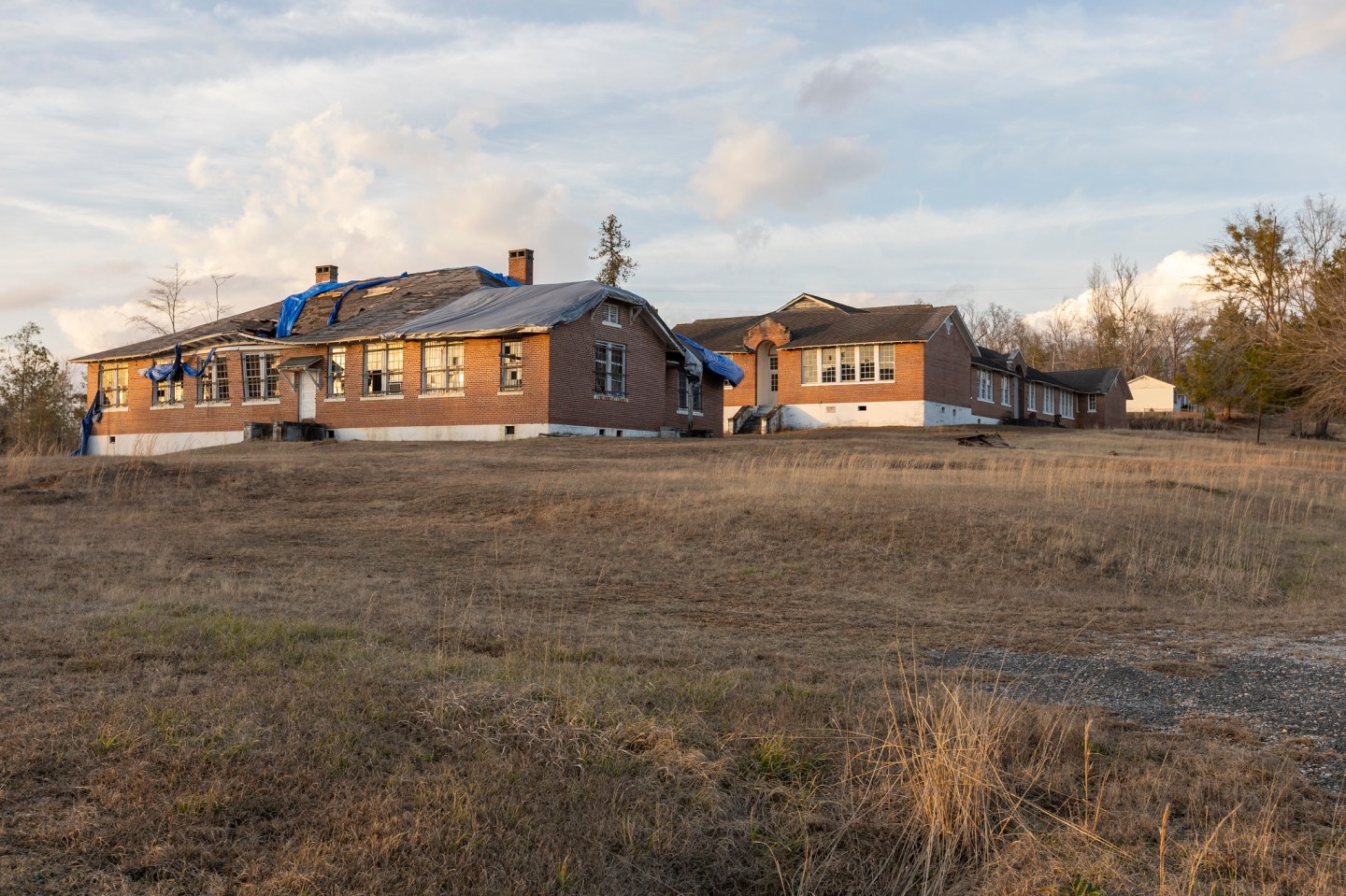
Today, there is not much left of Snow Hill Institute. Half a dozen vacant buildings punctuate the overgrown landscape, evoking memories spanning more than a century. Several alumni still live in Snow Hill near the abandoned school and act as caretakers of the property. In recent years, severe storms have damaged the roofs on the remaining buildings. While there has been discussion regarding the preservation of the school, minimal action has been taken to safeguard the buildings from further deterioration.


Thank you for reading this blog! Please share it with your friends. I appreciate your continued support. You can connect with me on Facebook, Instagram, and TikTok. Explore my collection of photography books to discover more incredible, abandoned sites throughout the Southeast.
Discover more from Abandoned Southeast
Subscribe to get the latest posts sent to your email.

My name is Freddie C. Howard I an Grad of Monroe County Training School/J. F. Shields Beatrice AL. 1966.
I played music concerts and for the Proms in The MCTS/JFSHIELDS Band 1966 under the Band direction of Mr. Bob Crowford. Travel to Snow Hill Institute many time as a high school musician play the Bflat Tennor Sax.
LikeLike
It is such a shame that the building couldn’t be reused and loved again. I really loved learning the history of this building and land. Thank you for sharing.
LikeLike
Is it for sale
LikeLike