
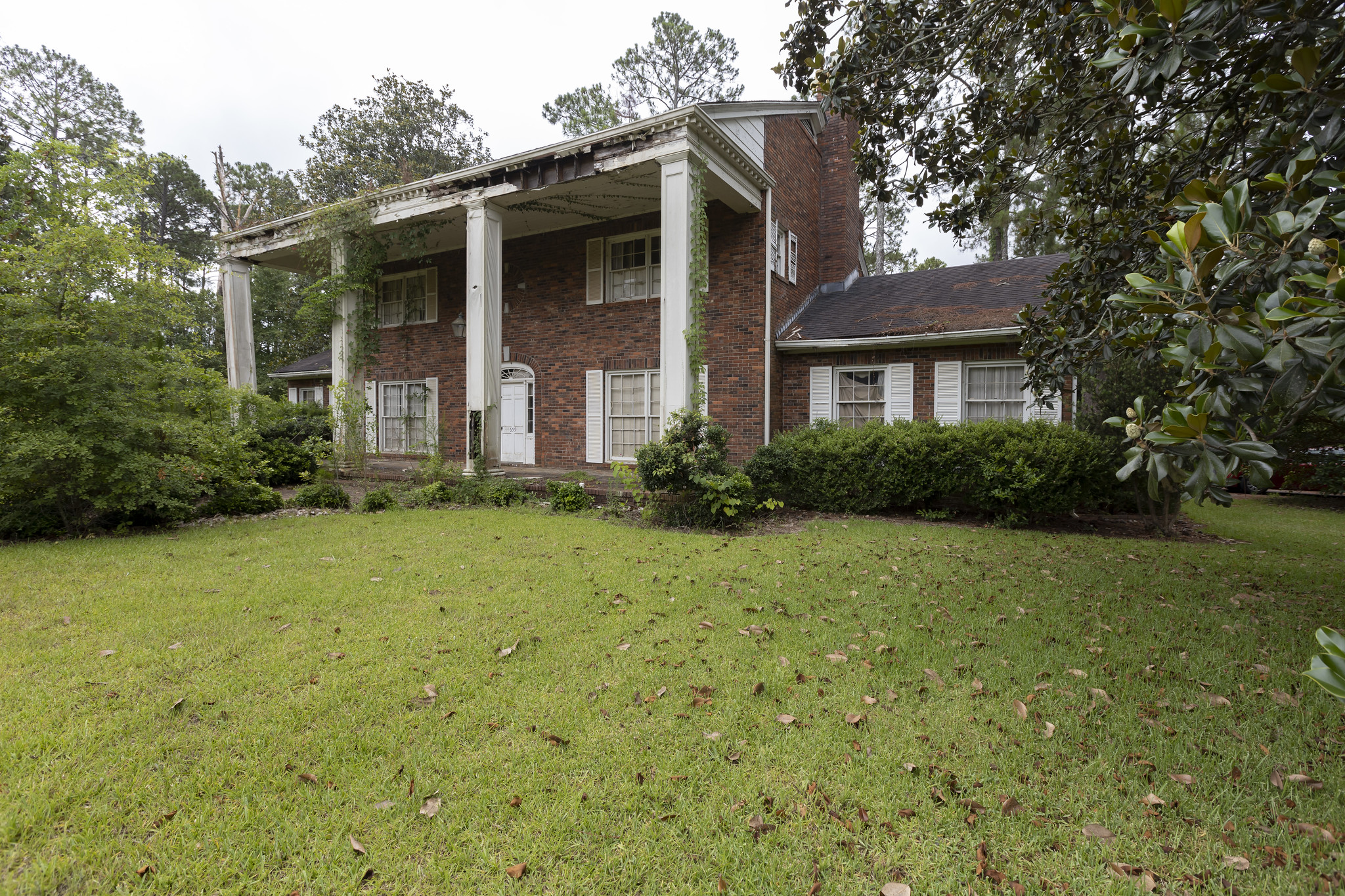
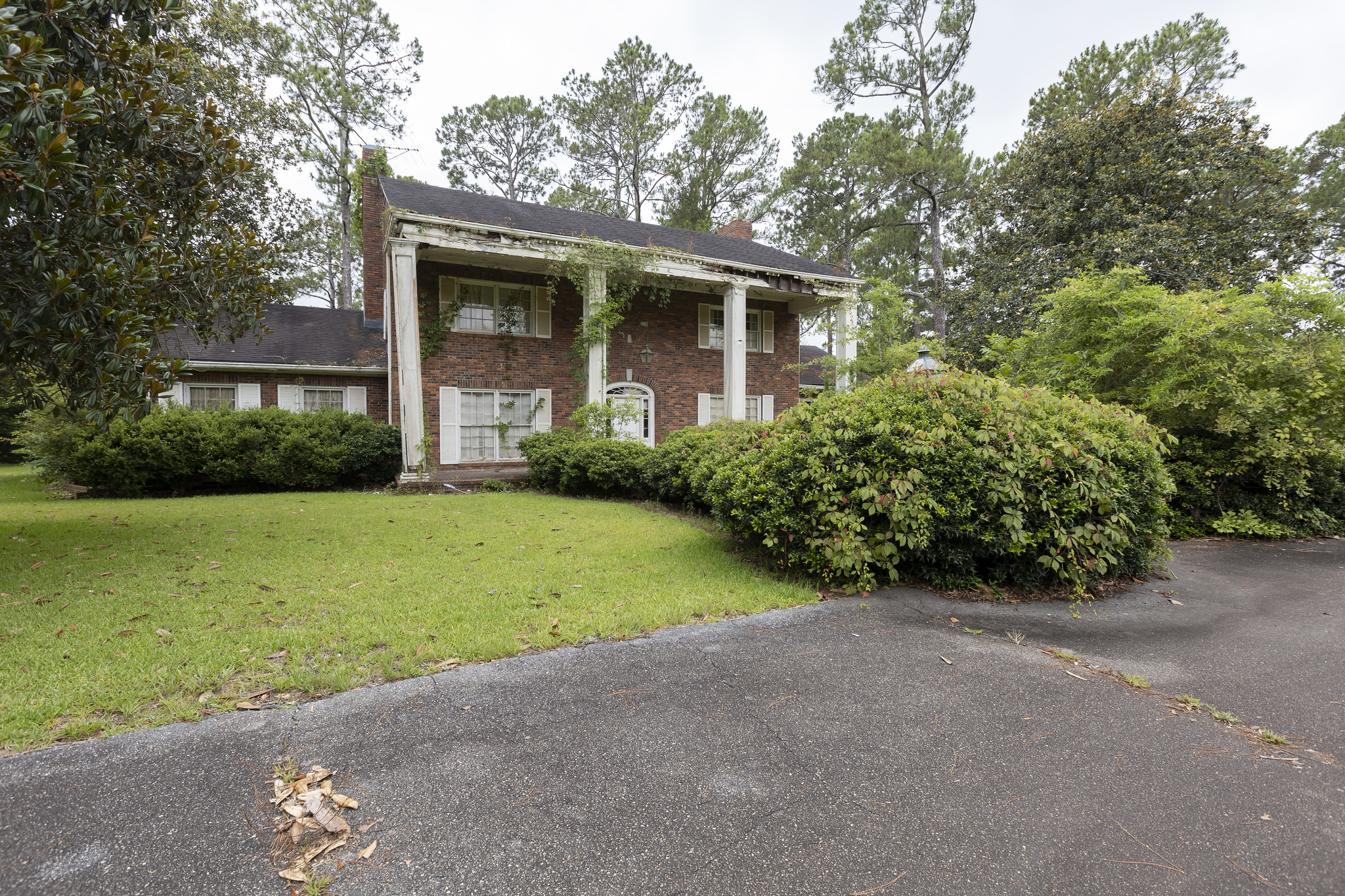
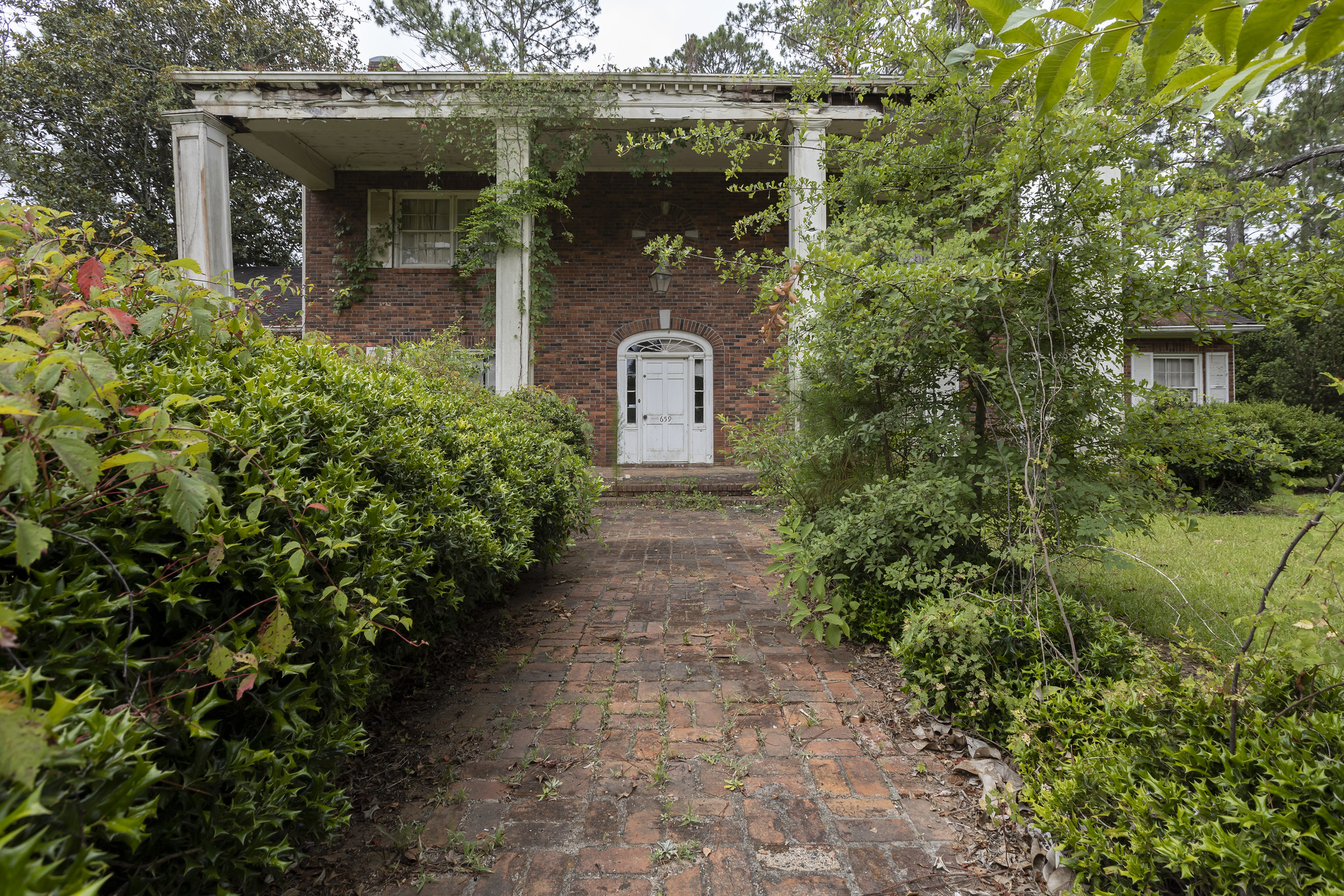
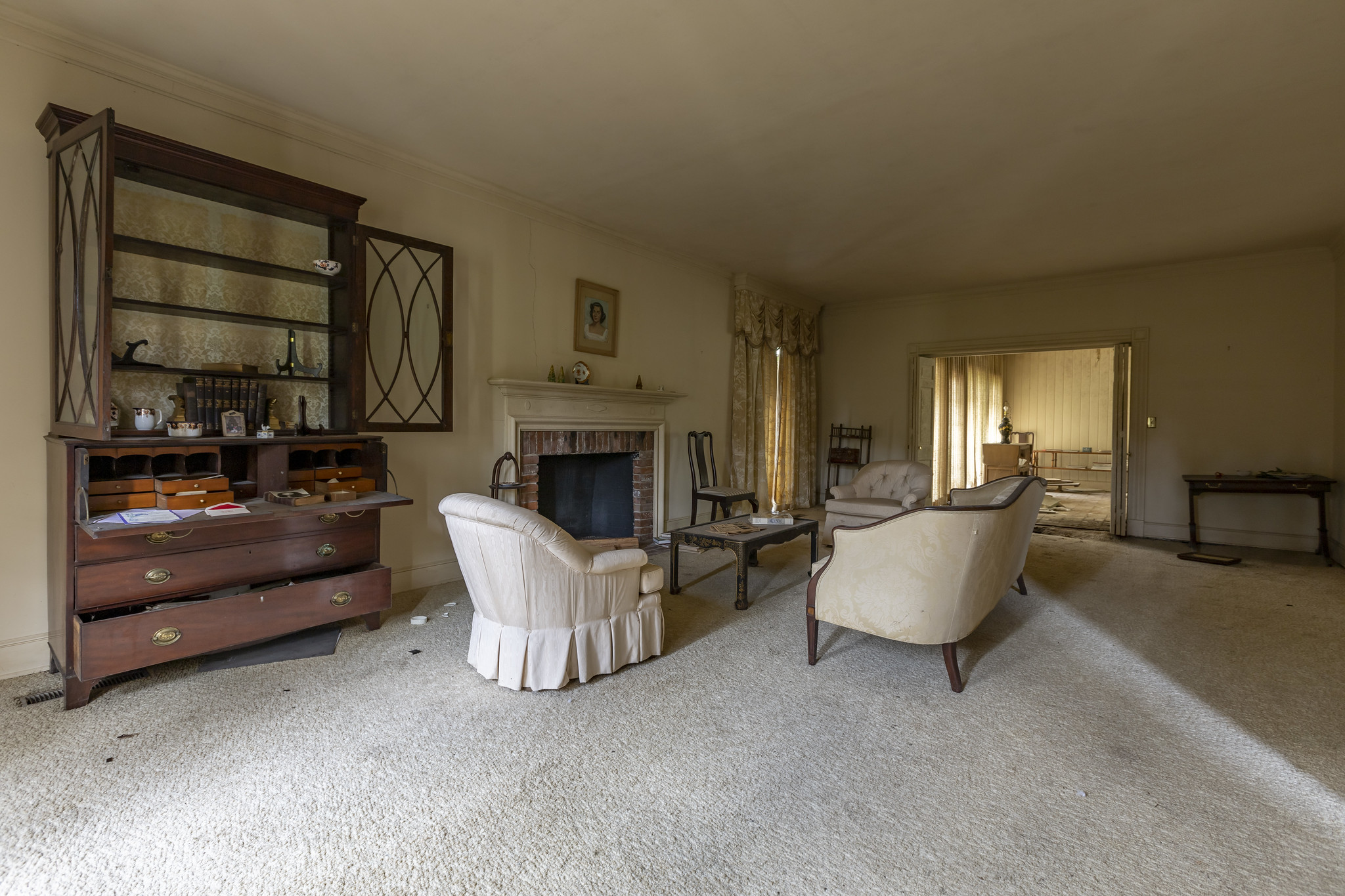
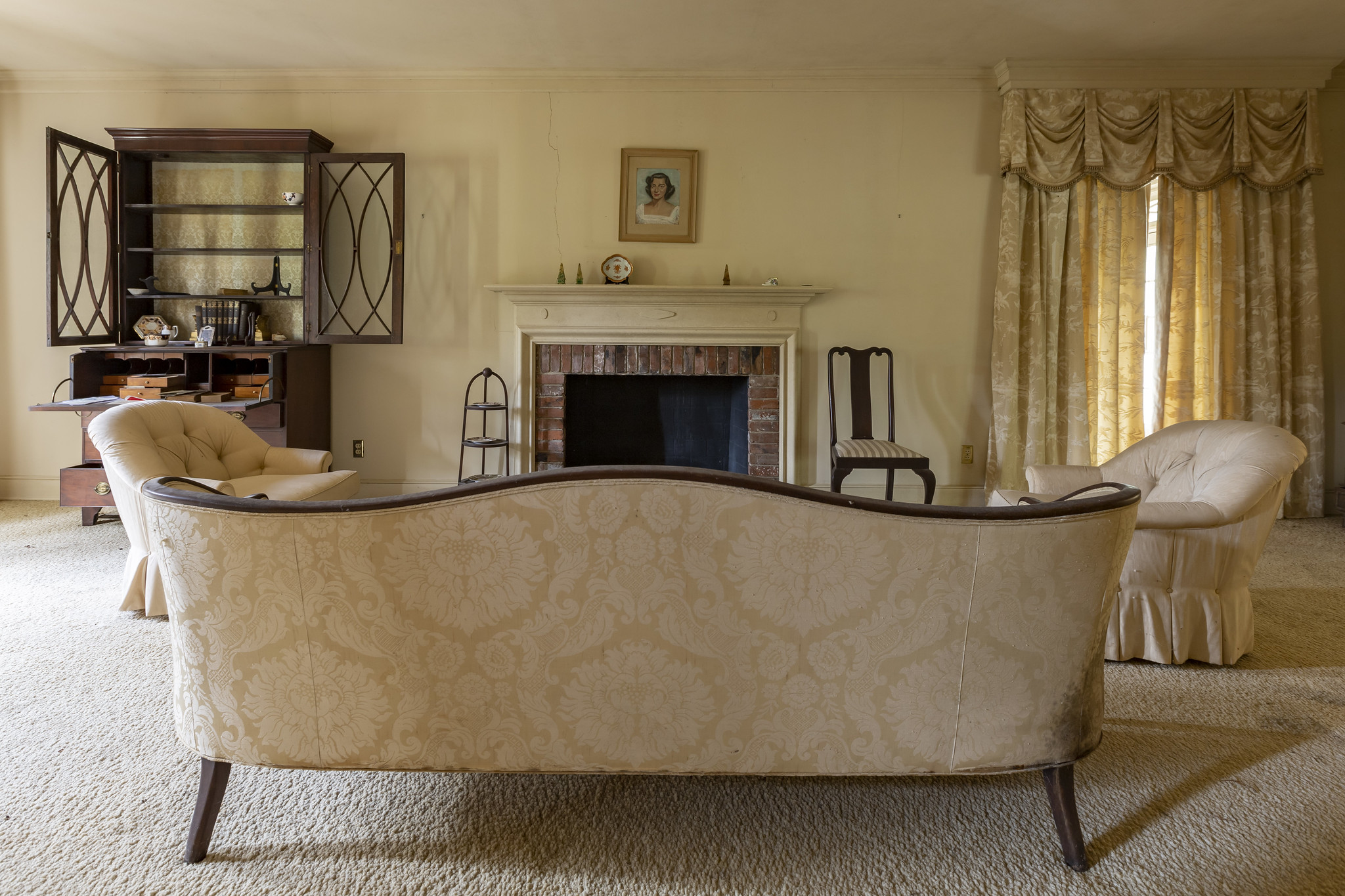
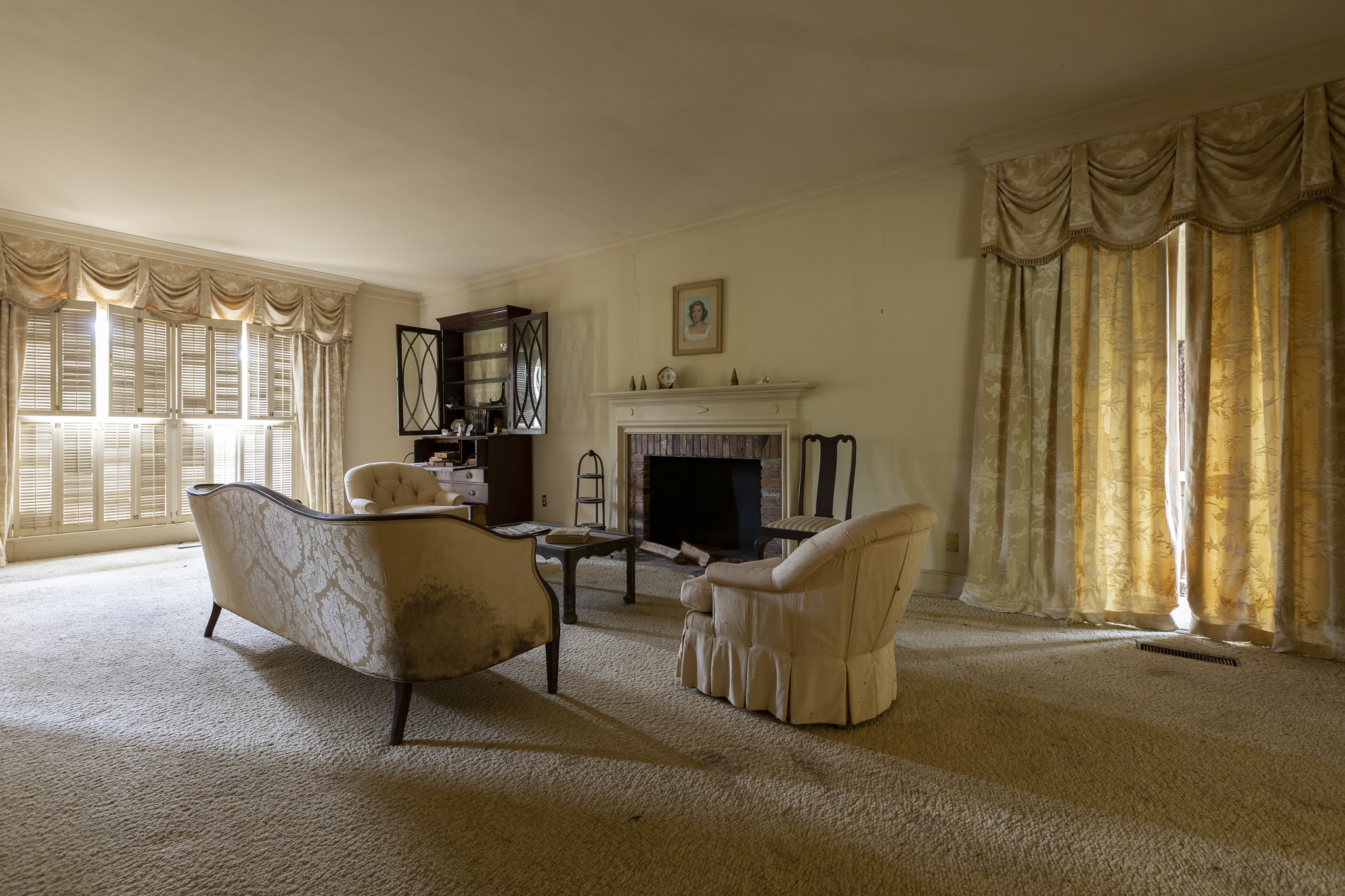
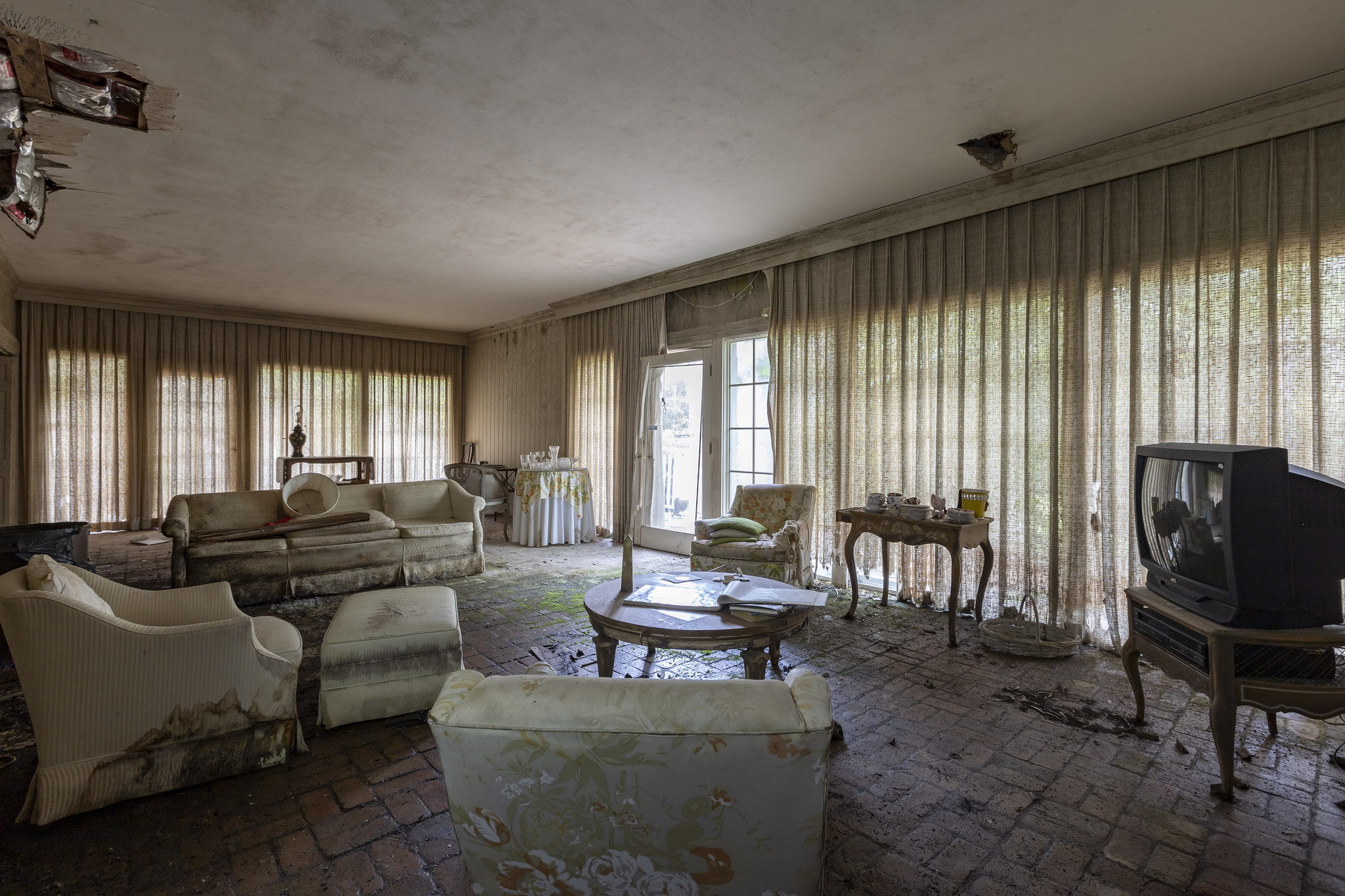
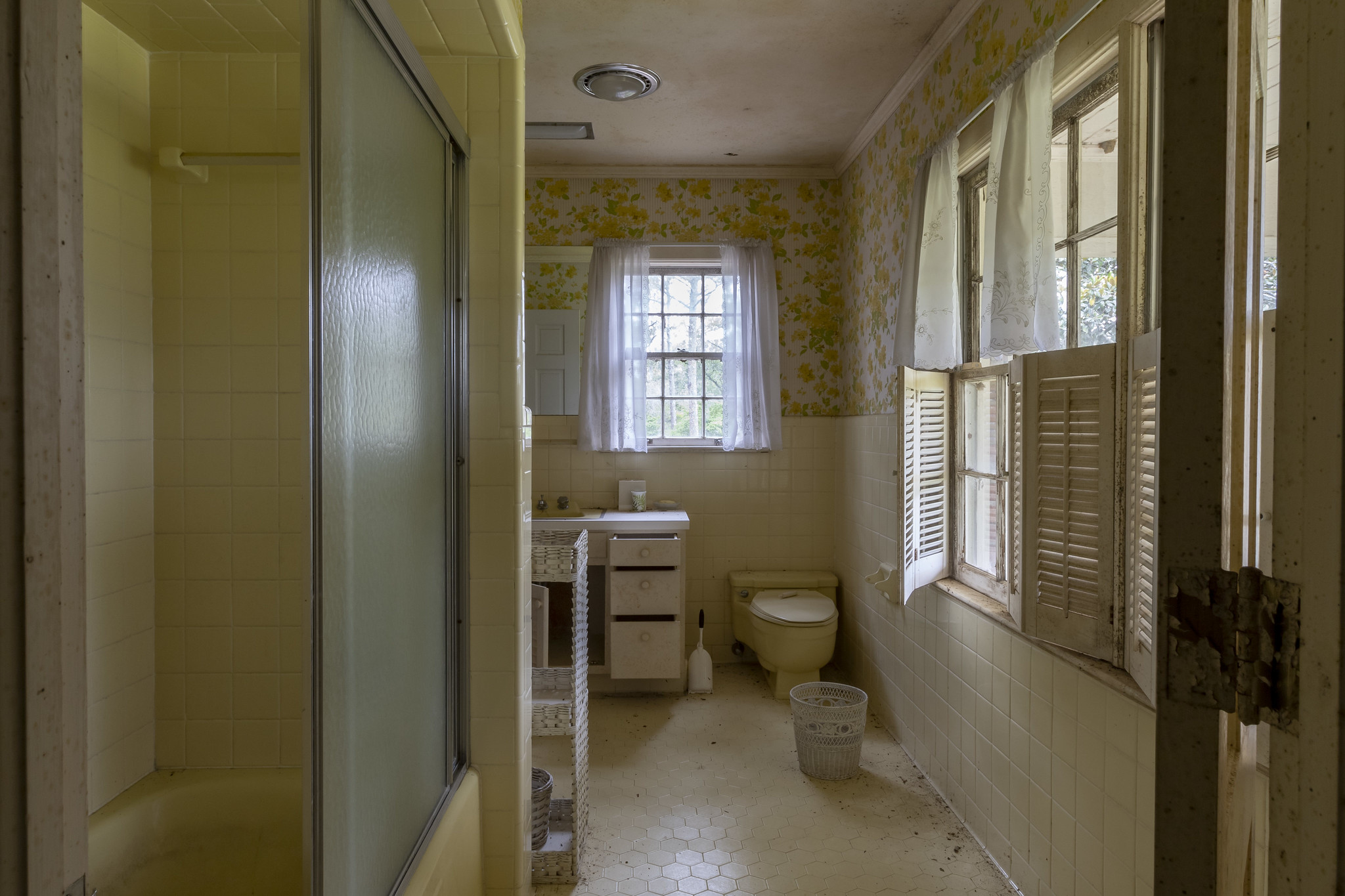
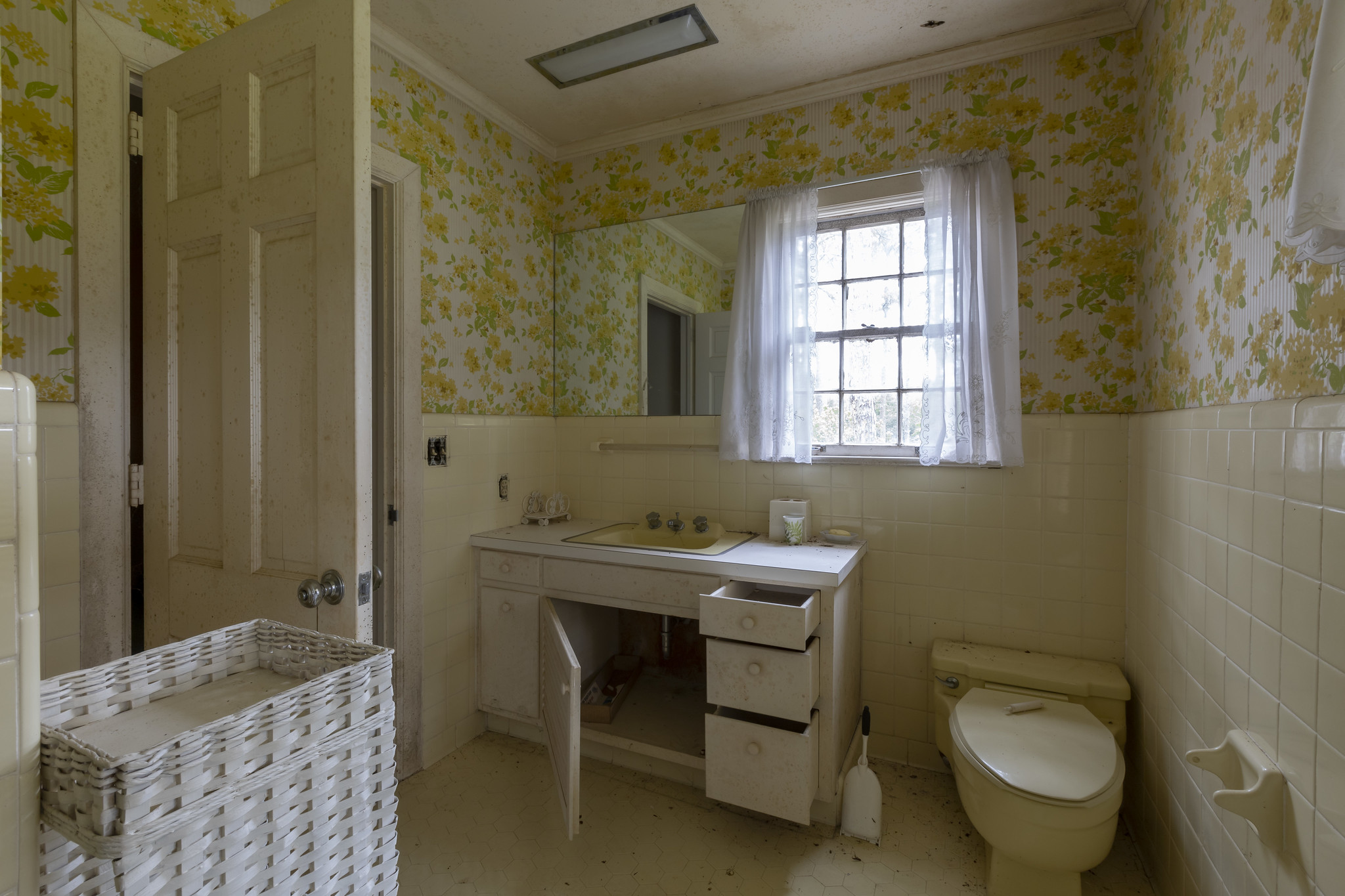
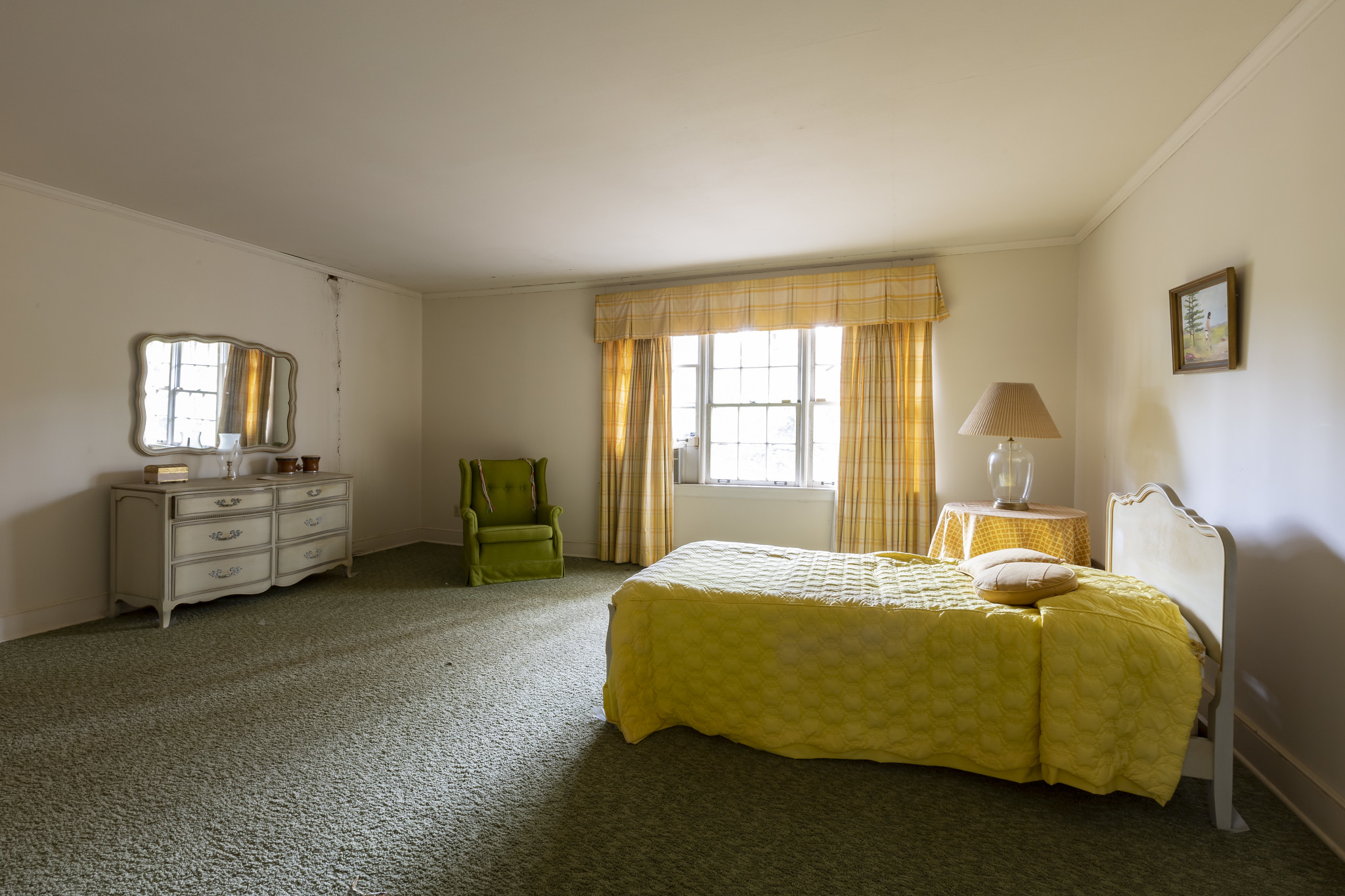
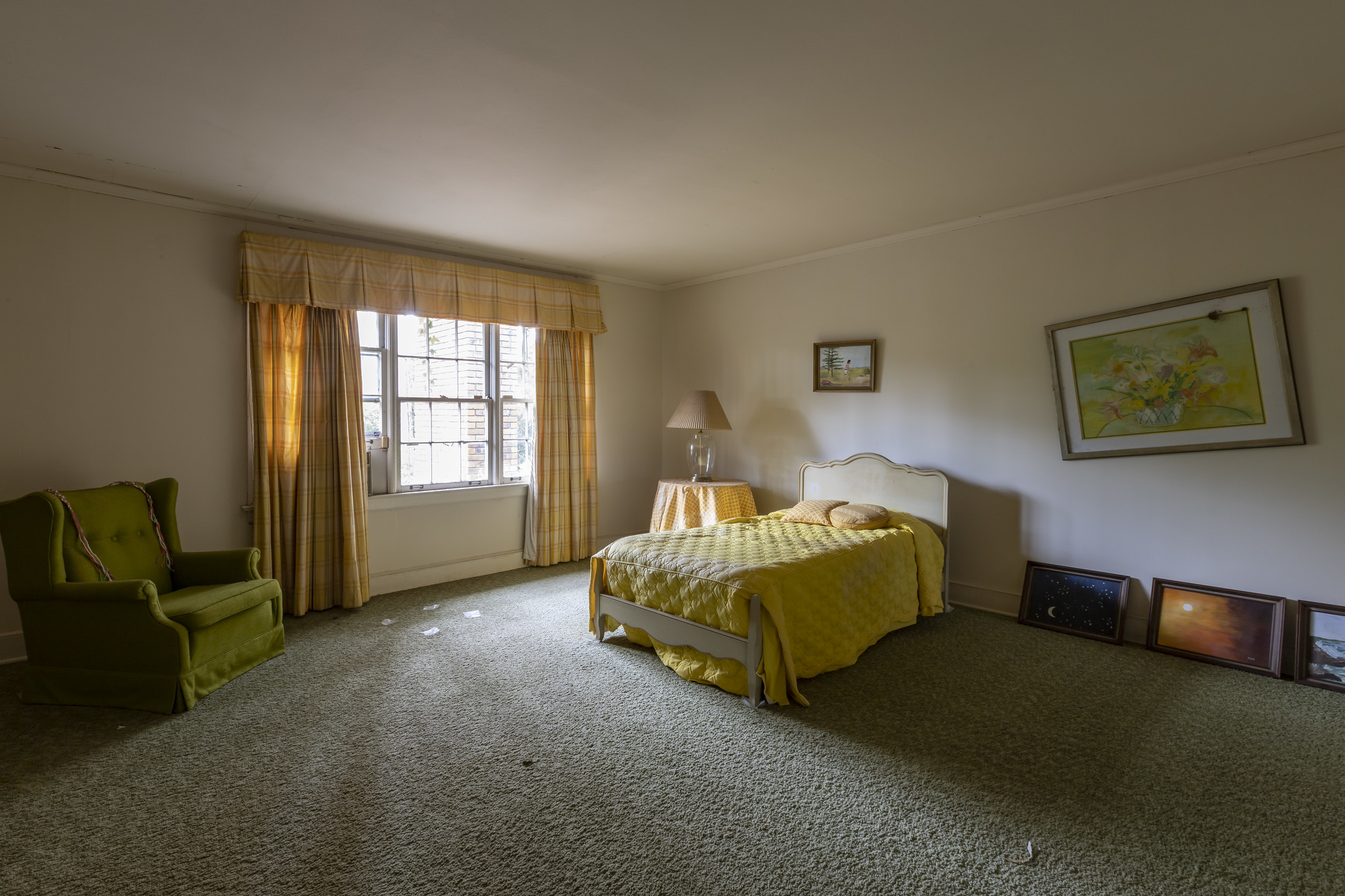
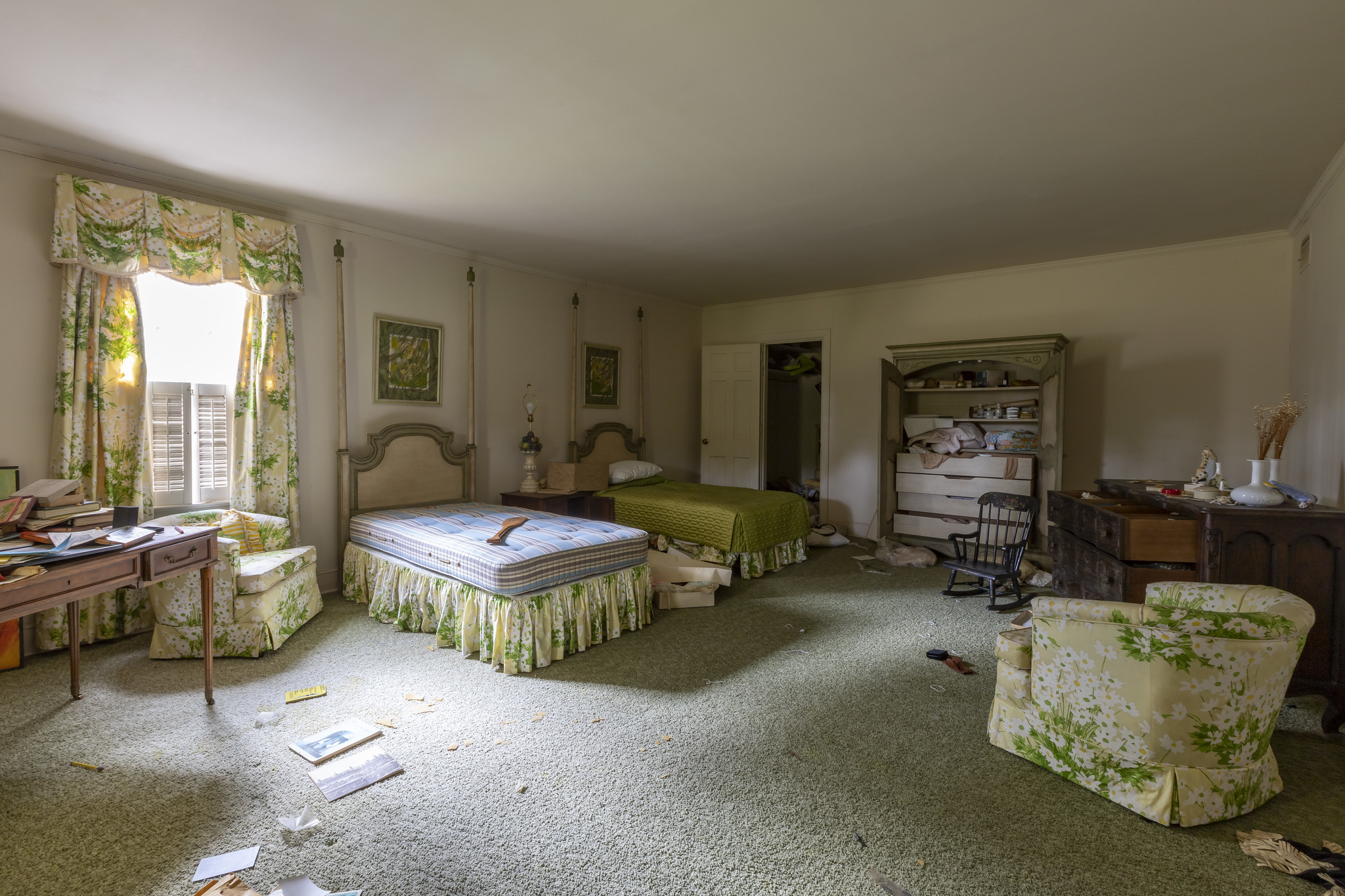
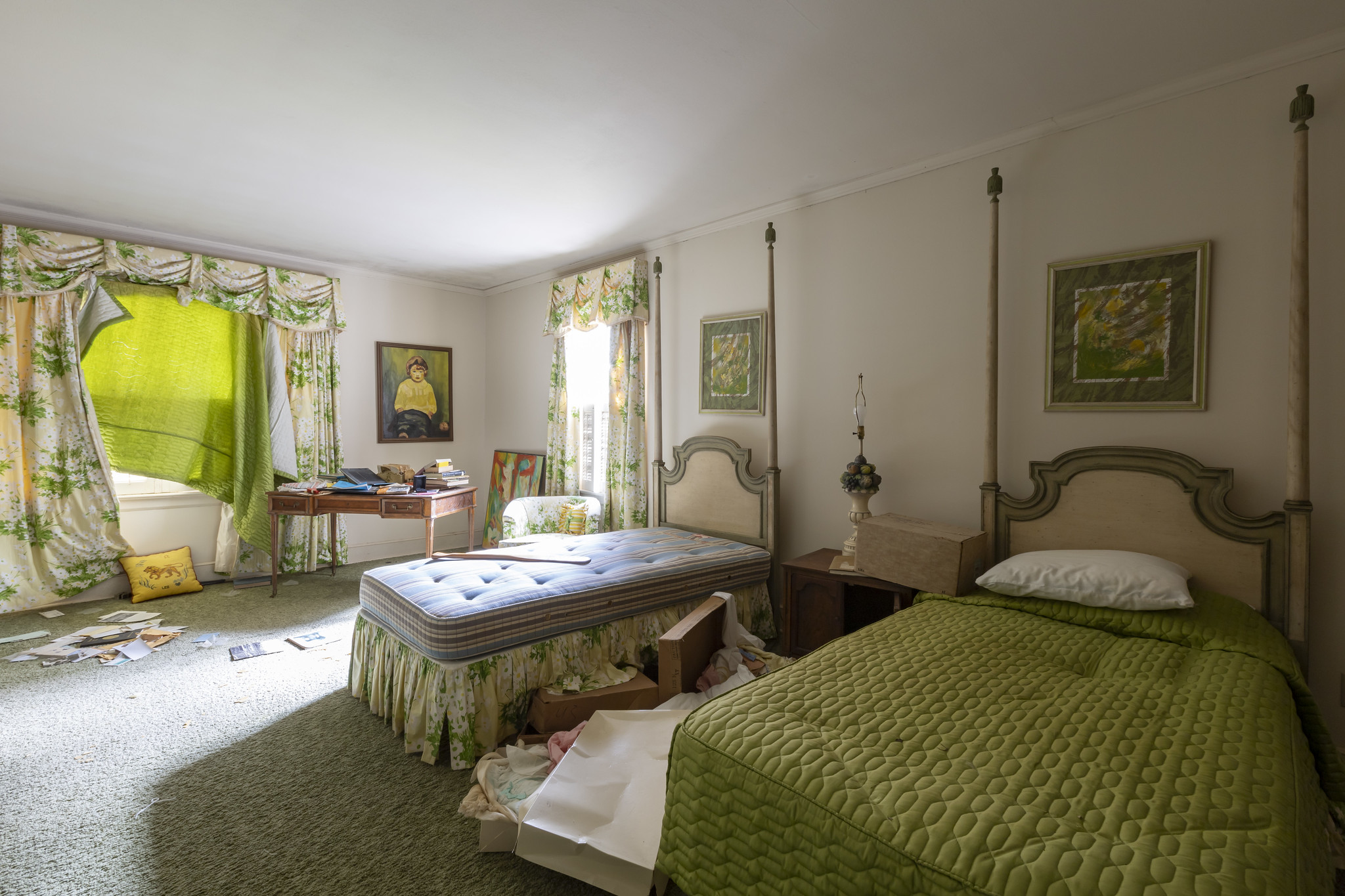
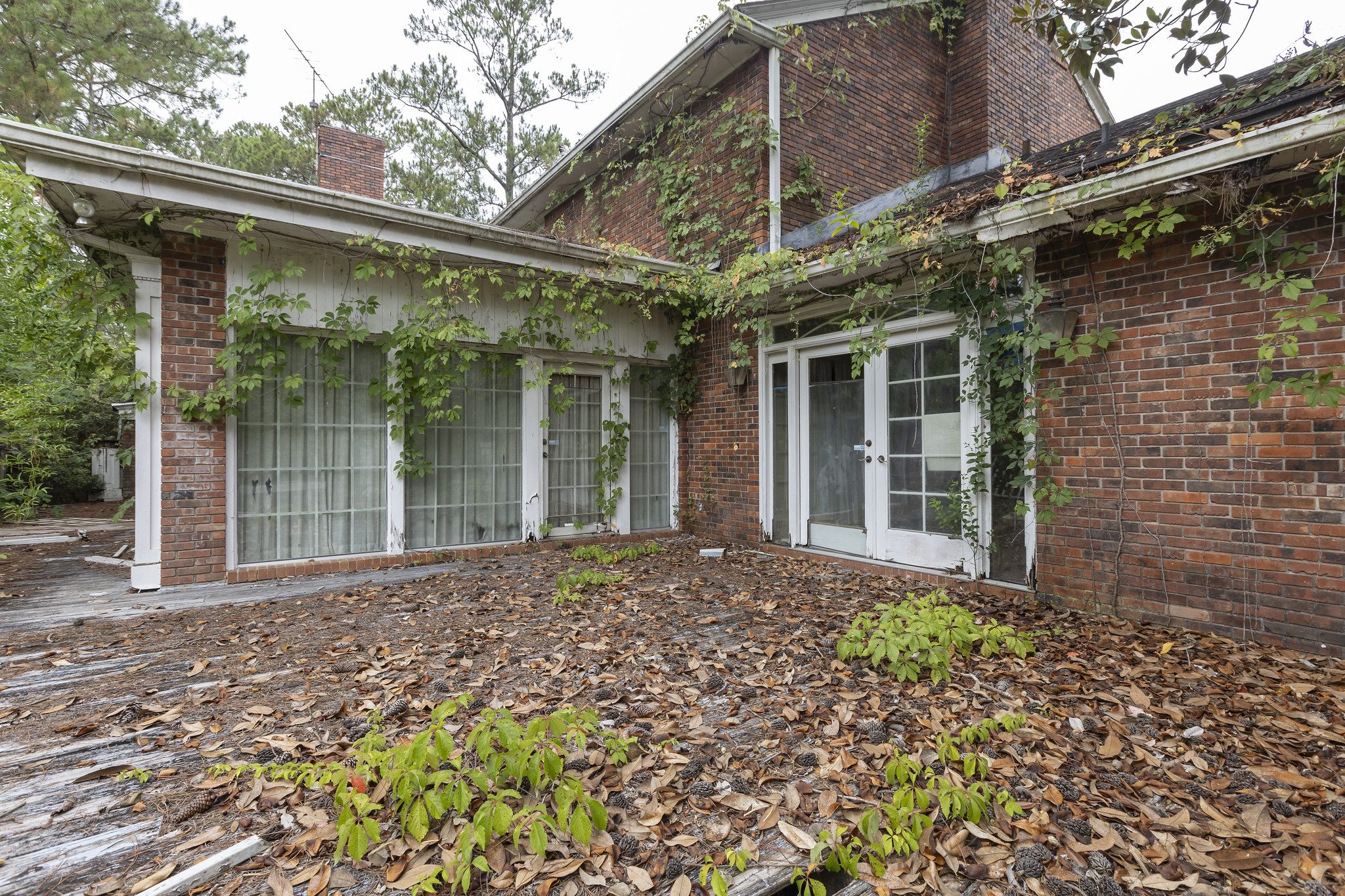
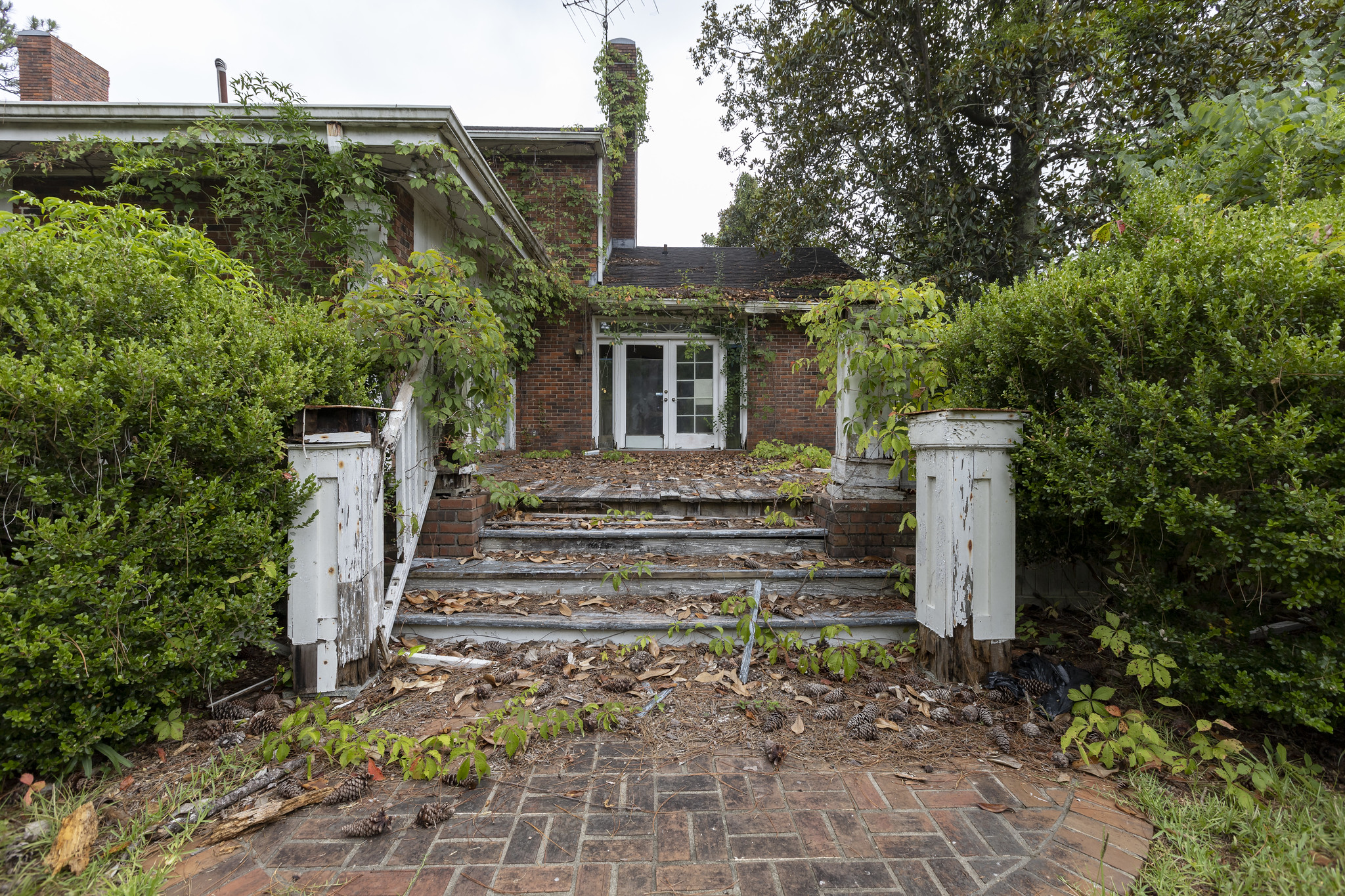
According to several long-time residents of Dawson, Georgia, this 4,200-square-foot mid-century home was built in 1962 for businessman and politician Curtis Dixon Oxford. He owned a Gulf Oil distribution firm, several service stations, and a 400-acre farm. He was also the former president of the Bank of Dawson. Oxford was born on his father’s farm across the road from his home. He received his formal education at Dawson schools, Georgia Military Academy at Milledgeville, and North Georgia College at Dahlonega. His ambition as a young man was to be a farmer, but he loved politics, which led to his position as a state leader. C. D. Oxford and his wife enjoyed playing golf and practicing putting on the spacious lawn of their brick home. Oxford served in the Georgia Senate in the 1950s, serving in the 11th Senatorial District including Clay, Randolph, and Terrell counties. He also chaired the State Highway Board under Gov. Herman Talmadge from 1948-1950 and was a member of the board thereafter until he resigned in 1955. C.D. Oxford later sold the property to the Maloof family.
Aziz Daher Maloof was born in Lebanon in 1892 and immigrated to the United States at the age of 19. After coming to America, A. D. Maloof moved to Atlanta and later relocated to Dawson in June 1914 where he founded Maloof’s Department Store which steadily grew through the years. The patronage he received enabled him to extend his operations to become Dawson’s largest and most up-to-date mercantile and ready-to-wear establishment. A second branch store was opened in Cuthbert. A. D. Maloof married Salina Saliba Maloof and the couple had three children, two girls and a boy. Their only son, Alfred Aziz Maloof, was born on April 28, 1915.
After graduating from Georgia Tech in 1936, Alfred Maloof returned home to Dawson to work at his family’s department store. While his father was away on business, Alfred ran Maloof’s with his mother. Maloof’s Department Store was considered the heartbeat of Dawson and was the only store around to offer charge accounts. The current store located in downtown Dawson was opened in the 1960s and included roughly 10,000-square-feet. The left side of the building was subleased to a grocery store and the right side housed the family’s department store. As a young adult, Alfred followed in his father’s footsteps and became a well-known figure in Dawson. In 1949, Alfred Maloof was elected chairman of the Merchant’s Association. He also got married and had four daughters around this time. Sadly, he lost his wife to cancer in 1953.
Alfred married his second wife, Mary Azar Maloof, in 1955. The following year, the couple welcomed their only daughter, Patricia, into this world. Before meeting Alfred, Mary attended the University of Georgia and graduated from Agnes Scott College in 1945 with a bachelor’s degree in economics. She had a pioneering banking career with American National Bank in Atlanta. Quite a tastemaker, her innate sense of style and grace was evident to everyone who met her. She worked as Alfred’s partner at Maloof’s Department Store in Dawson. Mary had a strong business acumen and enjoyed building the company and taking frequent buying trips with her husband. Aziz D. Maloof died in 1973, and left the family business to his son. Together, Alfred and Mary continued his father’s legacy, creating a special community center where friends and neighbors from surrounding counties came to shop and visit.
Their home was next door to the Dawson Country Club. Alfred was a charter member, past president, and served on the board of directors. He also served as president of the Terrell County Chamber of Commerce and was a member of the Double Tree Country Club of Albany. Alfred Maloof was also a member and past president of the Dawson Rotary Club where he received the Paul Harris Fellow Award. The couple retired and closed Maloof’s Department Store in 1989.
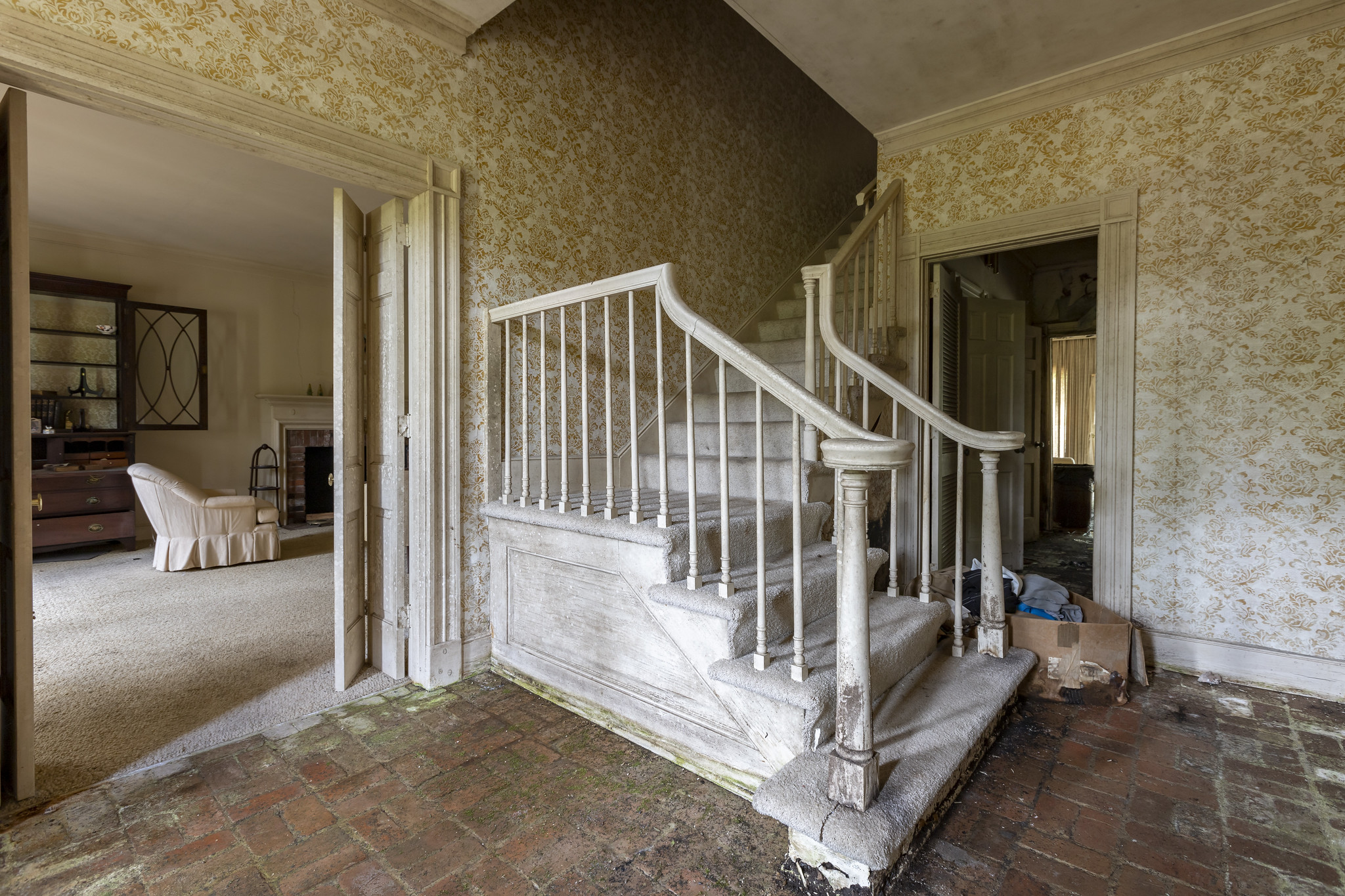
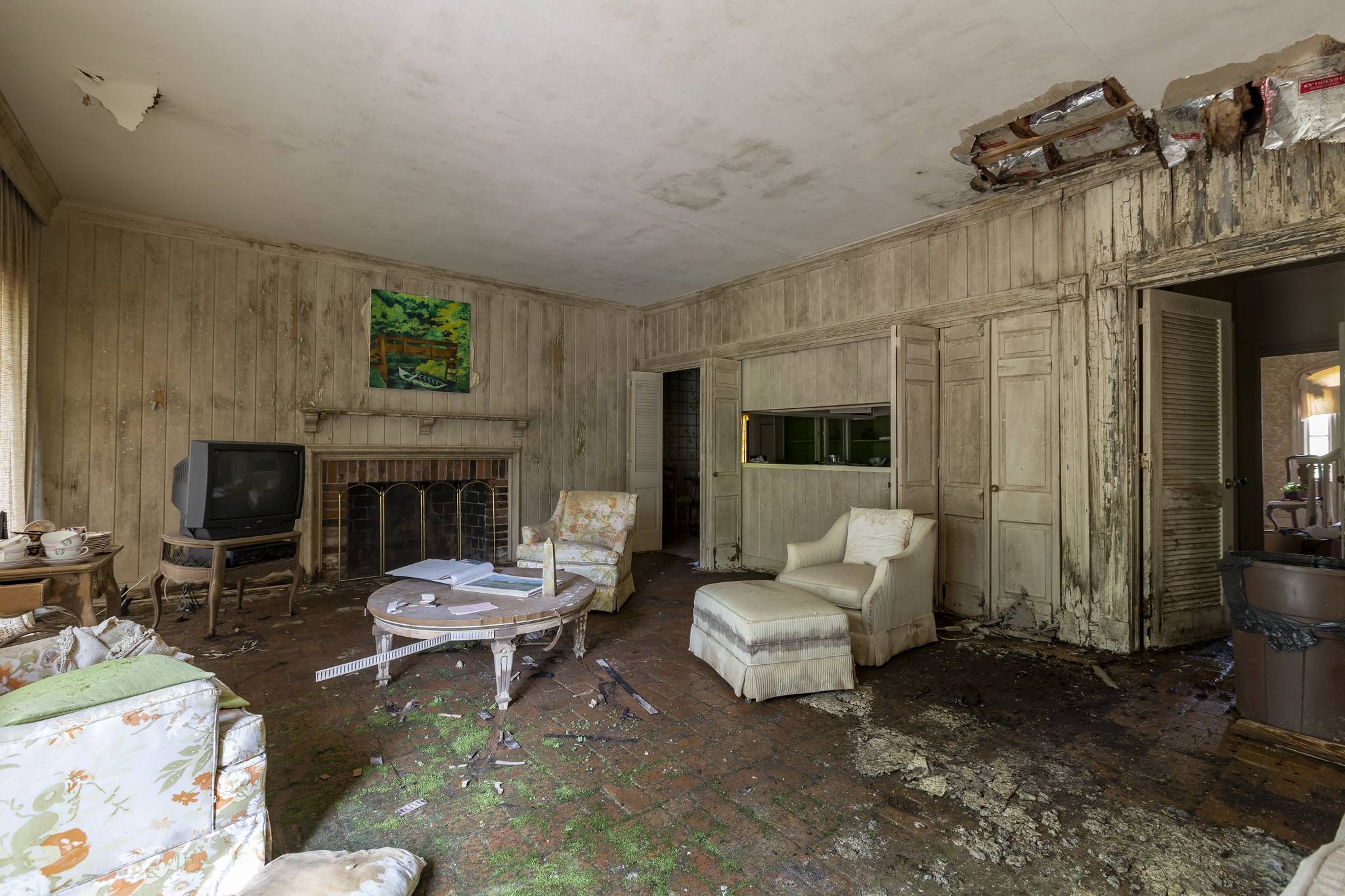
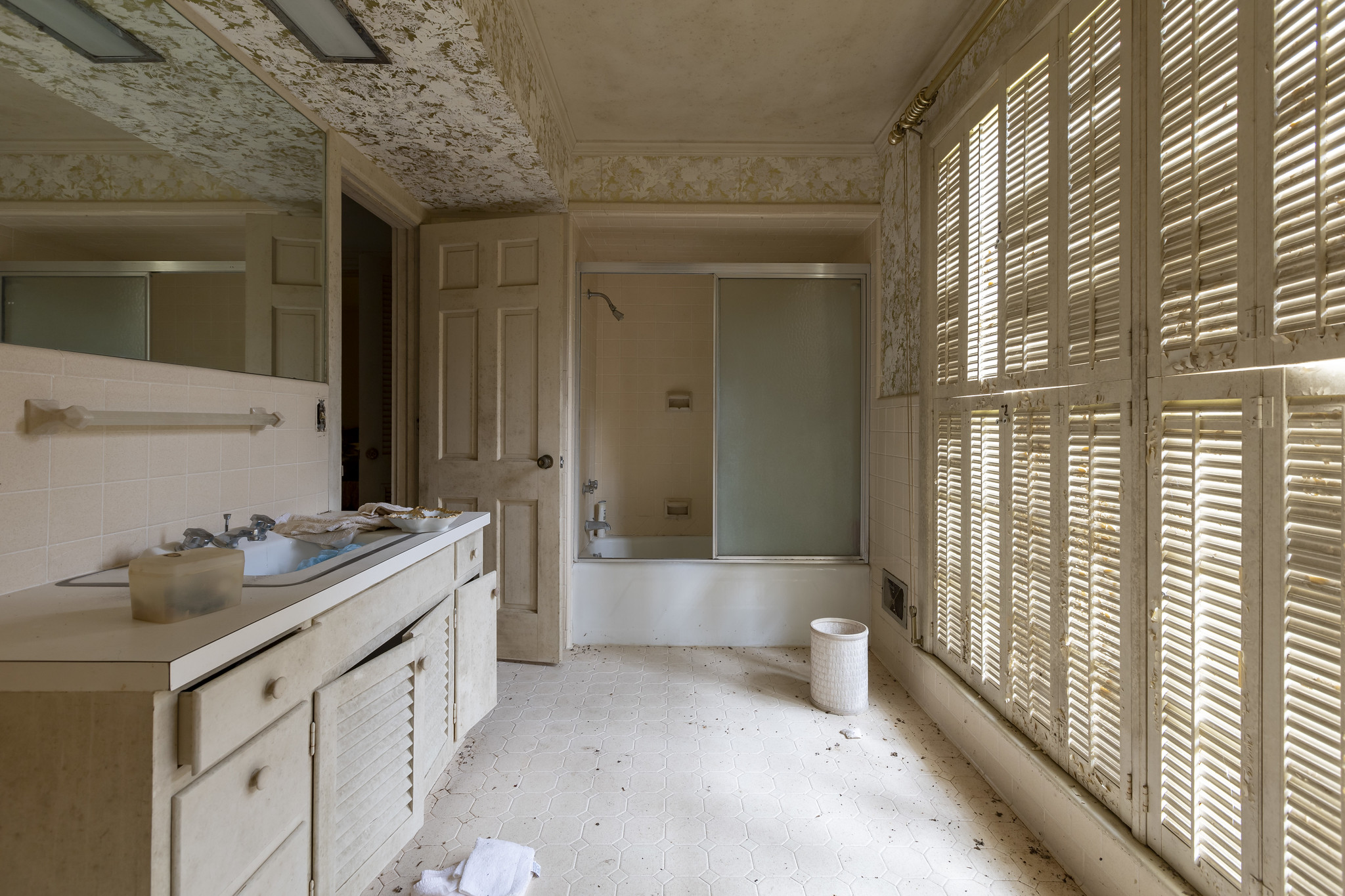
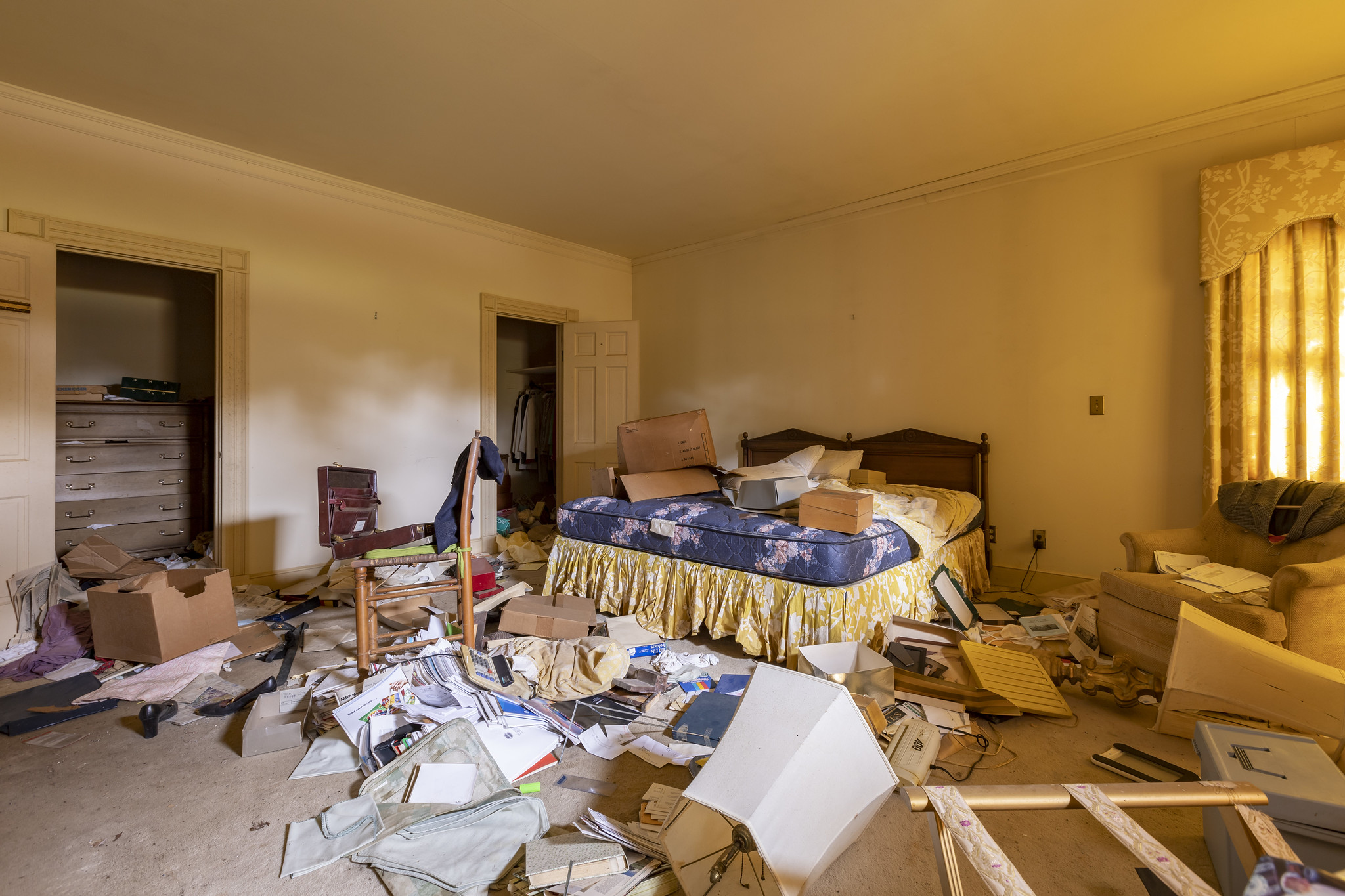
A lifelong Dawson resident, Alfred Maloof died of a heart attack at the age of 80 in 1995 and was buried in Cedar Hill Cemetery in town. Mary continued to live in the house until 2010 when she moved to Tennessee to be closer to her daughter and son-in-law. Mary died in 2014 at the age of 89 and resides in Cedar Hill Cemetery alongside her late husband. After Mary’s death, the home remained vacant as the family worked to find a use for it. The property sold in January 2023, and the home was demolished. The current owner plans to build another home on the land.
Thank you for reading. Please share the blog with your friends. I appreciate your support. You can find me on Facebook, Instagram, and TikTok. For more amazing, abandoned places check out my photography books.
Discover more from Abandoned Southeast
Subscribe to get the latest posts sent to your email.

This would have been an absolutely enormous house for the 1950’s. Most MCM homes are under under 1,100 square feet like my 1959 Ranch.
LikeLiked by 1 person
Found the build date & sq. ft after a search – 1962 and a little over 4200! It is a big house.
LikeLike
Where in GA is this?
LikeLike
It would be nice if you could buy the property and fix it back up it’s lovely it’s not that far gone it looks like it has good bones structure still looks stable
LikeLike
Hi Leland we could probably do this as a straightforward time capsule home if you want to send it?
Michael Carroll Managing Director Mediadrumworld.com ________________________________
LikeLiked by 1 person
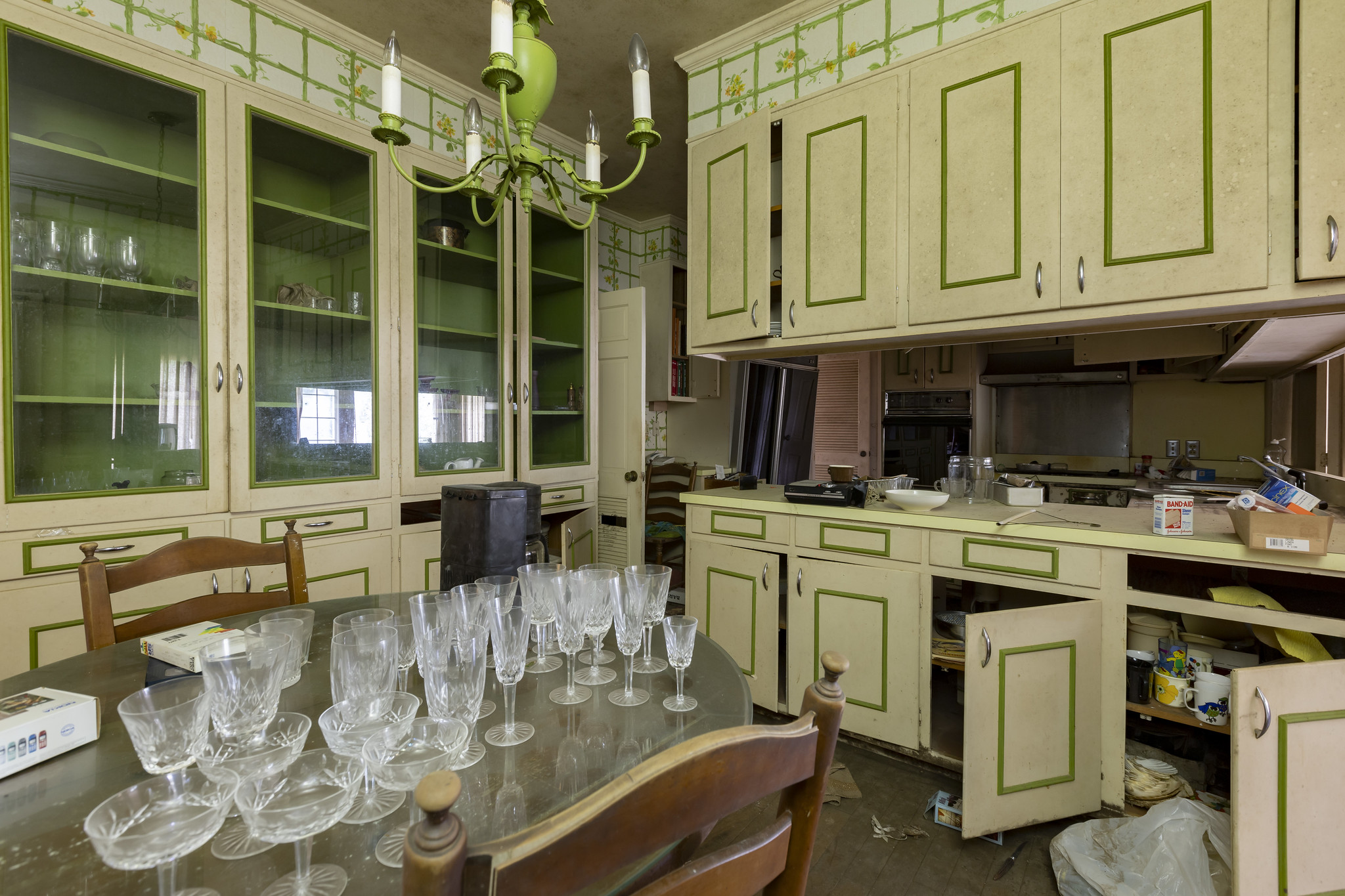
Wow….I love the green kitchen!
LikeLiked by 1 person
Who owns the country estate? May I have the address. Perhaps the name of who handles this. I would love to restore this.
LikeLike
Is it possible to buy this
LikeLike
Thanks for sharing this. I’ve lived nearby all of my life and knew the family. I used to shop at their store when I was a little girl. I’ve always loved that house and wondered what it looks like inside. It’s a shame to see it in this condition.
LikeLike
Im also in Georgia. Id love to see this one restored
LikeLiked by 2 people
Lived down the road. Patti was my age. Such a shame to see it like this!!
LikeLiked by 1 person
I grew up in SE Georgia in the 50s-60s. I had a family home that was a cut below this but which was still a big family home with most of the “fixin’s” that were expected in those days. Don’t recall having any peers that had family houses like this but had several who had grandparents who had houses like this. The 60s were boom years in the rural South. Both the Georgia and Federal governments spent money to get rural Georgians off the north end of southbound mules. There was a push to industrialization and people were making wage income never seen before in rural Georgia.
I had a friend whose grandfather owned a house very much like this one, just around the corner from the Golf Course. Grandpa just happened to own a bank. The guy who owned a big piece of another bank and who also owned the Ford dealership owned a similar house. These days, I think both are B&Bs. There are several surviving “Timber Boom” mansions in my home town, but none of them are private homes.
The reality is that there is almost nothing that you can do legally in a small to medium size rural town that will make you enough money to keep a house like this. Then throw in what was always the bane of the family place; they had six kids, and daughters at that. A thousand acres would make you pretty well off, but if you had to split it among six kids, it left all of them pretty much poor. If they were making the money from a department store to have that house and give a decent living to six kids in the early Sixties, by the early Seventies you were seeing your world coming to an end.
My father was a small-town merchant in those days. I watched his struggles from the optimism of the mid-Sixties to the plant closures of the Seventies and early Eighties, and the invasion of the big-box stores. WalMart was the nuclear weapon launched against small town retail. My dad survived, barely, with niche merchandising; he sold what they didn’t; big and small sizes, odd colors, odd sizes. It is a small business and your lifestyle gets smaller and smaller. He got to go from his store to the doctor’s office, never to return.
I can see how nobody would be willing or able to take up the burden of a house like this; there just isn’t enough money in a small Southern town for a house like this unless granddaddy left you a piece of the bank or you’ve set yourself up in the lawyer/political set.
LikeLike
Hi, I’m a reporter at Daily Mail and would love to give our readers the chance to learn more about this abandoned home and chat with you about it. Feel free to email me at kelsi.karruli@mailonline.com if interested!
LikeLike
Sadly, this is now gone.
LikeLike
Sadly, this house is now gone
LikeLike