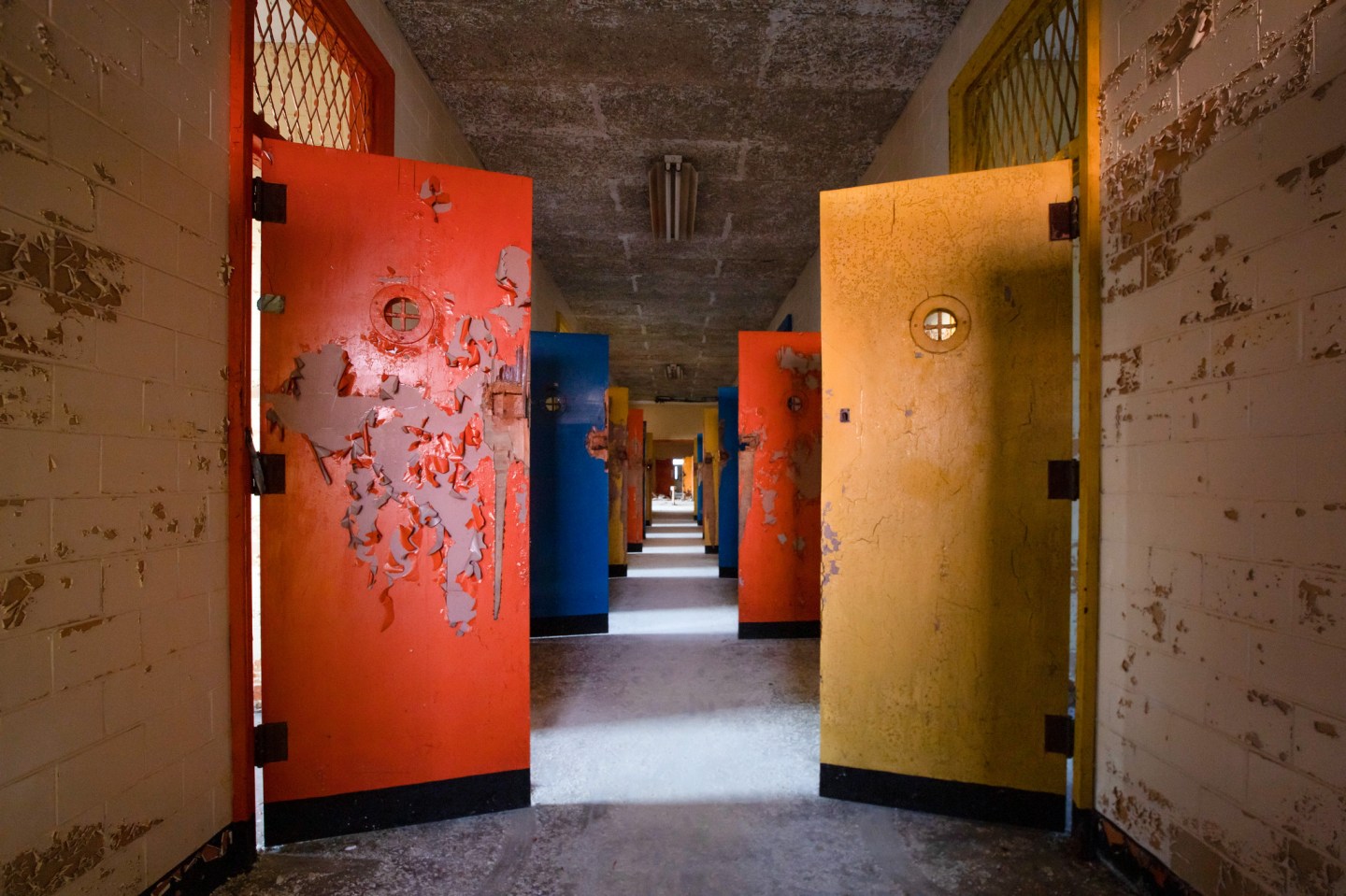
The origins of this state hospital date back to the close of the Civil War in April 1865, when Congress created the Freedman’s Bureau to establish hospitals, schools, and other facilities for the African American population. In December 1869, a former Confederate hospital was designated as a mental health hospital for African Americans. The name was later changed to Central Lunatic Asylum. In June 1870, the General Assembly passed an act incorporating the Central Lunatic Asylum as an organized state institution. When the state assumed ownership, there were “123 insane persons and 100 paupers, not insane” housed at the institution.
During the 1890s, early institutional history notes that treatment at the asylum was humane. However, routine practices included seclusion rooms, the use of mechanical restraints, and the administration of hypnotics. Recreation was emphasized as well as the value of work. Patients worked on hundreds of acres of farmland, making the asylum self-sustaining. Peanuts, wheat, okra, watermelon, pumpkins, radishes, turkey, and milk were just some of the foods grown. In an attempt to inspire a more positive image of the institution, and mental health in general, the facility was renamed from a ‘lunatic asylum’ to a ‘state hospital’.
During the early 20th century, the facility grew to encompass over 500 acres and 80 buildings. Women and men were housed separately. Each building was designed to accommodate patients with their diagnoses and conditions. Patients were assigned to wards for acute, chronic, demented, tubercular, epileptic, criminal, and suicidal. The bedridden and chronically ill were placed on the upper floors so that they were undisturbed by outpatient and ambulatory services.
By the mid-20th century, the institution faced severe overcrowding, with nearly 5,000 patients. A 1950 official report noted that one ward housed more than 300 patients in a large room. Patients slept on the floor in some of the most dangerous wards. In an attempt to ease overcrowding and house patients more comfortably, more buildings were built throughout the 1950s and 1960s, including a geriatric unit and a maximum-security forensic unit.
In 1980, an investigative reporter uncovered that roughly 1,700 patients had been sterilized without their consent between 1924 and 1973 at the state hospital. According to official records, a mass sterilization program was put in place by asylum doctors in 1924 after the state signed the Eugenical Sterilization Act into law. The program was designed to eliminate social misfits and to promote the genetic purity of the white American race. Both men and women were included in the program. Roughly 20% were African American. State records list among those sterilized were people considered “feeble-minded” and “antisocial” as well as unwed mothers, prostitutes, petty criminals, and children with disciplinary problems. With the help of the American Civil Liberties Union, a class-action lawsuit was filed requiring the state to notify every patient that was sterilized and to pay for operations to reverse the procedure.
Only after the passage of the Civil Rights Act of 1964 was the facility desegregated. In the 1990s, the Department of Justice investigated the hospital after complaints of patient mistreatment. After a two-year investigation, the DOJ concluded that inadequate care had caused patient abuse and death. Some patients were placed in restraints for simply talking back to staff, while others were placed in restraints for as long as 4 days at a time. One patient died after spending over 400 hours in restraints in one month. In response, the hospital reduced the number of hours patients could be in restraints from 1,100 to 102 per month.
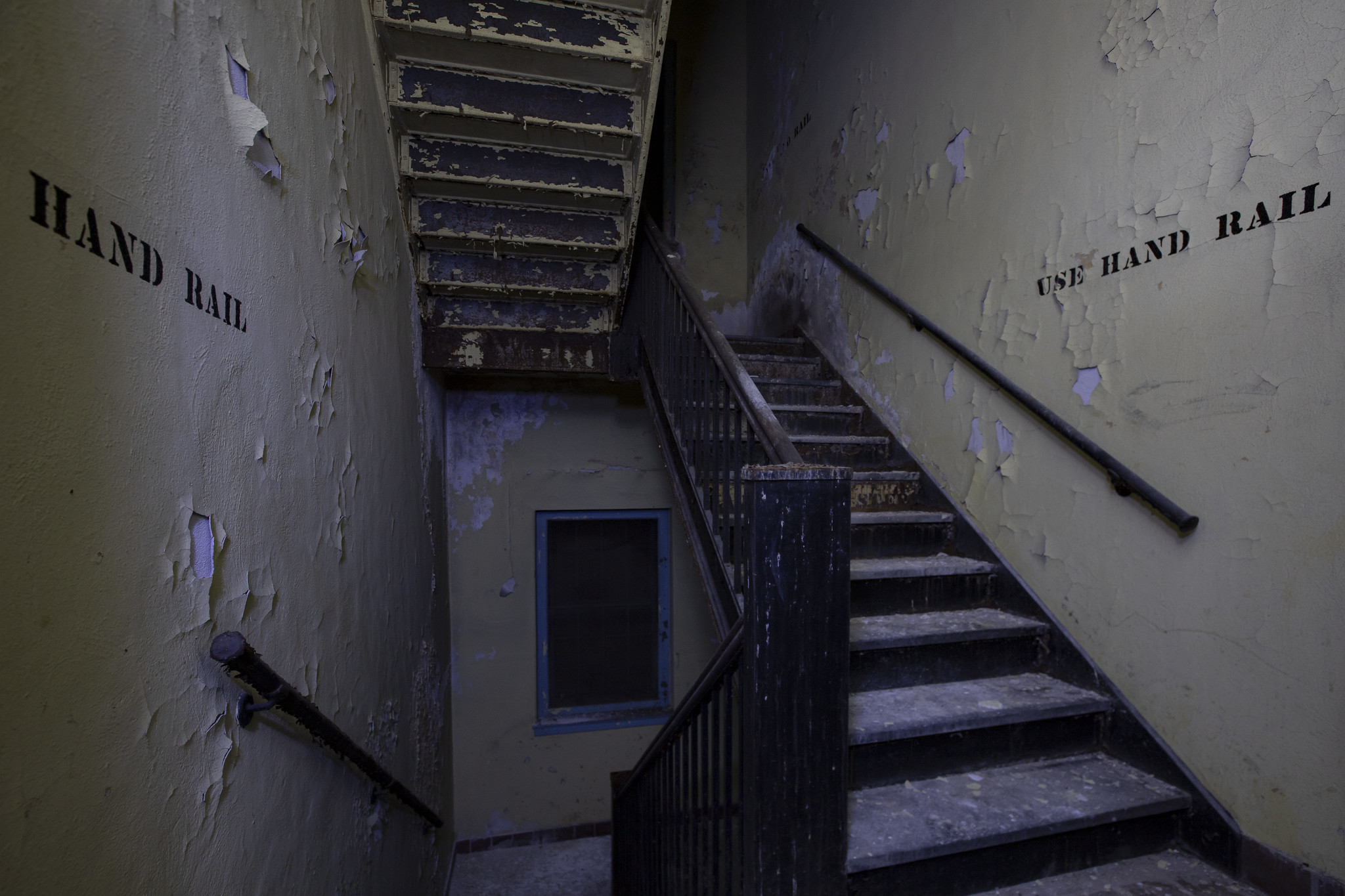
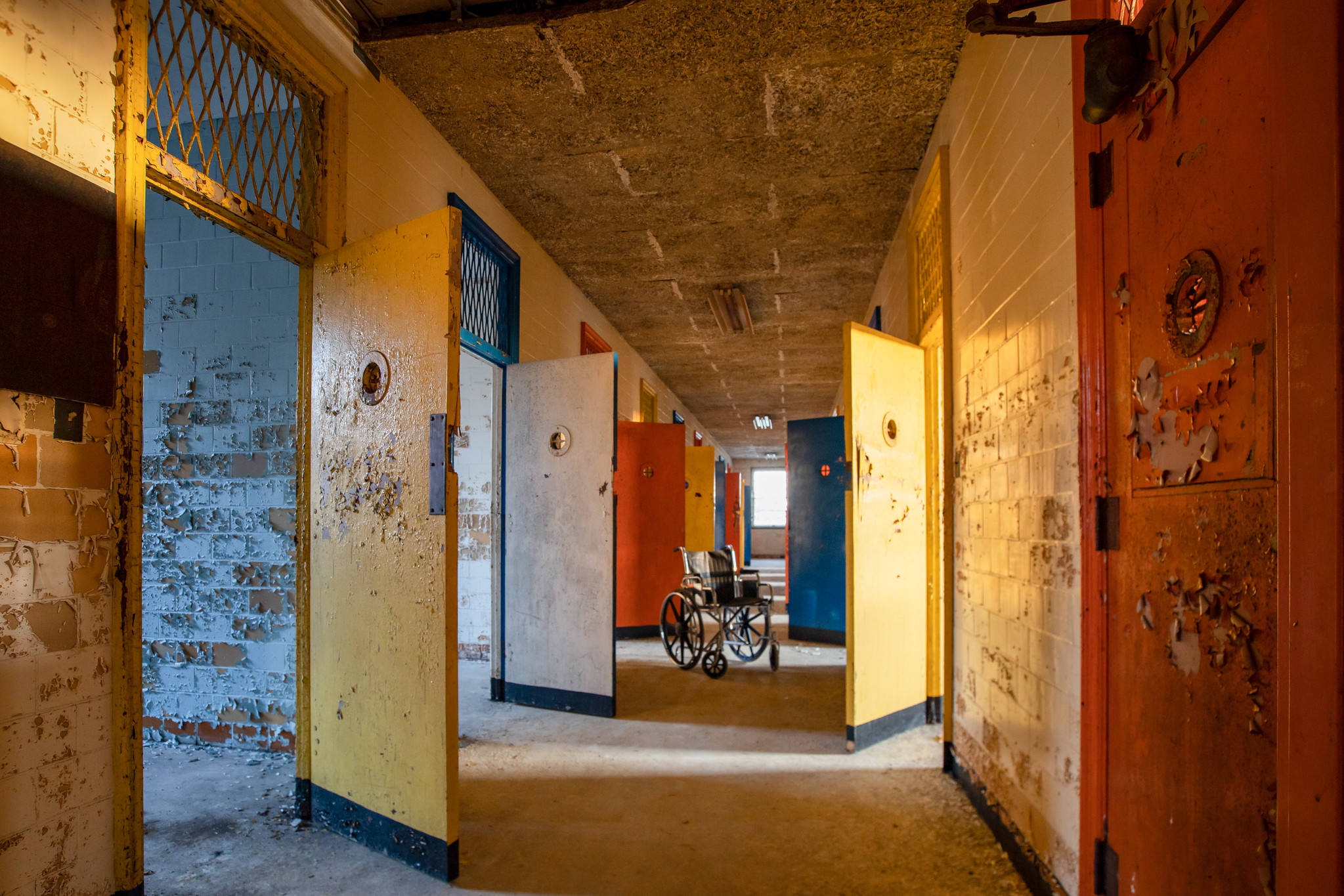
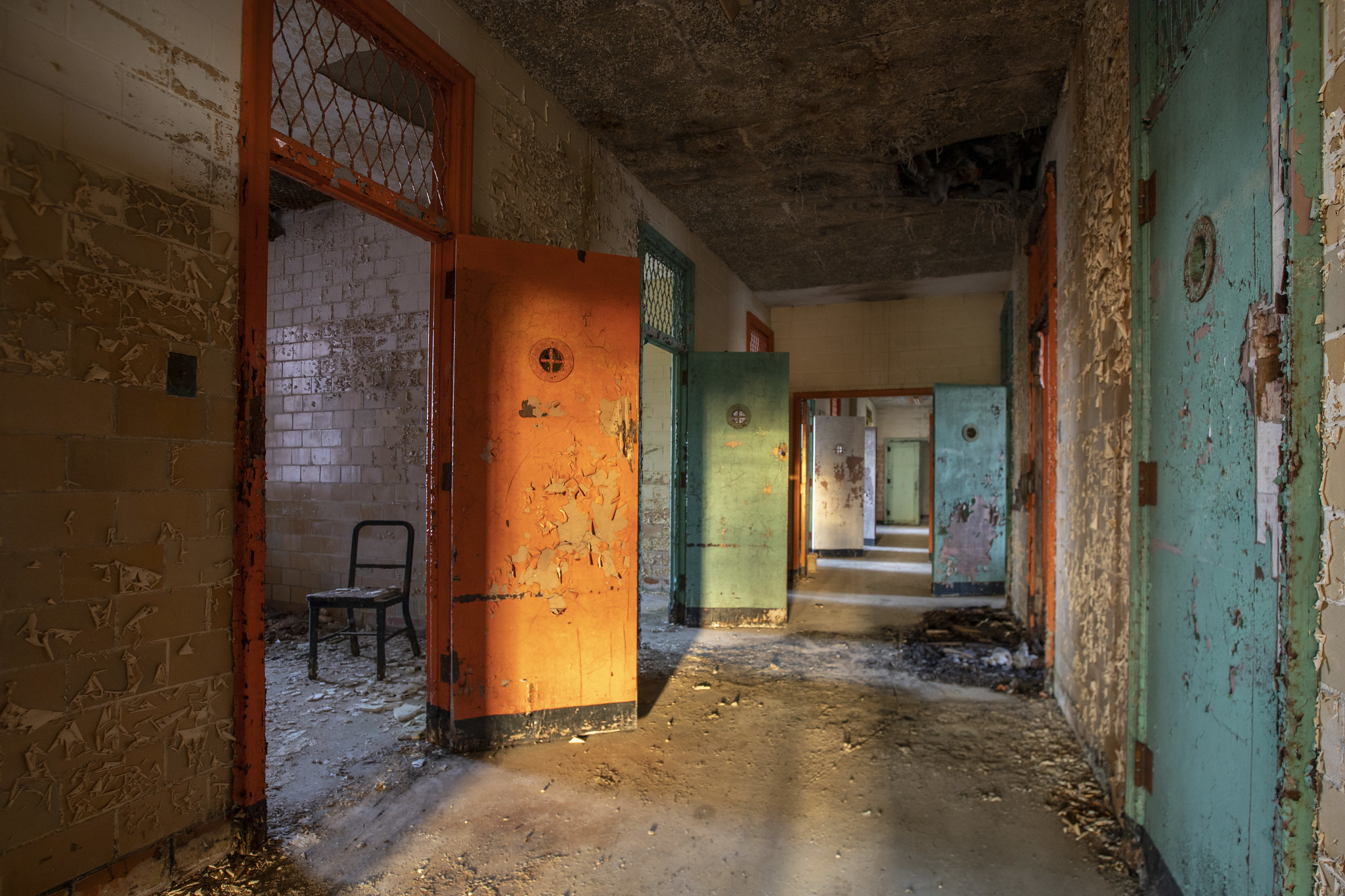
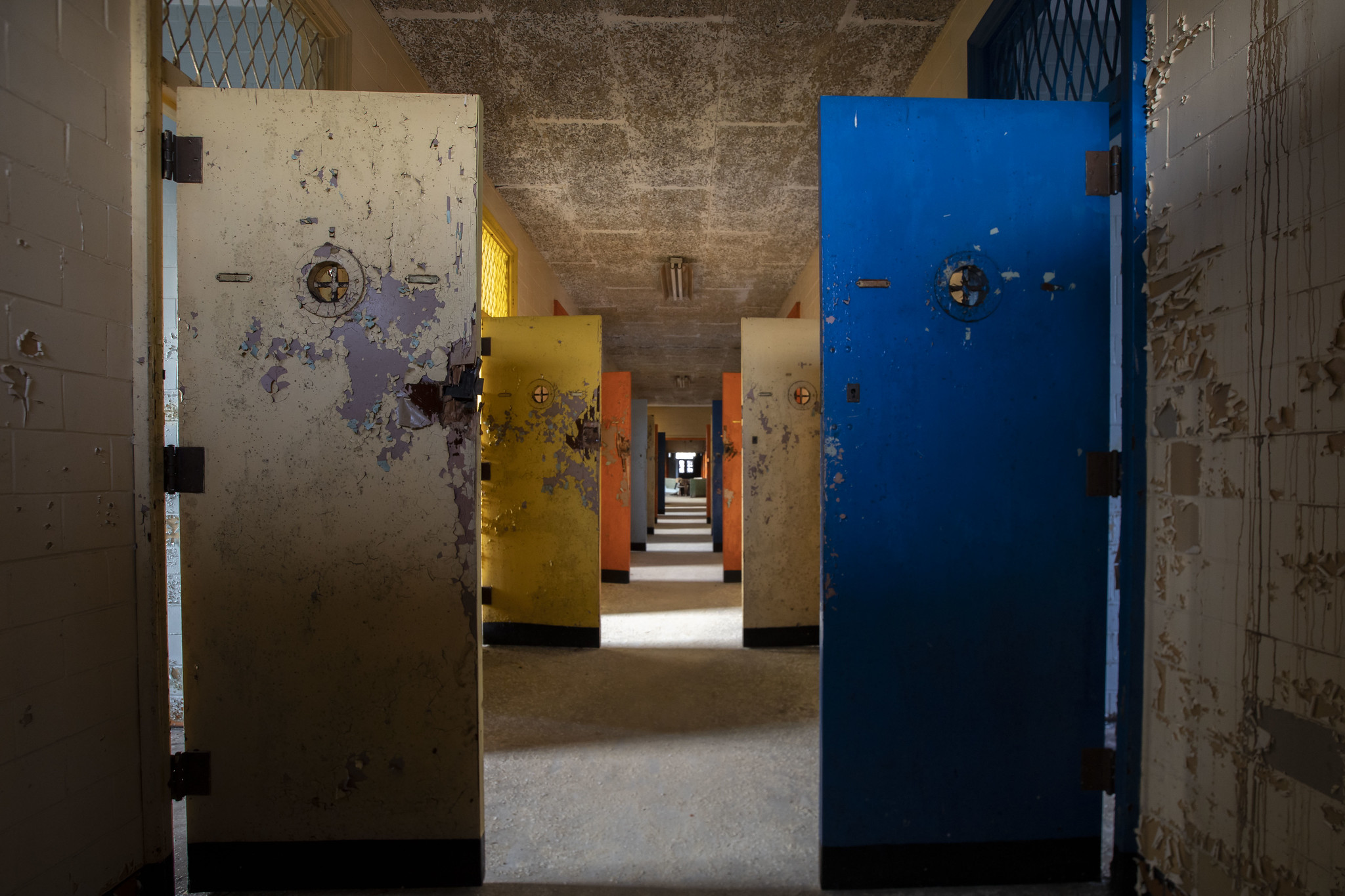
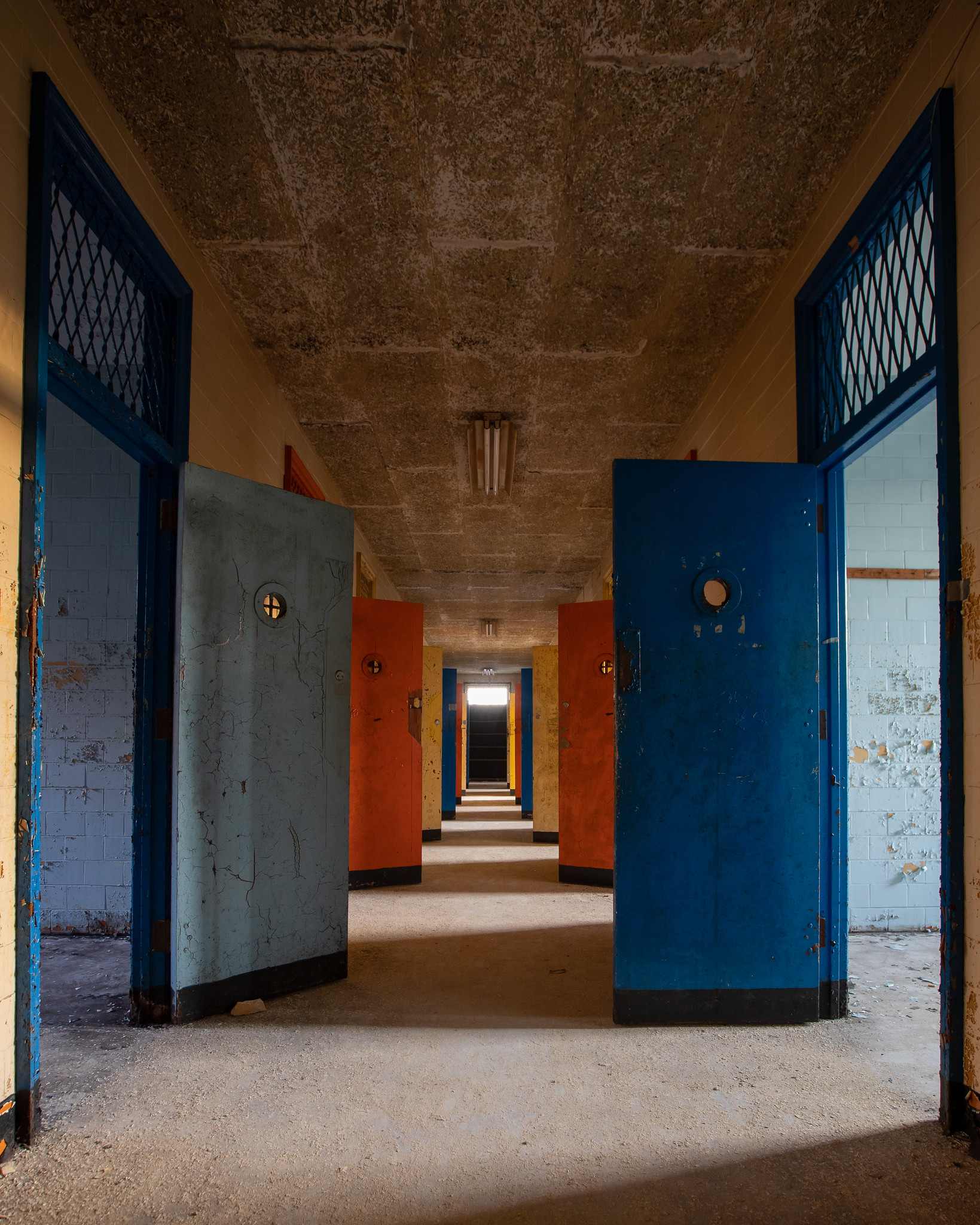
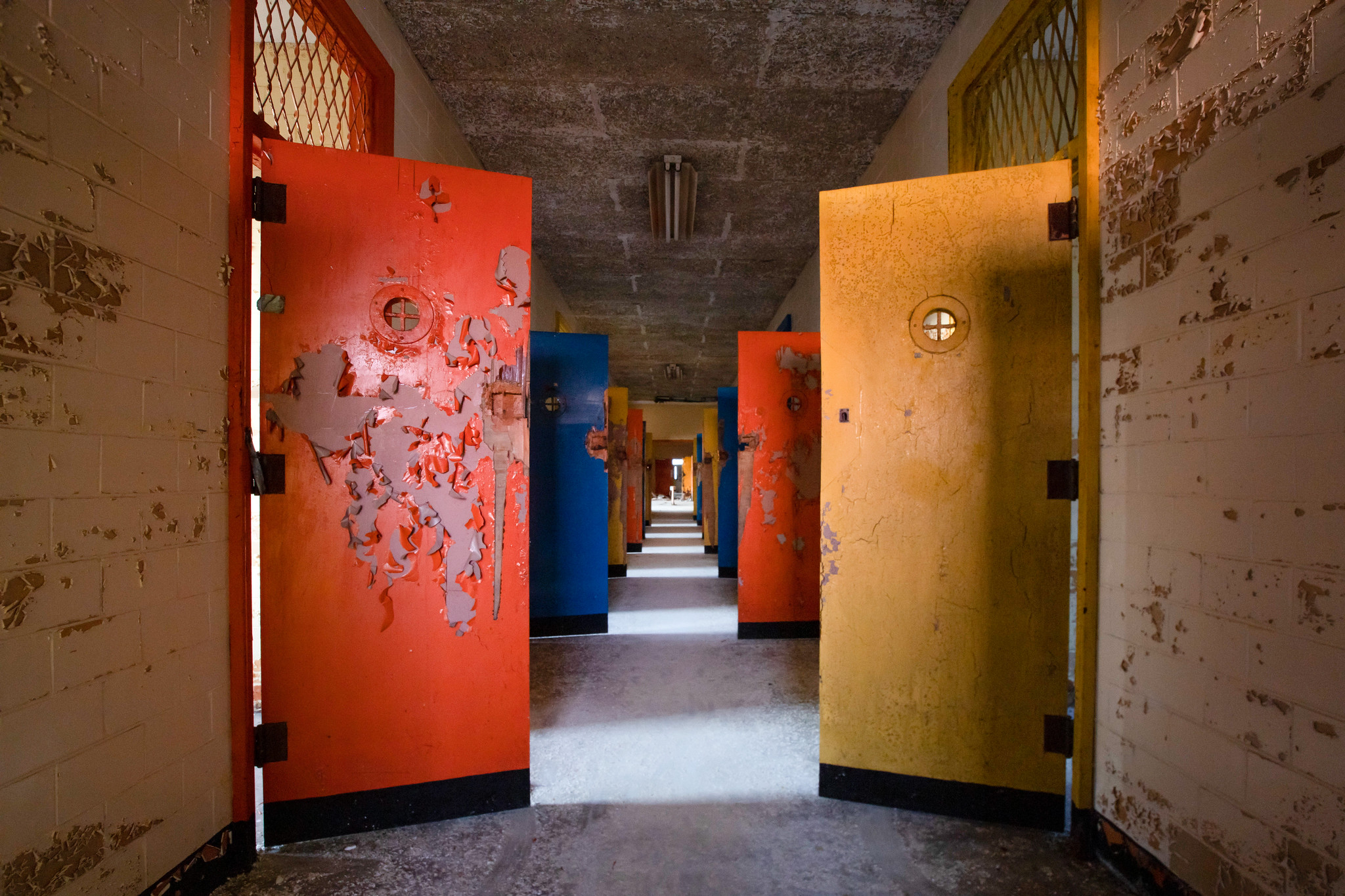
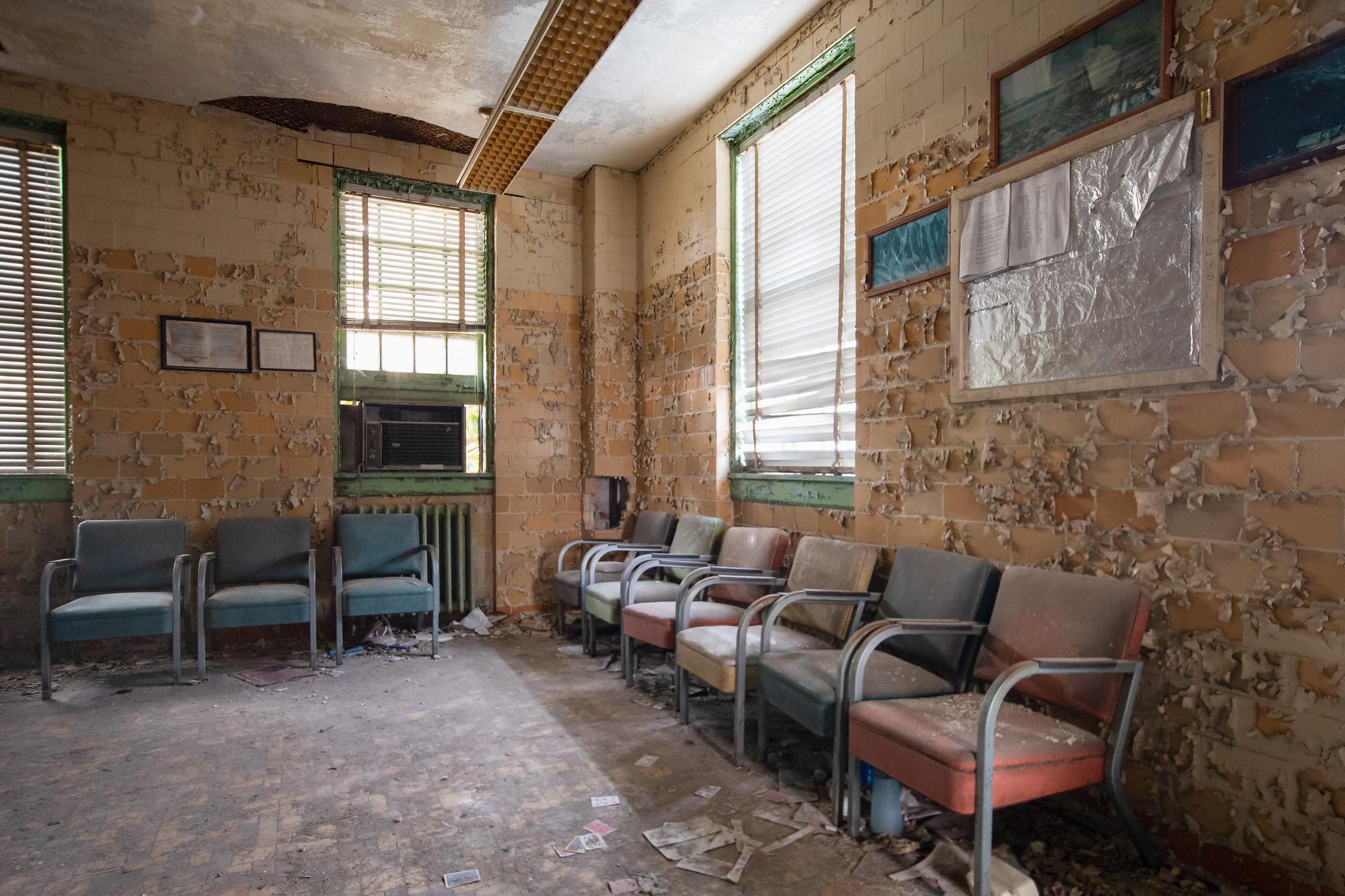
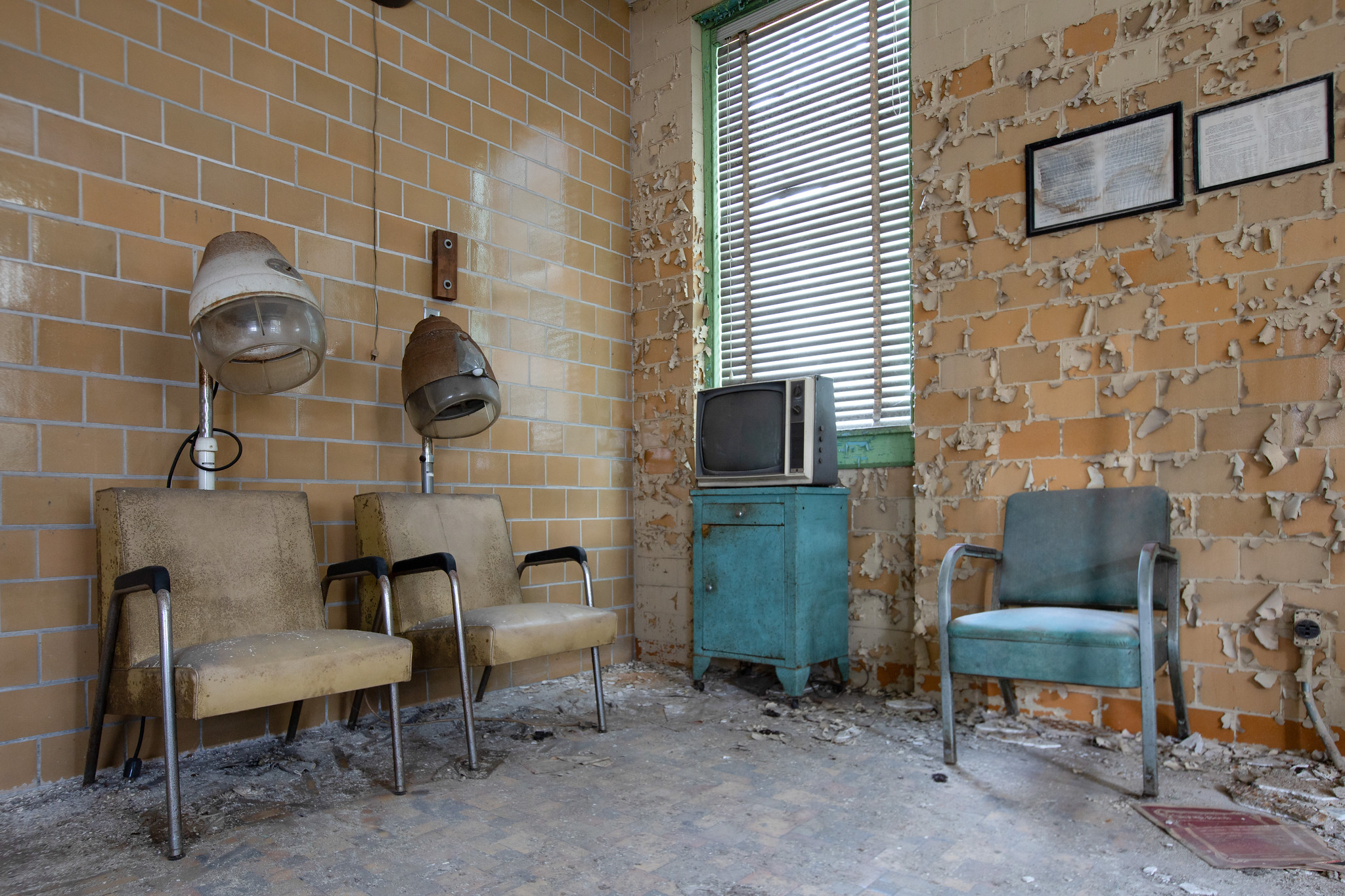
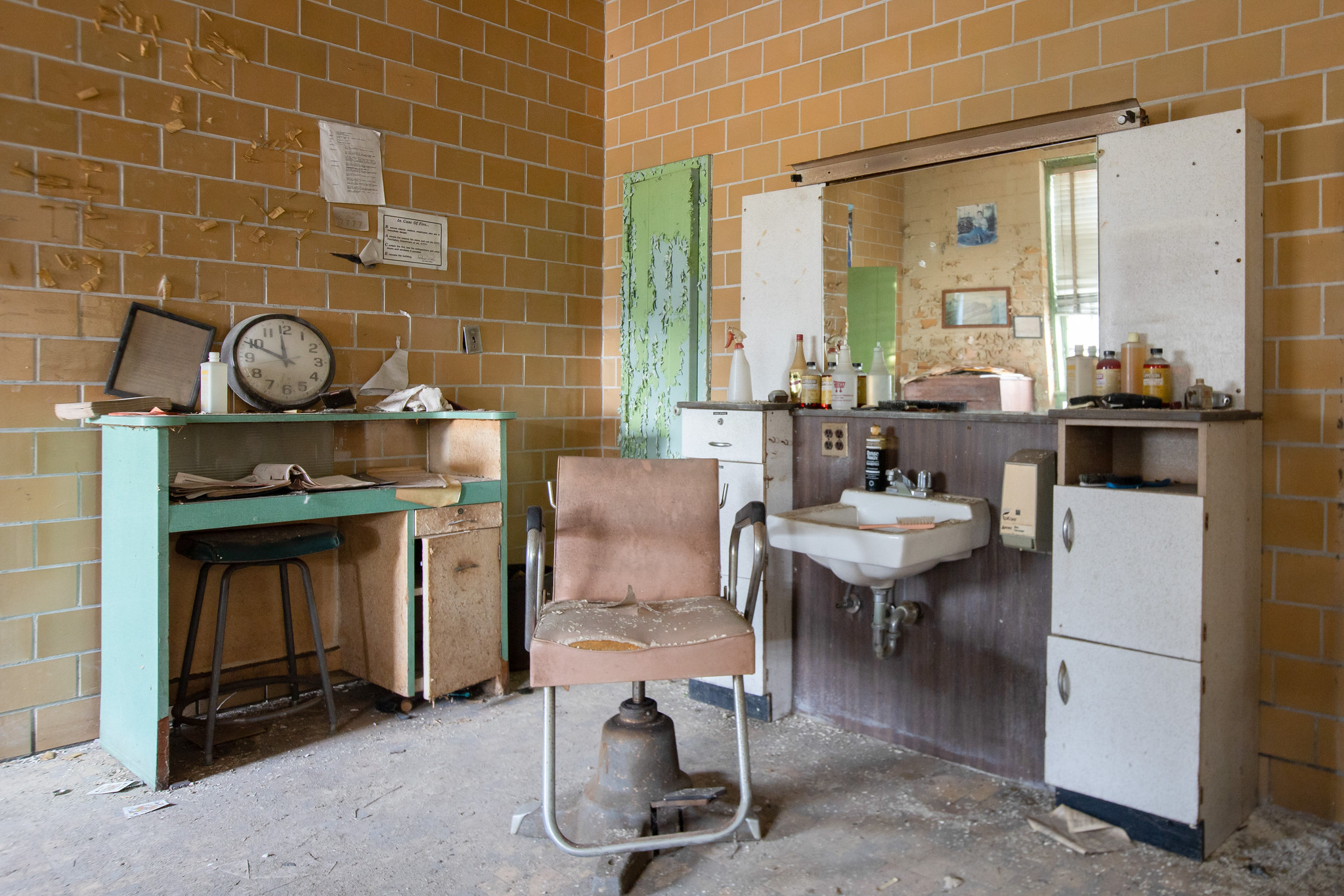
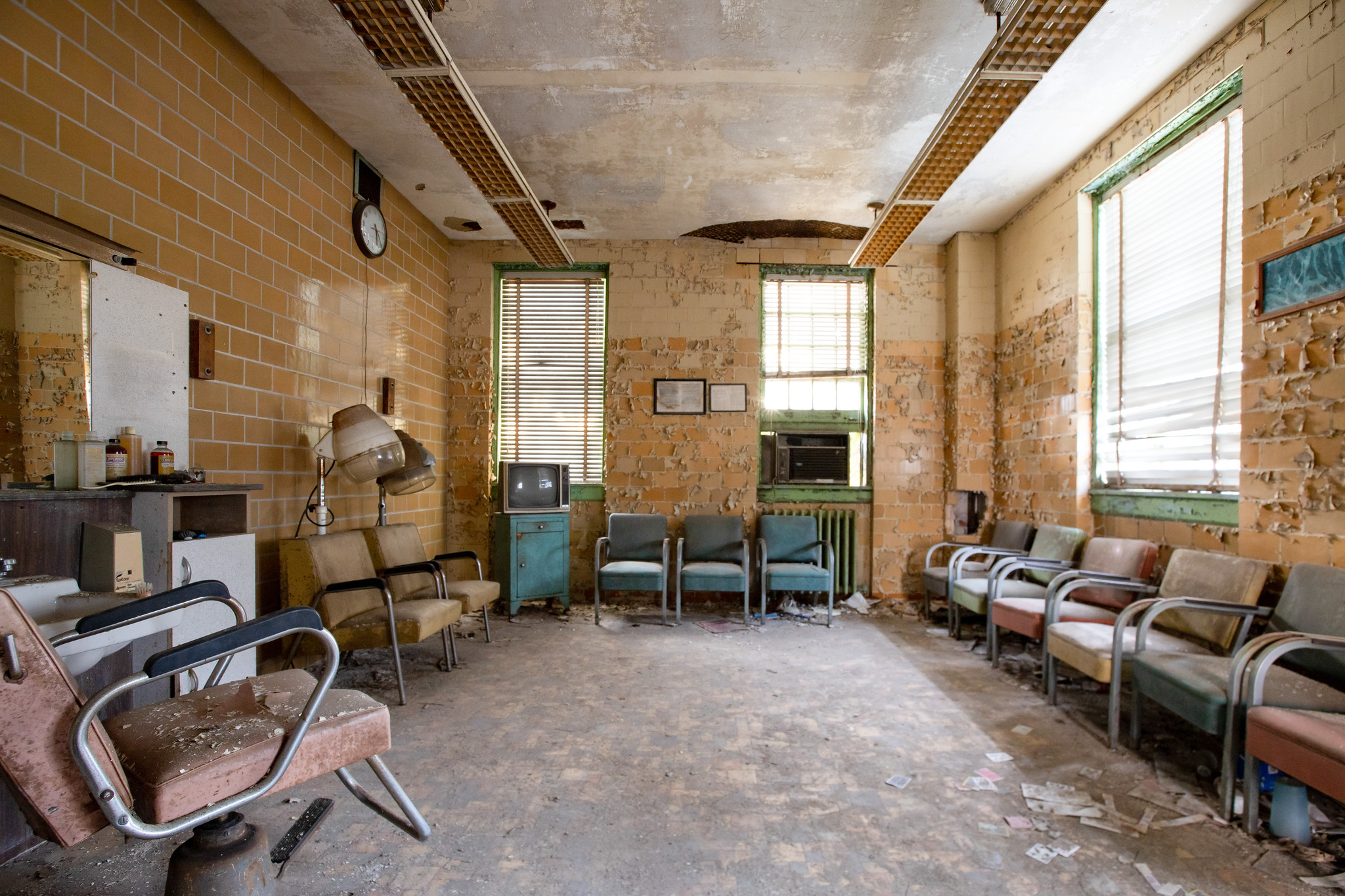
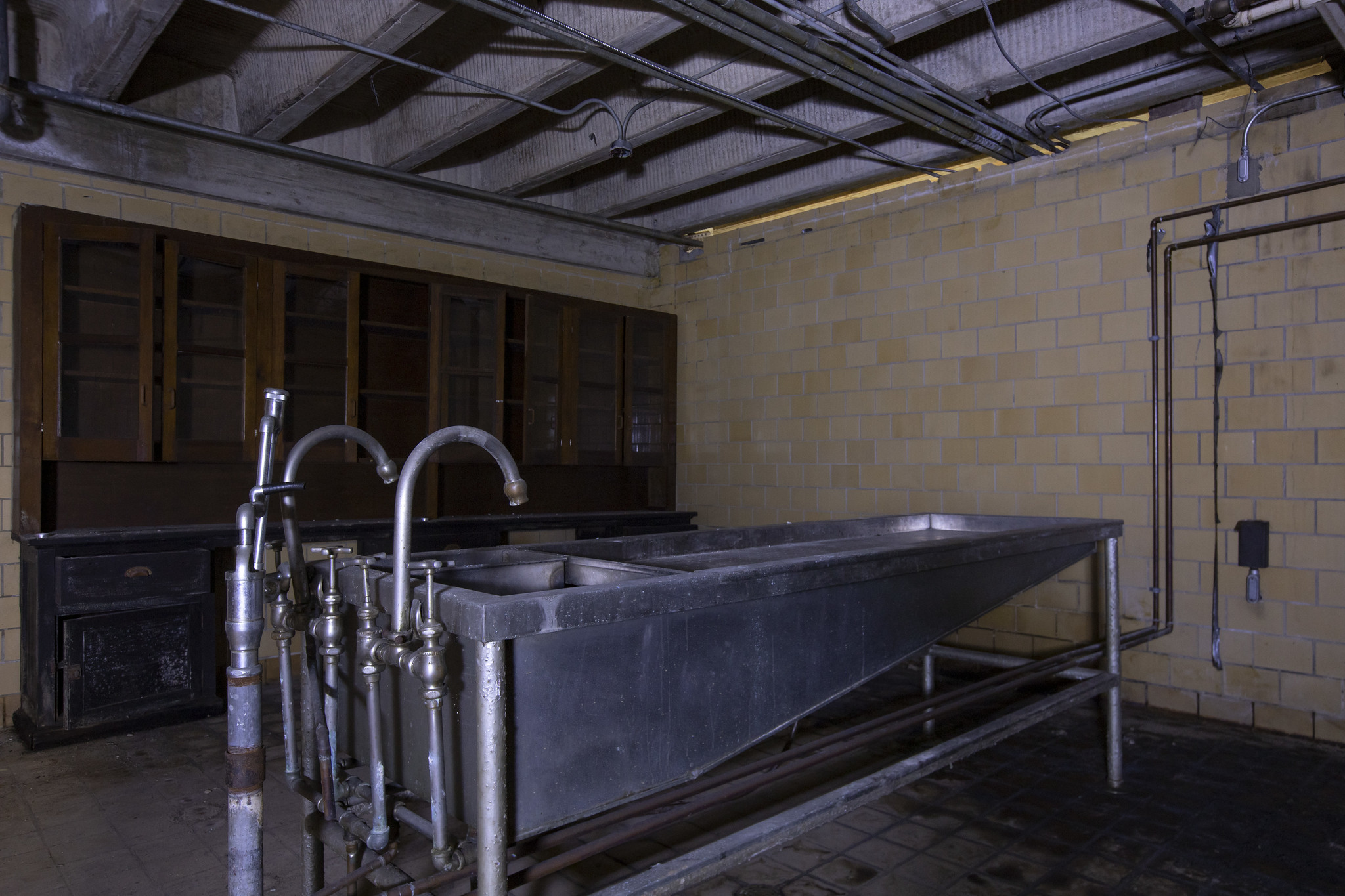
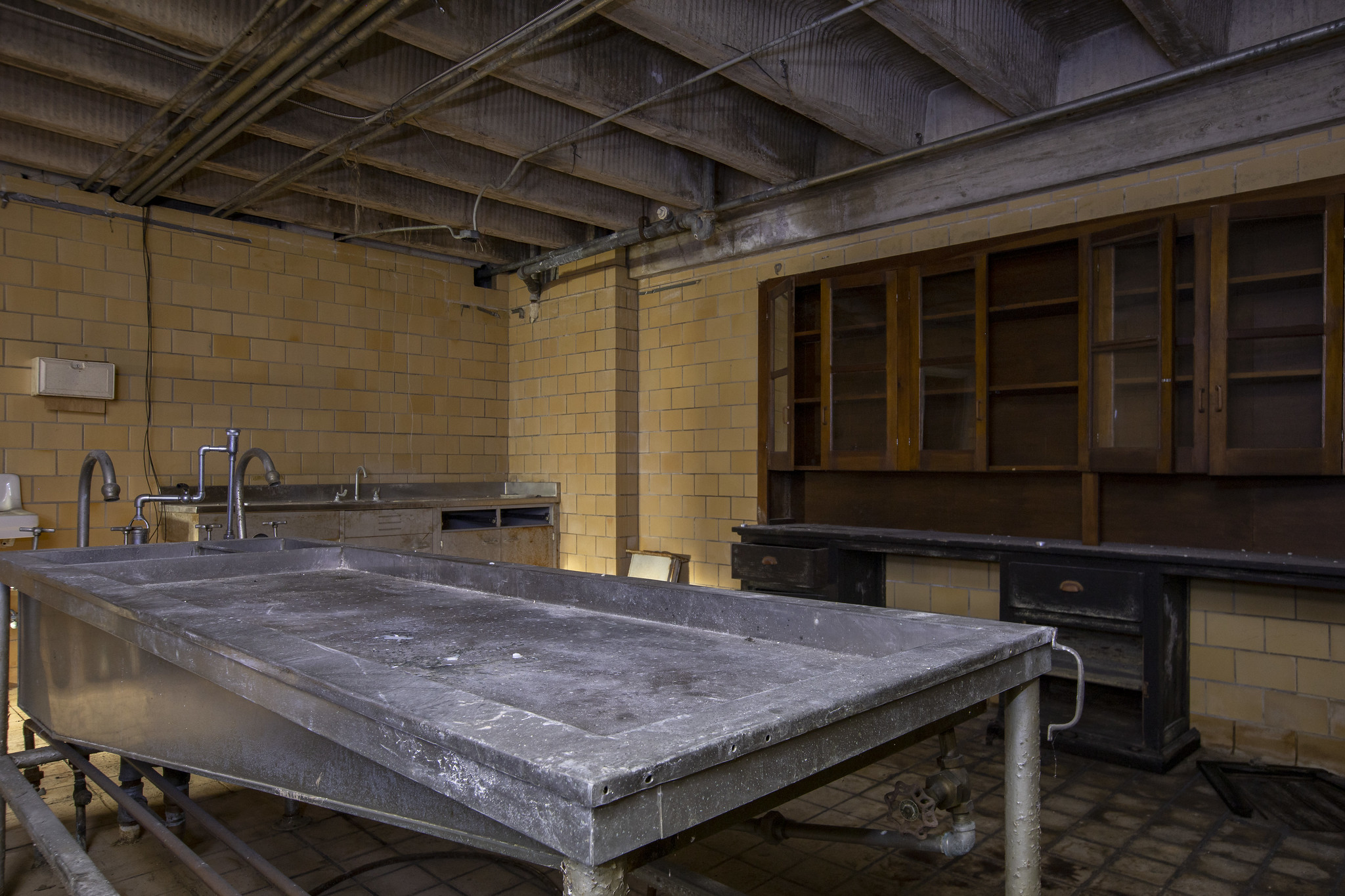
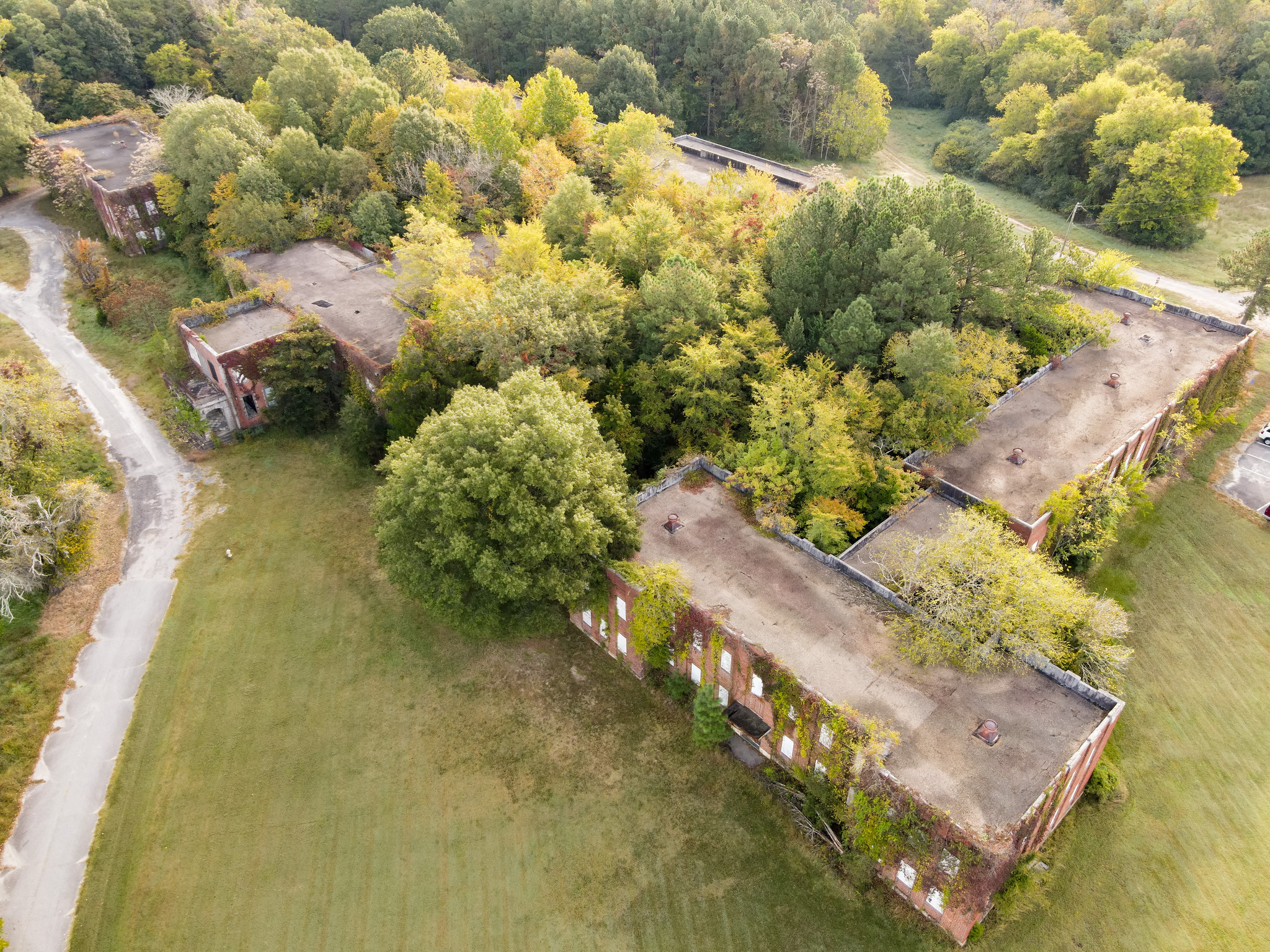
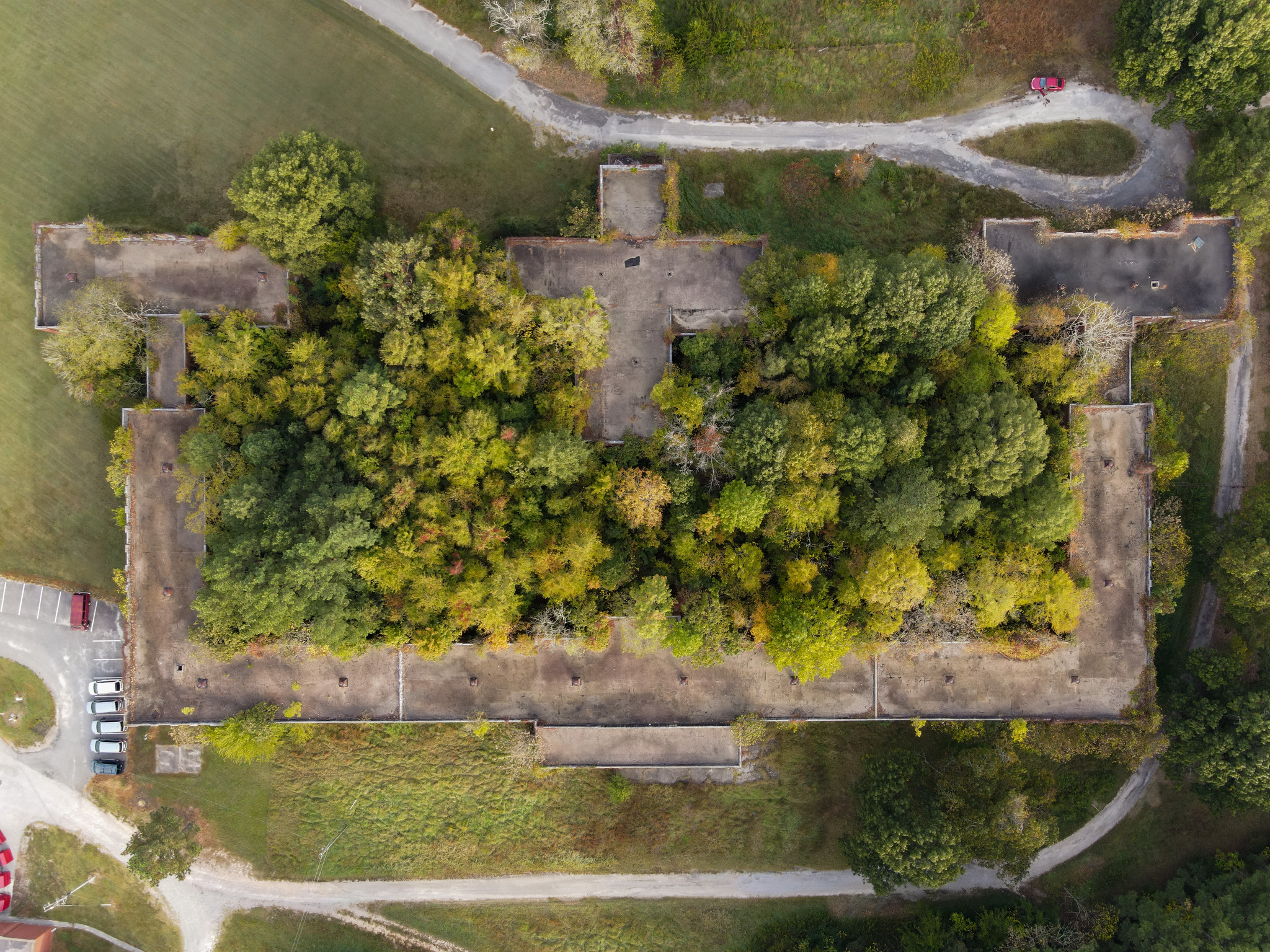
Today, the dilapidated state hospital remains partially active and still houses those deemed criminally insane. Its oldest buildings sit abandoned. According to state leaders, the existing ones should also be abandoned. State officials have proposed rebuilding the facility with more beds and double the staff. A new hospital is expected to cost $300 million and take five years to complete.

Thank you for reading. I appreciate your support. Please share the blog with your friends.
If you would like to receive the Abandoned Southeast blog in your email, you can sign up below. Also, check out my books that are available through Amazon. You can find me on Facebook, Instagram, Twitter, and TikTok.
Discover more from Abandoned Southeast
Subscribe to get the latest posts sent to your email.

Good article and pics…where is this located??
LikeLike
There is a hint in the story..
LikeLike
check the 6th paragraph down for the hint;)
LikeLike
Wow – interesting story for all the wrong reasons. We can’t begin to imagine what it was actually like to be a “patient” there.
Nice presentation.
LikeLike
Bravo! Very well written…and the photos….wonderful, wonderful shots!
I look forward to each of your posts and photos. Your work inspires me.
Again, Bravo!
LikeLike
Interesting story but as has been on several previous occasions, there is no location mentioned.
LikeLike
Kinda late but I did some research it’s old Bryce hospital in Alabama
LikeLike
For real?? I had no idea even what state it was in. Just referred to as state hospital but no clue as to what state.
LikeLike
Based on the comment about the 2014 law requiring state hospitals to take people under a temporary detention order, I’m pretty sure these buildings are part of Central State Hospital (CSH) in Petersburg, VA. CSH began its life in 1870 as the Central Lunatic Asylum for the Colored Insane, which was the first-ever psychiatric hospital for Black folks. The rest of the history offered in this piece tracks to it being CSH.
LikeLike
Not Bryce, I’ve toured Bryce in Tuscaloosa, and this is not Bryce.
LikeLike
I’m pretty sure he’s said this on said previous occasions, but he’s not required to give you the location and often doesn’t because he’s protecting the property. Just because they allowed a professional photographer with a successful blog to photograph the place doesn’t mean they want anyone and everyone trespassing.
LikeLike
great pictures .they stll exist
LikeLike
And considering the age, probably most of the paint is lead paint. The green especially is lead, not sure about the others.
LikeLike