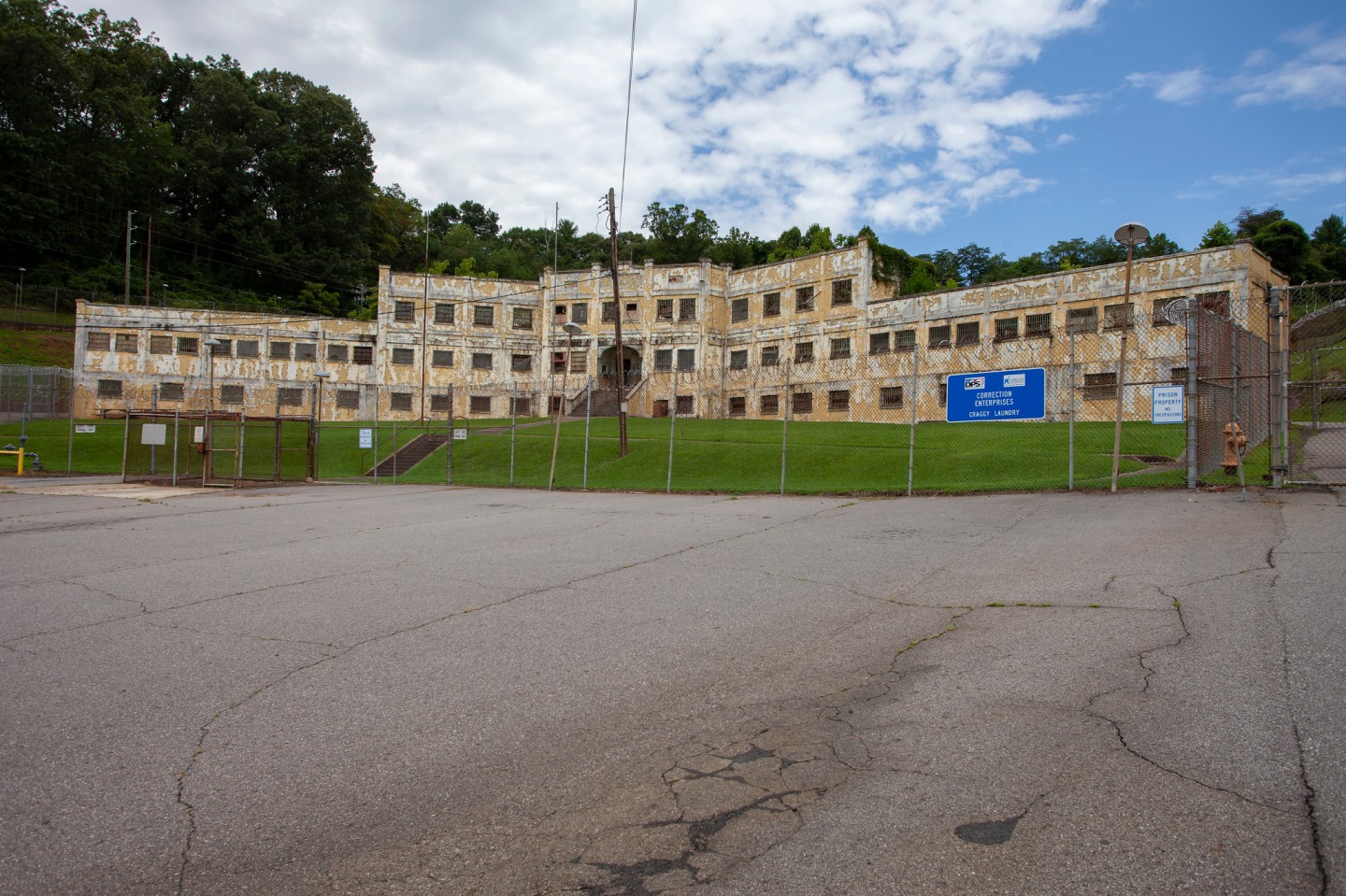
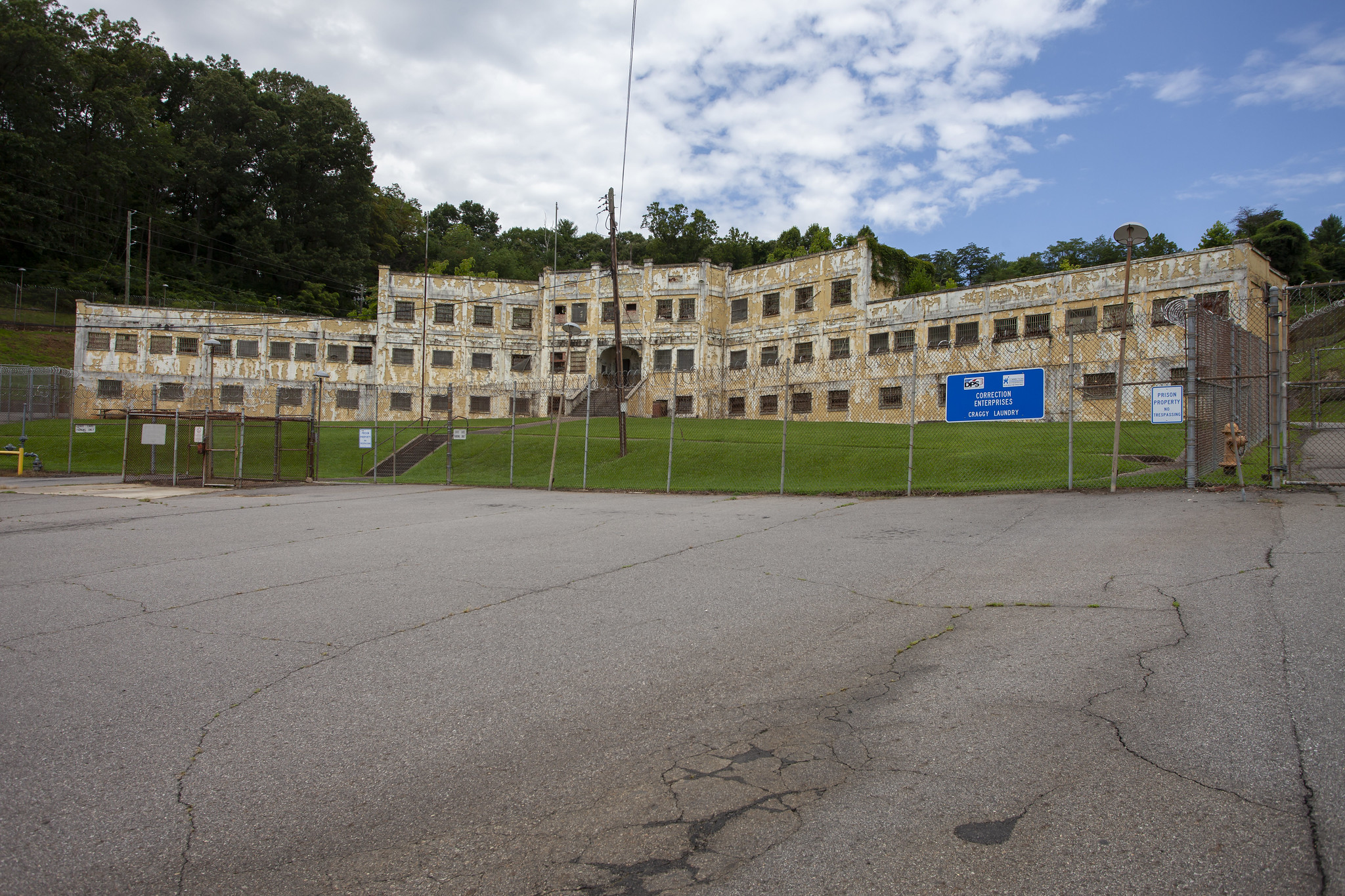
Old Craggy State Prison is located near Asheville, North Carolina, in Buncombe County on a 20-acre site and has a capacity of holding 500 inmates. Dedicated in May 1924 by the Buncombe County Commissioners, Craggy was one of 51 county prisons for which the state assumed responsibility with the passage of the Connor Bill in 1931. It was also one of 61 prisons renovated or built to house inmates who worked on building roads. The prison earned its name given its location near the Craggy Bridge.
The prison, comprised of three floors, with seven open-air dormitories and a row of solitary cells in the basement. With no central air-conditioning or heat, the sweltering summer months and frigid winters made life inside Craggy miserable for both the inmates and the guards. Craggy was the first state prison to install an electronic detection system to alert staff to attempted escapes through the prison security fence, and there were quite a few.
Most of the prisoners held at Craggy were convicted of minor felonies like arson, theft, or embezzlement, but there were still some with more heinous offenses such as rape and murder. Years ago, inmates were allowed to work labor jobs for the Department of Transportation. This backbreaking work paid 15 cents per day, paid out to the inmate upon his release. Many of the inmates chose to work these jobs to learn a skill or trade for when they reenter the workforce. From its inception until the 1950s, inmates wore traditional striped jumpsuits. Daily life inside the prison was not only uncomfortable but also extremely dangerous. Dorm room showers were notorious locations for beatings and assaults.
In February 1945, fourteen prisoners escaped from Craggy Prison by sawing the bars of a window and dropping down 15 feet to the ground. Superintendent E. G. Roberson said 12 men were sentenced from Buncombe County and 2 from Durham climbed over the fence and up the hill at the rear of the prison to escape. Prison guards, the local sheriff, highway patrolmen, and bloodhounds were brought out to track the escapees.
Almost a decade later, another escapee who was caught acted as his counsel at trial and used a defense that he referred to as the “Dog-Rabbit Plea.” In February 1952, 41-year-old Grover C. Pressley asked a Buncombe County judge and jury, “If a dog catches a rabbit he is chasing, can it be said the rabbit escaped?” “No,” said Pressley, after pleading not guilty to escaping Craggy Prison. Pressley contended that law enforcement officers and bloodhounds were on his trail almost from the moment he left a prison camp working gang. Like the rabbit, Pressley said it could not be found that he had escaped. Unfortunately, the jury declined to accept his logic and found him guilty. The judge sentenced Pressley to three additional months in addition to the two-year sentence he was already serving. Harris, who escaped with Pressley, offered no such novel arguments and pleaded guilty. A three-month sentence was added to his six-month sentence. A third man, Waverly Albert Sain, also pleaded guilty to escape and received a 60-day addition to his 6-month sentence.
In December 1956, prison guards and law enforcement officers were on the hunt for two prisoners who escaped from Craggy State Prison rock quarry in Weaverville. The escapees were listed as Carl Hill, 32, of Rutherfordton, and Boyce Charles Ledrette, 29, of Cliffside. It was reported that both men were serving time for misdemeanors.
In June 1964, six prisoners from Craggy broke away from a road gang in Avery County after severely beating a guard over the head with a bush axe. The same day, six others climbed the fence at the back of the prison. The following day, nine of the men were still at large. Two of the inmates went to the residence of Homer Rice in Woodfin around 11 P.M. and told him to call officers to come get them. Craggy Prison chief said the men apparently felt that officers were closing in on them. One of the men, John Witherspoon, was serving a life term for arson. The men still at large for the Avery breakout included a man serving a life term for first-degree murder. He was identified as Clarence Eugene Penley, 25, of Lenoir. Another escapee, Albert Junior Ledford, 38, of Gastonia, was serving 11 years for armed robbery. State Prisons Director George Randall said the escape from Craggy Prison was due to negligence. The men pulled up a wire mesh door in the laundry building and slid under it, then climbed the fence.
By the 1960s, Craggy was considered the most obsolete prison unit in the North Carolina prison system. In December 1964, the N.C. Prison Department was planning to build a new prison in the Asheville area to replace Craggy Prison provided funds are appropriated by the 1965 General Assembly. Prison Director George Randall said Craggy had no room for any kind of recreation, no room for education or group counseling programs and security-wise it is far below average. He said it would cost more than $230,000 to renovate the prison and make it fireproof. It would be another 20 years before the General Assembly decided to close Craggy and build a new prison.
In January 1973, thirteen prisoners escaped Craggy after John King, identified as the ringleader of the escape plot, confronted the night duty sergeant Jerry McMillan with a .22 caliber pistol, took McMillan and another man hostage temporarily, then fled the prison in three automobiles. Two deputies spotted King in a stolen car and attempted a traffic stop. King pulled over and came out of the car with the .22 pointed at the deputies, one of the deputies wrestled the gun away from King. Another one of the vehicles used, a Ford Mustang, was found by Tennessee police. No shots were fired, and no injuries occurred during the escape. It was said to be one of the biggest escapes in recent years at Craggy. A week later, all but three of the men had been captured.
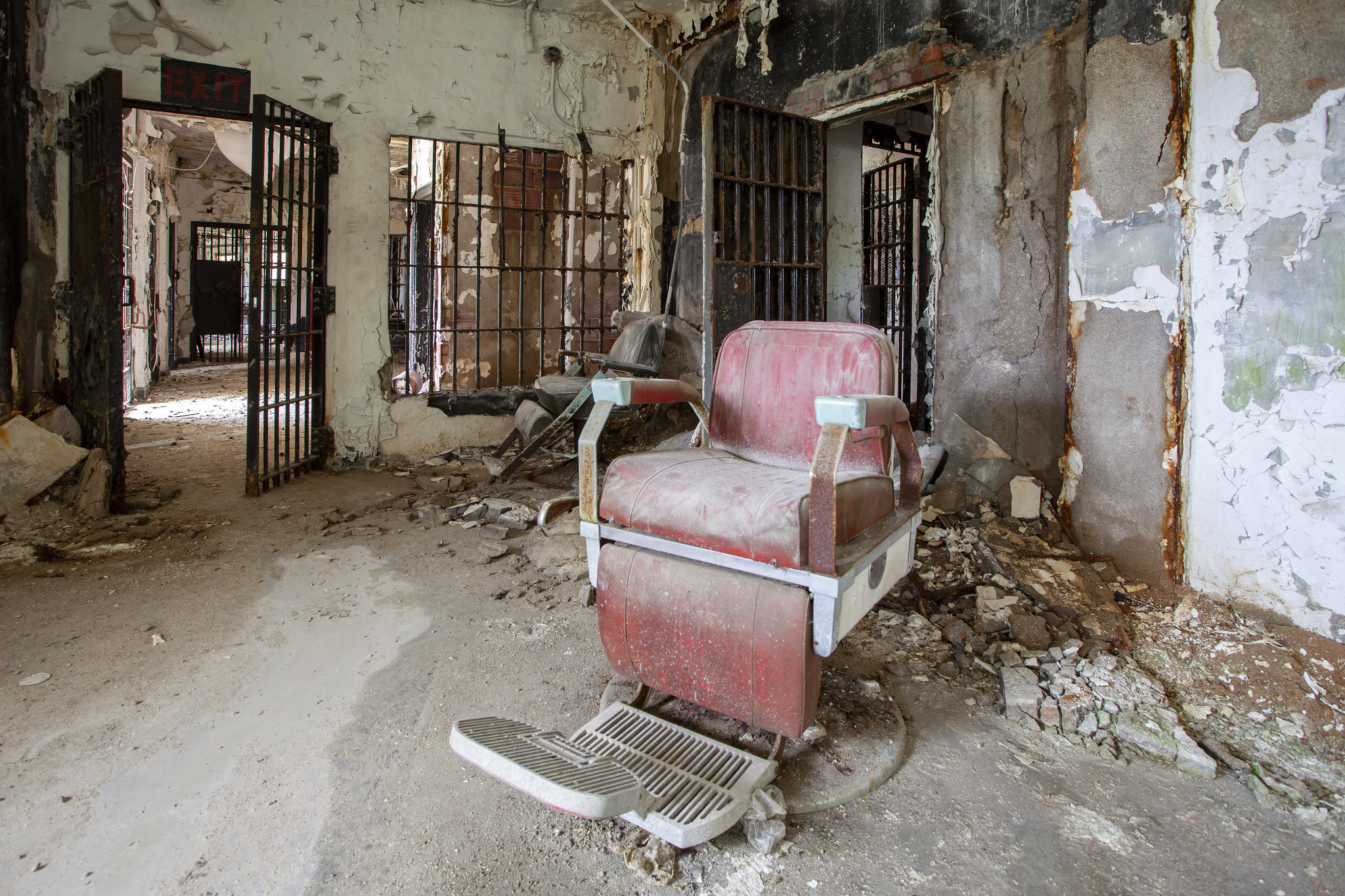
In September 1975, a small band of inmates at Craggy went on a rampage, smashing windows and starting a fire that gutted one of the dormitories. Eight inmates were injured which began after a stabbing. Officers were puzzled over the cause, stating there were no racial overtones or advanced warning that anything was about to happen. Six of the prisoners suffered from smoke inhalation, one was stabbed, and another cut his hand on a piece of broken glass. There was no estimate on the repairs, but one officer said it would be several thousand dollars. The fire started from an inmate lighting a mattress on fire and other inmates kept piling more mattresses on top as smoke spread throughout the building.
A few days after the dormitory fire, Donald Ray Henderson, who was serving a 25-to-40-year sentence at Craggy, escaped using a homemade pistol while being taken to Central State Prison in Raleigh for surgery after telling authorities that he swallowed a razor blade. The blade appeared on x-rays. Near Mocksville, Henderson allegedly pulled a homemade “zip gun” and put it to the head of the guard driving the prison vehicle. After about 20 minutes, he ordered the guard to pull over on Interstate 40 and fled. Henderson pled guilty in Davidson County Superior Court in May of 1972 to stealing a Continental Trailways bus and to kidnapping and robbing the driver. He had been scheduled to appear before a grand jury the following day to face another kidnapping charge that grew out of an escape earlier in the month. His freedom was soon cut short as Henry County deputies arrested Donald Henderson two days later on local charges.
In the 1980s, a series of lawsuits ushered in a new era of policing and prison reform. Lawsuits filed by inmates complaining about living conditions in state prisons. As a result of these lawsuits, many dated facilities across the South were forced to close. While prison populations increased, legislators explored drug and alcohol programs and programs for young offenders, such as boot camps and work releases, as a way to reduce them.
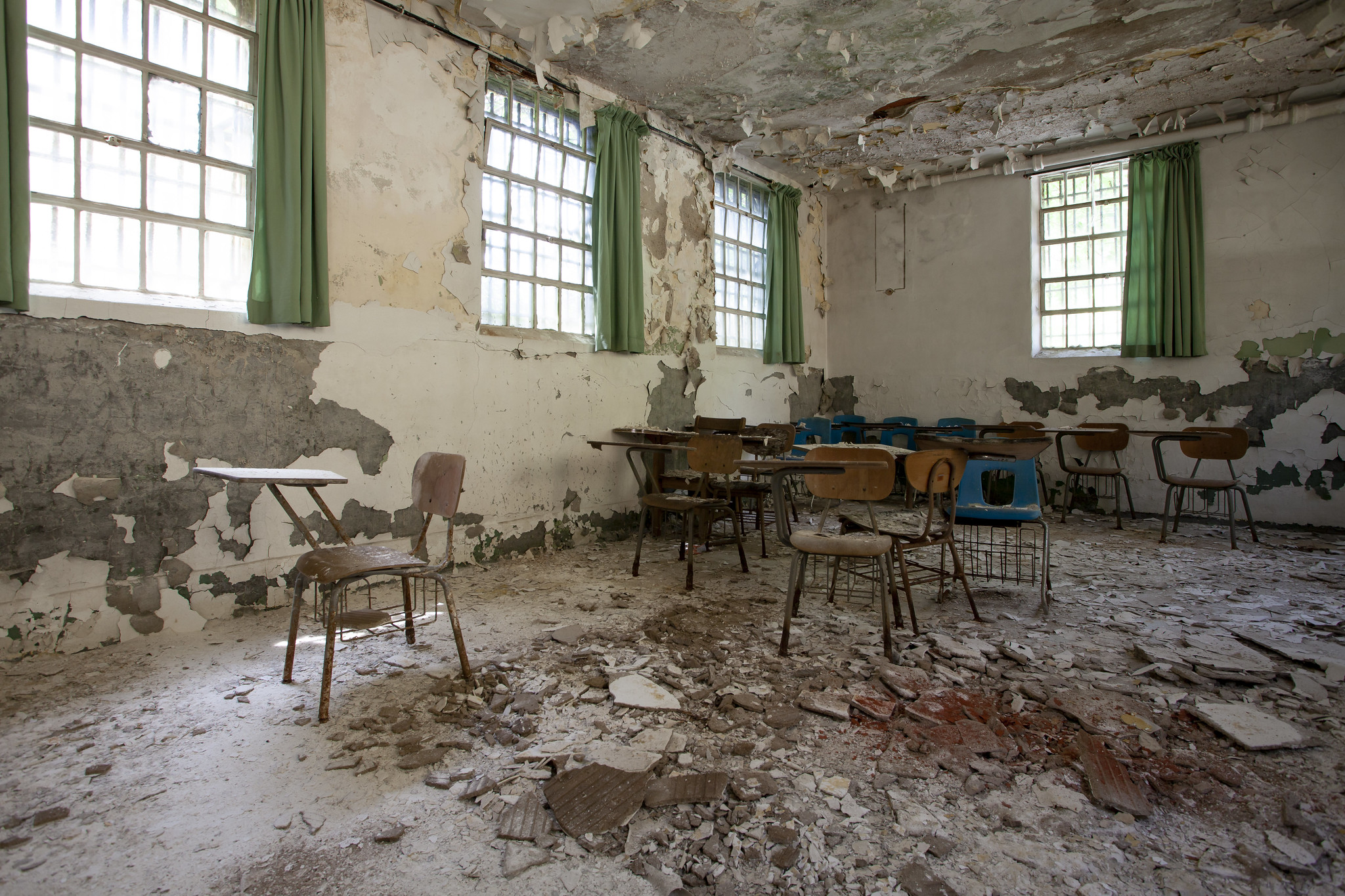
In 1987, the North Carolina State Assembly approved nearly $30 million to rebuild its state prisons. About $8.5 million of that was allocated to rebuild the new Craggy prison. Construction was completed in 1989. Today, Old Craggy State Prison serves as a reminder of its infamous past. Hazardous materials like asbestos and lead paint make demolition too costly. A laundry operated by Correction Enterprise still operates in one of the support buildings behind the main prison. Eight Enterprise employees supervise 52 inmates who wash about 36 loads daily, with each load containing 200 sets of inmate uniforms, on six industrial-sized machines. The property remains off-limits and belongs to the Department of Corrections.





Thank you for reading. Please share the blog with your friends. I appreciate your support. You can find me on Facebook, Instagram, and TikTok. For more amazing, abandoned places check out my photography books.
Discover more from Abandoned Southeast
Subscribe to get the latest posts sent to your email.

Some great photographs
LikeLiked by 1 person
Thank you, Sue!
LikeLiked by 1 person
Hey, Leland, this is near my NC houses, did you come up?
>
LikeLike
Not recently. These are from 5 years ago.
LikeLike